

the making of matir moina of seasons and the soil
On a chilly winter morning at four a.m. we installed ourselves on the pond steps of an old house at Amin Bazar on the outskirts of Dhaka. The cold seeped through our sweaters and shawls and into the marrow of our bones, so that we shivered together in the darkness. With stiffened fingers, the camera assistants set the tripod in position while film was loaded into the camera magazines. Across the pond, a huddled group of madrasa children waited patiently for our signal to begin their morning ablutions. The minutes ticked by as we scanned the night sky. Some of us sat on the cold steps, heads drooping with sleep. Finally, the pre-dawn glow began to penetrate the darkness, and we took our positions. The magic hour we were awaiting was approaching, but the main character in our scene was yet to arrive: where was the fog?

We spent three nights on the pond steps at the mercy of nature. At last our efforts paid off and we were able to capture the magical fog-shrouded images of early morning ablutions that open the film Matir Moina (The clay Bird). One of the major challenges of making the film was to remain true to the seasonal variations that we had written into the script so many months before. In the opening scene descriptions, we had only written: ‘Pre-dawn winter morning: fog.’ Caught up in the creative spell of scriptwriting, we could hardly imagine how difficult it would be to make these simple words come true in terms of execution.

The major challenge for us in the making of Matir Moina was to remain true to the seasonal quality of the story. Sometimes we found that Mother Nature was our worst enemy, sometimes our dearest friend, but always she remained predictably unpredictable.
One of the most frustrating battles we fought with nature, for instance, was during the filming of the monsoon sequence where the main character, the boy Anu, returns to his village home after the death of his sister. As we had conceived the scene in the script, the action would take place against the backdrop of gray overcast skies and flooded landscapes. To establish the mood, we wanted to use the oppressive monsoon atmosphere, rather than resort to the dramatic conventions of emotive acting. However, on the September day that we had planned our shoot, the sky was only thinly overcast, and the landscape was suffused with a soft golden hue, far removed from the gray oppressiveness we had hoped for. Furthermore, since the story was mainly based on Tareque’s own childhood memories, we also wanted to show details such as the flood-submerged grave of Anu’s sister. We had developed an elaborate and expensive scheme to raise the level of the floodwater around the village house by stacking sandbags in the area where the boat carrying Anu was to come to shore. However, as we were putting the finishing touches on the makeshift barrage, the sandbag wall collapsed in a rush of water, and the entire crew had to jump in to try and salvage it. After several hours of hard work, we were able to reconstruct part of the wall, and took the final shot of the boat coming to a flooded shore just as the sun burst forth in full splendor.

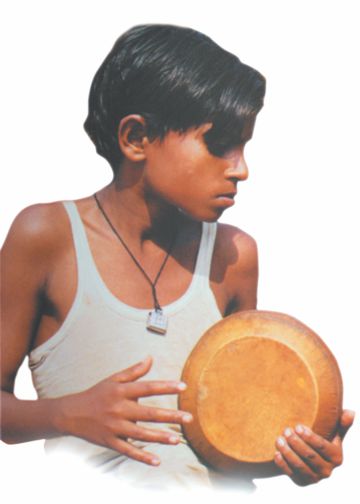
Over the next few days, the shortcomings of this shoot continued to haunt us. We travelled from our village location in Gazipur to another location in far-away Faridpur to film a monsoon boat race scene. Unlike the stormy skies of the death scene, we wanted to have monsoon water drenched in sunlight to bring out the colour and liveliness of this traditional festival, which takes place during the Bishwakarma Puja of the Hindu artisan community. On the day we filmed the boat festival, something we had prepared carefully for three months to ensure a 1960’s ‘period look,’ a powerful depression began to roll in from the Bay of Bengal. Over the course of the day, whatever dim sunlight there was began to fade, and by mid-afternoon massive dark clouds were casting dreary shadows over the festivities. Luckily we had already taken most of our shots, and despite the dim light, the excitement and color of the festival were still there. However, by the next morning the weather was threateningly dark and windy, and a steady drizzle drenched the landscape in hues of gray. As our exhausted crew sat in silence in the bus back to Dhaka, Tareque confessed to me a dream he had had the night before: that we were re-shooting the scene of Anu’s return. As we discussed his dream, we began to believe it was possible – the weather was perfect, the camera and crew were still with us. Even the typical country boat, in which Anu travels to his village home, was still strapped to the roof of the bus. Suddenly we remembered that Jayanto Chattopadhyay, the actor playing Anu’s father, was due to shave off his carefully cultivated beard for another drama shoot that day. In the return scene, Anu’s father meets Anu when he comes to shore, while a milaad for his dead sister continues in the village house. Without Jayanto’s beard, a re-shoot would be impossible. As our bus sped towards Dhaka, we desperately tried to reach Jayanto on his mobile. The signal was too weak to call until we reached Savar, and then suddenly we had him on the line. He was scheduled to shoot that afternoon, and no, he hadn’t yet shaved off his beard! By this time it was already 9 a.m., and we would have to begin shooting in an hour in order for Jayanto to be ready for the filming. We quickly told the driver to change course and take the Tangail road towards Gazipur. Within an hour we were at the village house again, and in record time the camera and actors were ready. There was no time to rehearse. We quickly planned a series of shots – no sandbags this time – to show the boat coming to the house and Anu meeting his father. The ominous dark skies, the wind, the drizzling rain all were in perfect harmony with the mood of the scene as we had originally visualized it. By one o’clock we were finished and Jayanto rushed off to shave his beard. When we got the processed film back from the lab some weeks later, we realized how correct our instincts for the re-shoot had been. Our expensive attempts to ‘create’ the monsoon mood had miserably failed, while the last minute rush re-shoot was miraculously authentic and convincing.
In order to keep pace with nature, we had to be ready to adjust ourselves at a moment’s notice. Another part of our script called for a scene where a spring storm would suddenly arrive as the madrasa children were hanging their clothes to dry. An actual storm is very difficult to capture, but we wanted to try to preserve the authentic seasonal look of the story, rather than resort to the artifice of blower and rain machines. In any case, experience had already taught us that attempts to trick nature at her own game were bound to fail. At the time we were shooting at an old zamindar house in Kaliakoir, where many of the ‘backyard’ scenes of the madrasa were set. We had found a dilapidated guardroom and were using it as a location for a ‘secret room’ of Anu’s madrasa friend, the strange boy Rokon. At the other side of the old zamindar house was a mosque with a beautiful mosaic minar, very similar in architectural style to the main madrasa location at Amin Bazar. We planned to use this as the location for the storm scene, as if the children were using the minar and the adjacent wall to dry their clothes. We were shooting in April, and the weather was very changeable, shifting from sunlight to gloom in a matter of minutes. The guardroom scenes required sunlight, and we had to pace ourselves throughout the day, waiting for the sun to reappear in the brief tracts of blue between massive clouds. At the same time, we tried to stay alert for signs of an approaching storm, so that we could be prepared to move quickly to the other location to capture the storm scene. In the afternoon of the second day, a massive dark cloud was approaching quickly. ‘Storm!’ we all shouted. Everyone scrambled to collect various pieces of equipment, while the guardroom set was covered in plastic to protect the delicate arrangement of props from wind and rain. We all ran like mad to the other side of the vast estate, set up the tripod and camera, hung out the ‘clothes,’ and put the child actors in position. Suddenly a thunderclap was heard, the wind rose, and the camera rolled as the clothes briefly fluttered in the wind. But the wind quickly died down and a break in the clouds revealed the sun. Someone was asked go to a higher spot to scan the horizon for the position of the storm. After a few moments he returned and told us to wait another ten minutes. We waited and waited, but the storm never arrived – it had passed us by. Dejectedly, we picked up our equipment and moved back to our guardroom location to resume our shooting, since the sun had returned. However, after an hour, the horizon got dark once again. It seemed that a massive storm was about to hit us. The wind was already rising by the time we packed up the camera and scrambled to the other side. We arrived barely in time. Just as the camera began to roll, a huge gust of wind blew the clothes high in the air, and two toupees fluttered down from the wall. The children ran screaming to collect the clothes before the storm arrived. Within moments, heavy rain began to fall. We had finally gotten our shot!


The dreamy reverie of scriptwriting might be said to be the most purely creative phase of the filmmaking process. Flights of fancy take their course, and little thought is given to the practical aspects of execution. The constraints of budgets and technical limitations seem like a petty nuisance. Unfortunately, there can be no other art form that requires such a lengthy logistical and managerial phase between conception and execution. As we penned in our descriptions of spring storms and winter fog, sunlight and monsoon gloom, little could we imagine what lay in store for us. The shooting of Matir Moina eventually stretched out over one full year as we chased the seasons and struggled to execute our dreams. But when we shot the final scenes of the film, which were delayed by several months due to the unavailability of our main cameraman, we found that nature’s whims could sometimes work in our favor. Already the next monsoon season had begun, and a strong depression had arrived coinciding with the full moon. But equipment had already been booked and paid for, our cast and crew were ready, and schedules were set. For days on end the sky was dark and heavy, while sudden rainfall continually disrupted our shooting. The landscape was drowned in water and mud. What should have taken four days to complete took ten. However, the miracle of it all was that the dark and brooding monsoon atmosphere was perfectly in keeping with the sombre mood at the end of the film. We had never conceived of creating such a mood, but when our film came back from the lab, we realized it could not have been done any other way.
Catherine Masud is the prouducer of Matir Moina
On a chilly winter morning at four a.m. we installed ourselves on the pond steps of an old house at Amin Bazar on the outskirts of Dhaka. The cold seeped through our sweaters and shawls and into the marrow of our bones, so that we shivered together in the darkness. With stiffened fingers, the camera…