

nine months in london
The harvest of art exhibitions in London last autumn was indeed a rich one. From sumptuous Gainsboroughs to austere Barnett Newmans, late 19th/early 20th century masters to the conceptualist nullities of the Turner Prize shortlist, portraits of Byron, the supreme Romantic icon, to those of romanticised Indians commissioned by Queen Victoria, there was varied stimulation – and provocation – offered to the connoisseur.
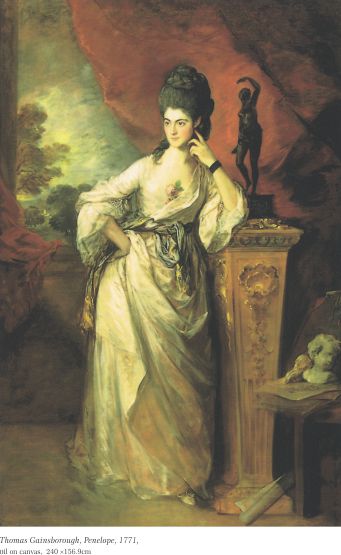
At Tate Britain, the ‘largest and most comprehensive Gainsborough exhibition ever staged’ was a natural crowd-puller. Here was everything the unsophisticated adore – landscapes they’d love to picnic in, and exquisite portraits – but there’s an added dimension to Gainsborough, combining technical innovativeness with a complex relationship with society, that elevates him to the company of Constable, Turner, Hogarth: an English quartet that ranks with the world’s greats. Gainsborough made a specialty of combining the two genres in ‘landscape portraits’, carefully painting his sitters and their attire, down to the last crease or sensuous fold, while working in the background leafage with swift improvisational brushstrokes that seemed, at least to me, to look forward to the impressionists.
Thomas Gainsborough (1727-88) trained in London under a Frenchman who taught him the courtly graces of Rococo, but he also admired the solid Anthony Van Dyke and had Hogarth as an early mentor. The creative assimilation of these influences produced the distinctive Gainsborough touch. Gainsborough set up as a portraitist, first in his native Suffolk, later in fashionable Bath, and from around 1770 in London, where he participated fairly regularly in the recently instituted annual shows of the Society of Artists and the Royal Academy until 1783: he didn’t feel entirely comfortable with this new mode of presenting art to an anonymous public. Though never as scathing as Hogarth, Gainsborough snidely let his high and mighty patrons have their comeuppance. He was only 23 when he painted his most famous and widely discussed work, ‘Mr and Mrs Andrews,’ foregrounding the eponymous couple to one side of a panoramic view of their estate. Our take on it has been definitively shaped by the Marxist critic John Berger’s 1970s TV series ‘Ways of Seeing’. Mr and Mrs Andrews, Berger declared, ‘are not a couple in nature as Rousseau imagined nature. They are landowners and their proprietary attitude towards what surrounds them is visible in their stance and expressions.’ Their unattractive, indeed mean, looks contrast with the beauty of the farmland, the cloudscape, the pretty sheep flecking the middle distance, even the handsome dog whose snout is raised in devotion towards its master. Mr Andrews leans lightly against a wrought-iron park bench, with legs casually crossed (a conventional upper class pose of the time) and a long hunting gun – at once intimidating and phallic – nestling beneath a crooked arm.
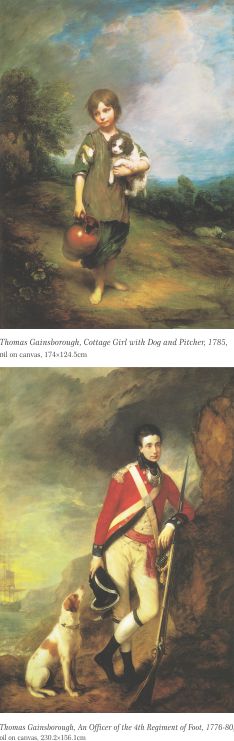
In London Gainsborough had no dearth of patrons, for there was a great demand for portraits. Imperial expansion had brought a sudden influx of new wealth; London became a Vanity Fair. Curiously, among the ‘macaronis’ or ‘overdressed and effete male fashion victims’, anxiety over their vanity reached hysterical levels in the early 1770s and inspired many caricatures in the popular press. In the gentler art of portraiture Gainsborough had two rivals, the classicistic Sir Joshua Reynolds, president of the Royal Academy, and the saccharine George Romney; Gainsborough’s reputation today is streets ahead of either.
In the Royal Academy exhibition of 1771 Gainsborough showed portraits of a famous aristocratic couple, the Viscount Ligonier and his wife. The pasty-faced Viscount is put in the shade by the imposing horse beside him; a wag quipped that ‘such people as effect to be witty will say that the horse is as good a man as his master.’ By contrast there is bold self-assertion in the comely Viscountess. The hypnotic gaze of her dark eyes shoots off to one side as she stands with her height enhanced by a tall coiffure, two fingers of her left hand drawing our attention to her sharp jawline, while the right rests on a provocatively out-thrust hip. The pair of portraits was intended to celebrate the sitters’ marital bliss, but while the show was on scandal broke over the Viscountess’ infidelity; her husband sued her for ‘criminal conversation’ (a prize euphemism). To compound the irony, the Viscountess’ Christian name was Penelope. Gainsborough could show sympathy and compassion where needed. His landscapes often include the rural poor whose condition had worsened with the introduction of enclosure laws, and if at times he tilts towards sentimentality, as in ‘Cottage Girl with Dog and Pitcher’ (1785), he doesn’t wallow in it. He could also subtly capture the impress of a complex historical event like the American war of independence, a fratricidal conflict that induced sadness rather than jingoism. Such is the mood suffusing ‘An Officer of the 4th Regiment of Foot’ (1776-80); we are not surprised to learn that the regiment had been in the thick of the fighting. A comparable sensitivity marks Gainsborough’s portraits of his family and friends.
Next door to the Gainsboroughs, the year’s Turner Prize shortlist, like all previous ones, drew bemused, irritated or outraged comments. Kim Howells, the minister for culture, dismissed the show as ‘conceptual rubbish’. Let me set down my impressions.
The first room, devoted to the 33-year old Keith Tyson, was dominated by mixed-media drawings of mathematical and scientific symbols and pseudo-philosophical graffiti pasted around a fake front-page of The Times of 16 March 2001. The execution is energetic, I have to admit, but so what? A mirror with a digital display took up one wall, while a couple of nondescript machine-like constructions occupied the floor. Just before the far door stands a massive black aluminium column supposedly containing computers and software; it is titled ‘The Thinker’ (after Rodin) and is a clever application of the combinatorial theory of the mind currently being promoted by a group of psychologists, neuroscientists and philosophers (Steven Pinker, Daniel Dennett, et al).
In the next room Liam Gillick (b.1964) installed a false Perspex ceiling in varicoloured glowing bands, and beneath it a long display case containing computer-generated plans for art projects. No comment.
Catherine Yass (b. 1963) had two videos playing continuously on wall-size screens. ‘Descent’ captures an 8-minute ride down an 800-foot skyscraper, but with the camera held upside down. ‘Flight’ is a 3-minute helicopter ride around the BBC Broadcasting house. Every lurch of the chopper gives a frisson, but do videos belong in an art contest? Why can’t full-length films compete? Last and most talked about was Fiona Banner (b. 1966) whose photograph by the door greeted the visitor with a screaming face. The floor of the room was punctuated by a number of giant black ovals and spheres, while a wall displayed ‘Arsewoman in Wonderland’, a screenprint transcription in pink of a pornographic film, down to the last grunt and gasp.
The bookies presciently made Tyson a favourite. He KO-ed the rest and received the £20,000 cheque at a ceremony attended by Chelsea Clinton. The Times, seizing the opportunity for self-publicity, made much of the mock front-page of the paper among the winner’s drawings.
But the controversy remains. It ultimately boils down to the status of conceptual art, which has always found favour among Turner Prize juries. Isn’t conceptual art merely the partially realized idea for art works rather than fully realized art? Where is the struggle with a medium, the mastery of a technique? Rodin’s Thinker depicts a man in a posture of cogitation, head resting on a hand. Today many believe that what goes on in a thinker’s head is essentially the same as a powerful computer in action. So Tyson thinks it’s a good idea to do another Thinker; only, instead of a human being there is a nondescript installation. As you read this account you get everything necessary to appreciate Tyson’s Thinker. Actually standing in front of it, walking round it, will add nothing significant to your appreciation. Not so with Rodin’s Thinker. You may appreciate the idea behind that famous sculpture from a description, but seeing it will give a richer, aesthetic experience. And seeing it again and again is likely to enhance that experience. So it is with all great works of art. But the more one sees Tyson’s conceptual Thinker the more empty it will appear, for it is nothing more than the idea behind it; if you have appreciated the idea you have exhausted it. As an artist, Tyson, his prize – and name – notwithstanding, is a light-flyweight.
More conceptual rubbish was insinuated into the Courtauld Institute Gallery. Amidst the hundred plus works in the show titled ‘Into the 20th Century’ ( Manet to Barbara Hepworth), as well as the permanent exhibits, there were bits of embroidered textiles by Conrad Atkinson, conceptual artist and currently visiting professor at the institute. Atkinson responded to Van Gogh’s famous self-portrait with a bandage over where his ear had been by displaying a series of embroidered ears. The only thing I can say in Atkinson’s favour is that he is comfortable with his own ephemerality: ‘Duchamp said that a work of art lasts 50 years before it becomes something else. I’m happy if it lasts the weeks it’s in a show.’
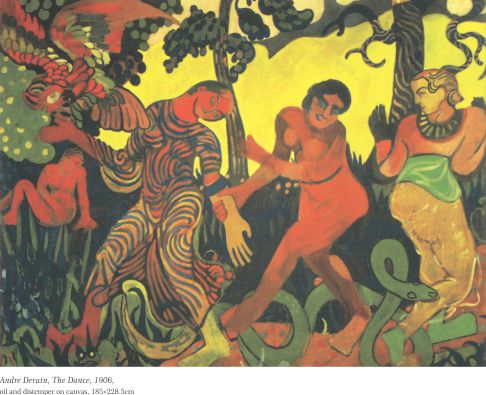
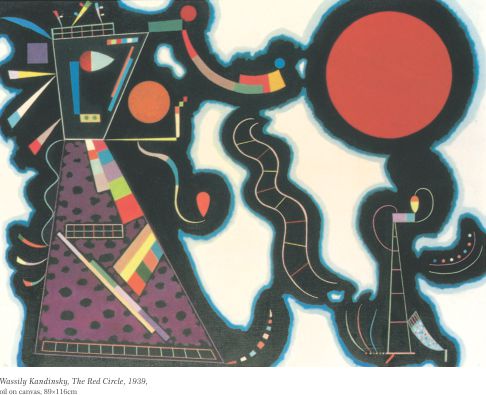
The Courtauld’s ‘Into the 20th Century’ paired neatly with the Royal Academy’s ‘Masters of Colour: Derain to Kandinsky’, which offered ’80 masterpieces from the Merzbacher collection’. The Merzbachers, Gabrielle and Werner, inherited a small collection of Impressionist and post-Impressionist works (Cezanne, Van Gogh, Picasso) and kept adding to it with an eye for artists and schools interested in exploring the resources of colour: Fauves (Matisse, Derain, Vlaminck), German Expressionists ( Blue Rider artists like Heinrich Campendonk, Franz Marc, Paul Klee, Kandinsky and Der Brucke artists like Kirchner, Heckel, Pechstein, Emil Nolde) and Russian Constructivists (like Malevich, Alexander Exter).
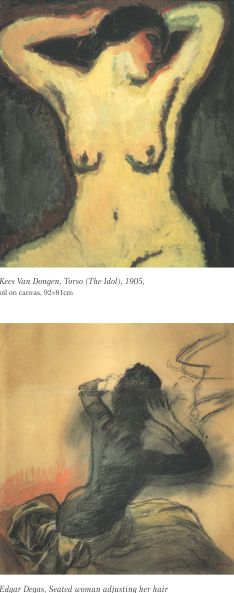
Both shows brought home the contribution of colourists to modern art; one may, somewhat schematically, divide modern artists into two groups, one group emphasising form (e.g. Cubism), and the other colour (the Fauves are a conspicuous example). Two works, encountered for the first time, left a profound impression on me. The first was a relatively little-known Degas, ‘Seated Woman Adjusting Her Hair’ (1884), in charcoal, chalk and pastel. A roughly drawn, sinuous torso grows out of the elaborately depicted folds of a dress, creating an amazing contrast between our elemental being and our effete accoutrements.
The other was by the obscure Kees van Dongen (1877-1968) whose ‘Torso, the Idol’ (‘Torse, l’Idole’) was in the first Fauve show of 1905. A highly expressive nude portrait of his future wife, it is, compared to other Fauve works, restrained in its use of colour. A pale body is heavily outlined in black and brown and startlingly set off against a dark background. A mask-like face is turned away to the left and painted in bands of various colours, the lips are full and dark-hued, the arms raised and linked behind the head, producing more than a hint of sado-masochistic sensuality.
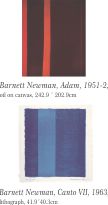
Tate Modern devoted substantial shows to the overlapping careers of two Americans, Barnett Newman (1905-1970) and Eva Hesse (1936-1970). Newman is a rare example among artists of a late starter, having begun painting at 40 (only Rabindranath Tagore I think started even later). His small oeuvre of 120 or so works, at least to the uninitiated, is marked by a degree of sameness. Most of the works on show were paintings and drawings, with a few graphics and sculptures thrown in. Only a small number have titles, which are either mythic or abstract – ‘The Song of Orpheus’, ‘The Slaying of Osiris’, ‘The Stations of the Cross’, ‘The Word’, ‘The Name’ – but if one tries to relate them to the works they are likely to appear interchangeable.
How is one to characterize Newman’s art then? A good way is to say that he was obsessed with the dramatic encounter of stripe and ground. On a monochrome ground -generally red or black or blue – one or more vertical stripes ( or ‘zips’ as the artist called them) shoot heavenward. Newman’s advice to viewers is to stand up close, the more fully to register an effect of heightened self-awareness. Yes, one can see the point. But Newman’s stature remains uncertain. He is ranked alongside his fellow American abstract-abstractionists, de Kooning, Rothko, Pollock, but suffers in the comparison. At best he is a minor modern master.
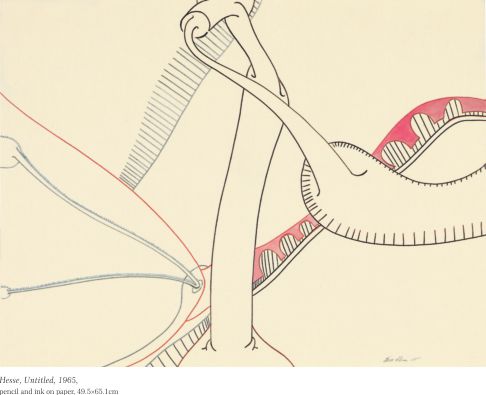
Eva Hesse began as a painter but is remembered more as a sculptor who pioneered the use of fragile materials like fibreglass and latex. Born in Hamburg into a Jewish family that fled to New York in 1939, she graduated two decades later from the Yale School of Art and Architecture. Her early drawings and paintings include self-portraits ‘rendered in thick impasto and earthy tones’ and abstracts suggestive of ‘organic shapes reminiscent of figures and landscapes’. Under the influence of surrealists like Arshile Gorky she moved on to a ‘looser, more gestural drawing and painting style, often incorporating colourful, collaged elements.’ In 1961 she moved with her sculptor husband Tom Doyle to Germany where their studio was an abandoned textile factory strewn with bits of dismantled machinery. She drew, painted, and collaged the machinery, and in the process evolved into a sculptor. ‘Untitled’ (1965), a pen and ink drawing from this period, combines ambiguous eroticism with lyricism and comedy. ‘Ringaround Rosie’ (1965), inspired by a friend’s pregnancy, mounts cloth-covered electric wire on papier-mache and masonite. She described the sculpted form that emerged as ‘both breasts and penis’. Diagnosed with brain tumour in 1968, Hesse underwent three operations before finally succumbing to the disease. Among her last works were disturbing, even grotesque, latex and fibreglass sculptures of visceral shapes.
Taking up the entire space of the turbine hall at Tate Modern was Anish Kapoor’s installation for the Unilever Series, constructed out of 30 tonnes of high strength steel and 700 square metres of maroon PVC, a man-made fabric that Kapoor thinks is ‘rather like a flayed skin’ – hence the title, ‘Marsyas’, in allusion to Titian’s masterpiece, ‘The Flaying of Marsyas’. Apart from being one of the largest installations in the world, it was an enigmatically lovely form, even though the whole of it could not be taken in by the eye.
The National Portrait Gallery brought together some well-known paintings of Lord Byron in a small show, nearly half of which was devoted to those who had in varying degrees modelled themselves on him. Among them are other Romantics, like Pushkin and Lamartine, a composer like Berlioz, post-Romantics like Baudelaire, and rather surprisingly, twentieth-century figures like Auden and Oswald Mosley and Ted Hughes and Martin Amis. It is as if Byron might be credited with the invention of the modern!
One room of the National Gallery was used for ‘An Indian Encounter’, an exhibition of portraits of Indians commissioned by Queen Victoria from the Austrian artist Rudolf Swoboda (1859-1914). The earliest of these were those of Indian craftsmen brought to London for the Colonial and Indian Exhibition of 1886. The craftsmen were not from villages, as organisers claimed, but prisoners from Agra jail, who had been trained up to facilitate rehabilitation. Anyway, the Queen was pleased and despatched Swoboda to India to paint more of her subjects. The entire collection eventually found its way into Osborne House, Queen Victoria’s summer residence on the Isle of Wight, the decoration of whose Durbar Hall in Indo-Saracenic style was entrusted to Bhai Ram Singh, Vive Principal under Kipling pere of the Lahore School of Art. The portraits are superior to run-of-the-mill Company art and should not be dismissed as mere Orientalism.
With the new year began a series of noteworthy shows of masters old and modern. Albert Dürer’s prints and drawings, on show at the British Museum, offered a rare view of this master of the Teutonic Renaissance. Giorgio di Chirico’s early series of paintings based on the mythic tale of Ariadne drew appreciative attention; David Hockney’s recent portraits were noticed but generally considered disappointing. Jasper Johns’ recent prints seemed to have only themselves to commune with in a small West End gallery, but were nonetheless worth a look. Johns is the first contemporary artist I had felt drawn to when, as a high school student curious about things avant-garde, I browsed through the modest collection on the subject in the USIS library at Dhaka. His recent prints, characteristically bold in form and colour, brought home to me his debt to cubism.
Conceptual craziness is never absent from the London art scene. The inaugural show at the Saatchi & Saatchi gallery on the South Bank was a Damien Hirst retrospective that showed once again that despite the hype and the critical chatter surrounding him few have a nose for his pickled sharks and rotting carcasses. At Tate Britain’s Triennial, Cornelia Parker kicked up a fuss with her appropriation of a prized possession of the gallery. In ‘The Distance’ she had Rodin’s ‘Kiss’ masked by a mile of twine. Outraged comments appeared in the press; the poet James Fenton charged that Parker had no right to disfigure – so to speak–someone else’s art. Parker’s raison d’etre as explained in a note, was that she had tried to show that an intimate relationship had a constraining aspect. Taking a dispassionate look at the exhibit, this is what I thought: Parker is right in saying that intimacy can be a constraining force, but is this an idea that she has added to Rodin’s sculpture? Isn’t it rather an idea already realized in ‘The Kiss’?
Just take a look at it or at a photograph, and it should become obvious that the entwined figures with conjoined lips embody intimacy in all its complexity. There is of course palpable sensual delight, but at the same time the firm grip the lovers have on each other (or rather, that the man has on the woman) clearly tells the viewer that intimacy has its dangers: it can turn into sado-masochism; it can be suffocating. Parker therefore has repackaged Rodin’s sculpture to highlight one aspect of its significance. I wouldn’t say it is an act of desecration, since I take a desacralized view of reality (which includes art); but it is certainly a cheapening.
Next door to the Triennial, a large show highlighted the influence of British artists Constable and Turner, most conspicuously on the French Romantics (Delacroix, Gericault, et al.); and, erring on the side of comprehensiveness, exhumed a number of minor purveyors of kitschy portraits and landscapes whose influence lives on in posters adorning many a philistine living room.
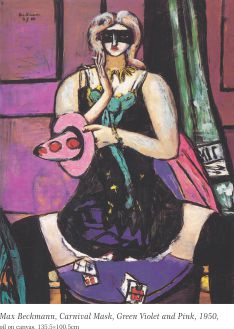
Across the Thames, Tate Modern ran a large Max Beckmann retrospective covering every phase in the artist’s career, which spanned the first half of the twentieth century. German art, from its Gothic past (Grunewald) through the Renaissance (Dürer and Cranach) and the Romantic age, down to the present has had an inward-turning, expressionist slant. Beckmann crossed his native expressionism with cubism to fashion a robust idiom that could convincingly record the psychological and socio-political stresses of his age, from the ordeal of the Great War, in which he served as a medical orderly, through the rise of Nazism and Fascism (which led to his proscription as a ‘degenerate’ artist) and the horrors of the Second World War to the onset of the Cold War. His use of narrative, frequently drawing upon both classical and Christian myths has had wide influence; contemporary Indian narrative painters like Bhupen Khakar and Ghulam Sheikh, for instance, look upon him as an exemplar. Equally admired are Beckmann’s psychologically intense portraits. His self-portraits unerringly capture the tenor of their historical moment. ‘Self-Portrait as a Clown’ (1921), for instance, is in keeping with the carnivalesque ethos of the 1920s. Beckmann’s women exude irresistible sexual power. More often than not he depicted his second wife, nicknamed Quappi, as in ‘Carnival Mask, Green, Violet and Pink’ (1950), where she is cast as Columbine, masked and provocatively astride a chair, with a cigarette in one hand and a pink hat in the other. In pantomime, it is worth point out, Columbine rejects the love-sick Pierrot and takes Harlequin as her lover. In these dark days Beckmann is an artist who has a lot to teach us.
If I were asked to choose only one show to visit during my London stint it would be the Titian exhibition at the National Gallery. Michelangelo and Leonardo da Vinci may be the greatest icons of the Italian Renaissance, but in easel-painting their influence on succeeding epochs is far outstripped by Titian’s. Younger than either, Titian (1490-1576) learned his craft in Venice from the Bellini brothers (Gentile and Giovanni) and Giorgiano, but soon discovered his own idiom, and at twenty-six he was already the city’s leading artist. He might have been so jealous of his position that when he noticed an original talent among his apprentices–the young Tintoretto – he sacked the boy; or so Jean-Paul Sartre would have us believe. Be that as it may, Titian remains the greatest Venetian painter.
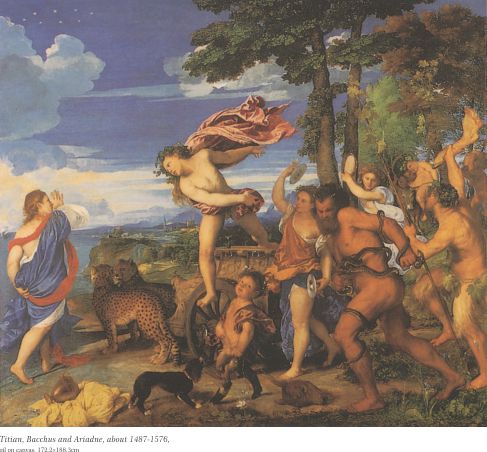
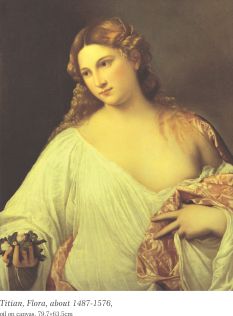
As early as 1510, with ‘La Schiavona,’ the portrait of a Dalmatian country woman, Titian introduced a new realistic idiom. ‘Flora’ (c. 1515), in the Venetian genre of the ‘bella donna,’ fuses realism with idealisation: note the tendrils of hair playing over the left breast. Shortly after, the Duke of Ferrara commissioned Titian to do three mythological scenes for a private room. The best-known of these, ‘Bacchus and Ariadne’ is a dynamic composition in which the abandoned Ariadne, wistfully gazing at Theseus’ departing ship, is the object of Bacchus’ testosterone-charged advance.
Titian never lacked lucrative portrait commissions from some of the exalted personages of his day, most notably the Hapsburgs Charles V and Philip II of Spain. It is universally acknowledged that Titian ‘was the first portraitist to so successfully use pose and gesture to convey the personality of his sitters as well as their status.’ He shows Pope Paul III (1543) bareheaded to indicate humility, and holding a purse, which symbolizes generosity. This no doubt gratified the sitter, but if one examines the Pope’s facial features the meanness for which he was notorious becomes apparent. This portrait inspired Francis Bacon to do his own Pope: thus Titian’s influence – conspicuous in old masters like Rubens, Poussin, Velasquez – lives on in our time.
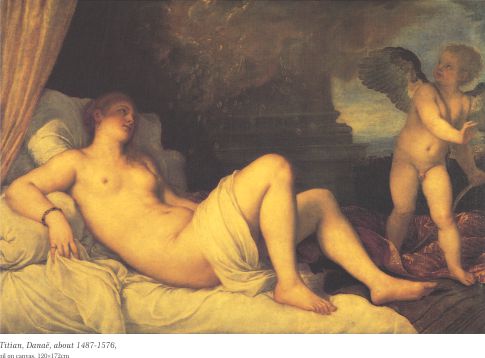
Titian’s unabashed eroticism is another aspect of his modernity, witness ‘Danaë’ (1544-46), compared to which many Renaissance nudes (Giorgionis’ for instance) look asexual. Titian’s late style is ‘characterized by a free, vigorous application of paint and visible brushwork,’ justifying one critic’s claim that he was the first twentieth century painter. ‘The Death of Actaeon’ (c. 1565-76), for example, or ‘The Flaying of Marsyas’ (c. 1570-7), which has become an icon of the artist’s predicament, is painted with shimmery, impressionistic strokes, and has to be seen from a distance to be brought into proper focus.
Doing justice to all the shows in London from late September 2002 to late June 2003, when I was a visiting fellow at London University, would require full-time commitment – and an indulgent editor. But even a sampling should give an idea of the city’s vitality as a centre of the arts.
Kaiser Haq is Professor of English at the University of Dhaka
The harvest of art exhibitions in London last autumn was indeed a rich one. From sumptuous Gainsboroughs to austere Barnett Newmans, late 19th/early 20th century masters to the conceptualist nullities of the Turner Prize shortlist, portraits of Byron, the supreme Romantic icon, to those of romanticised Indians commissioned by Queen Victoria, there was varied stimulation…