
slow down liupanshui minghu wetland park
liupanshui, guizhou province, china, 2010
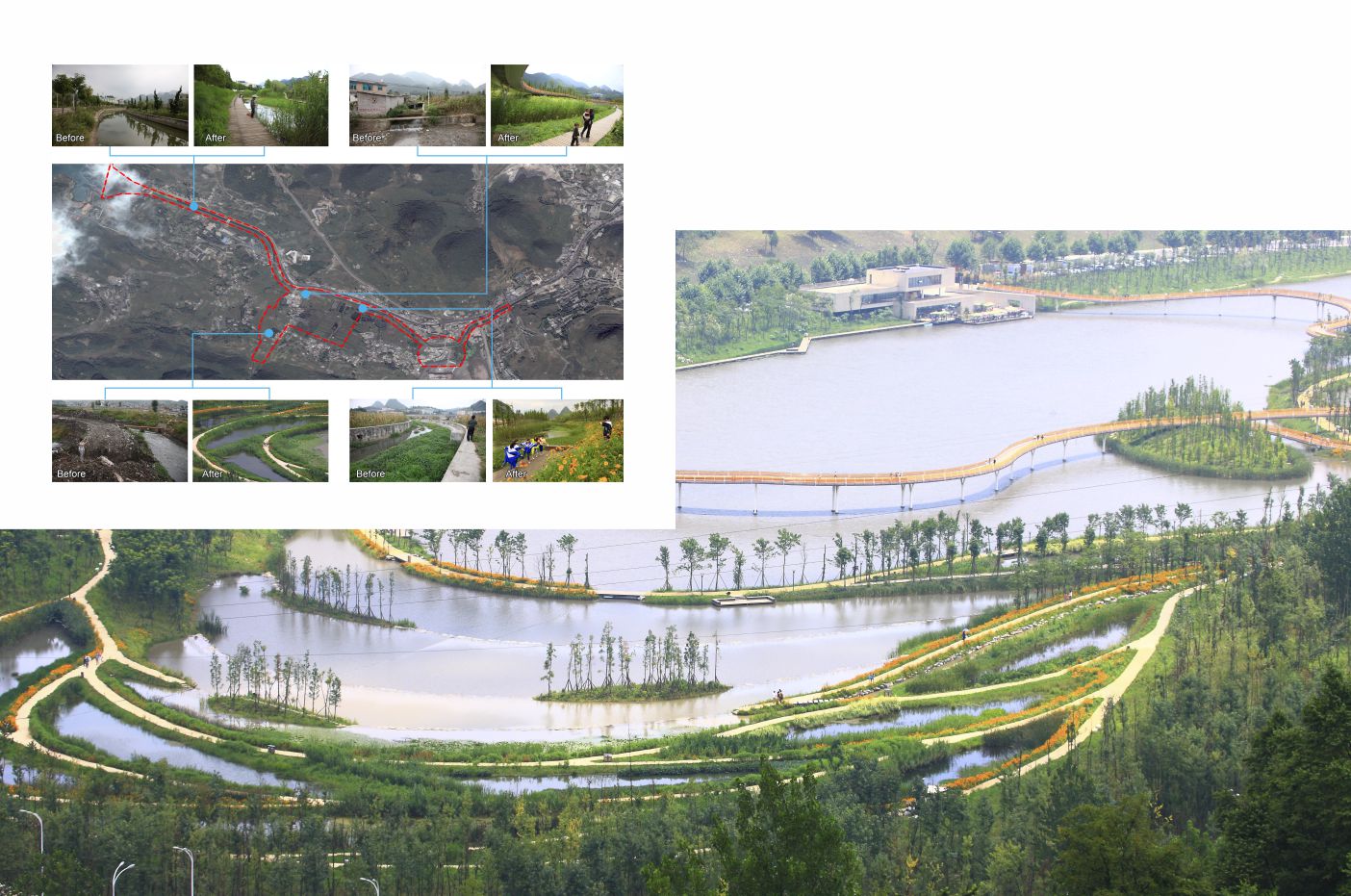
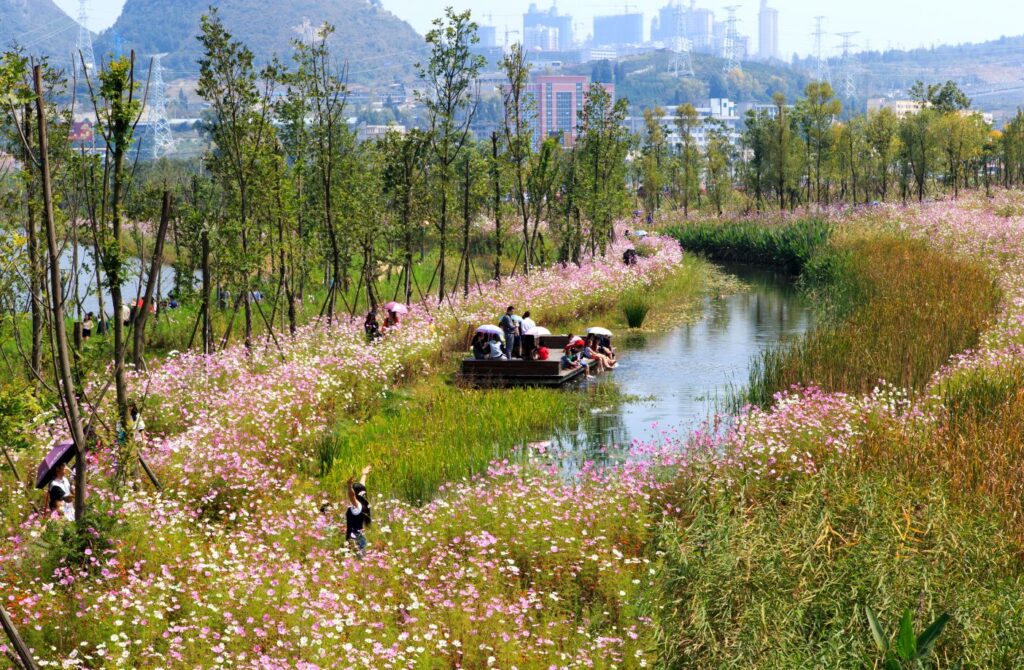
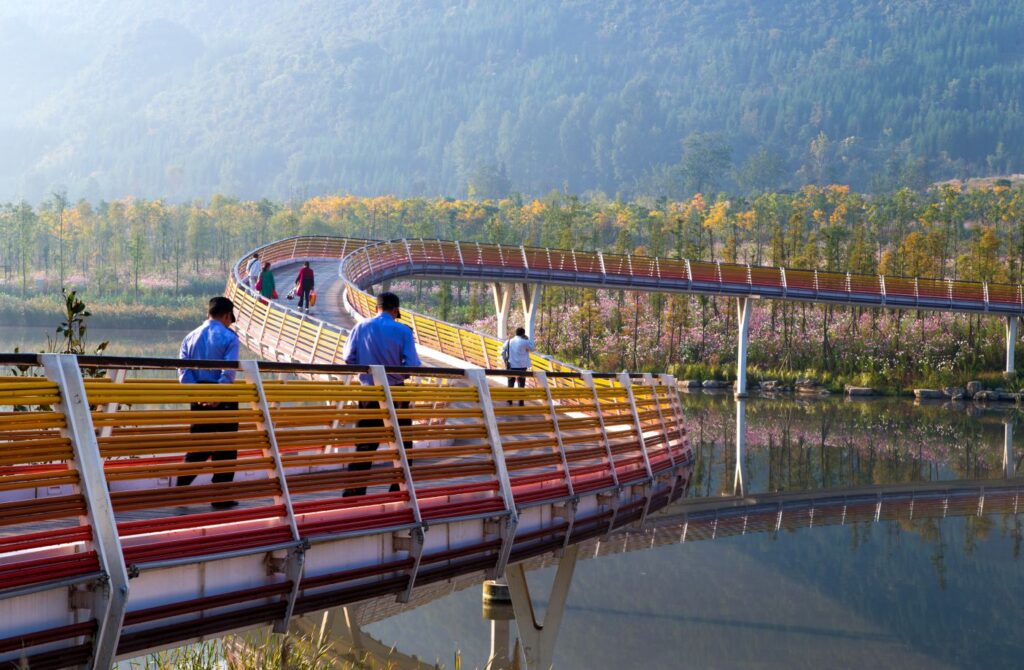
Through a series of regenerative design techniques, particularly measures to slow down the flow of storm-water, a channelized concrete river and a deteriorated peri-urban site have been transformed into a nationally celebrated wetland park that functions as a major part of the city-wide ecological infrastructure planned to provide multiple ecosystem services, including storm-water management, water cleansing, and recovery of native habitats, as well as a creation of a cherished public space for gathering and aesthetic enjoyment.
Liupanshui, known for its cool plateau climate, is an industrial city built in mid 1960s in a valley surrounded by limestone hills, with the River Shuichenghe running through it. With an area of 60 square kilometers, the city is densely inhabited by a population of 0.6 million. As part of a major campaign of environmental improvement, the city government commissioned Turenscape to develop a holistic strategy to address multiple problems including water pollution, flood and storm-water inundation, recovery of the mother-river, and creation of public spaces.
The water system that was once a blessing to the city has become a deserted backyard, garbage dump and the dangerous backside of the city. Pedestrian access to a restored green space system is badly needed in such a densely populated community. The strategy is to slow the flow of water from the hillside slopes and create a water-based ecological infrastructure that will retain and remediate the storm-water, and make water the active agent in regenerating a healthy ecosystem to provide natural and cultural services that transform the industrial city into a livable human habitat.
liupanshui, guizhou province, china, 2010 Through a series of regenerative design techniques, particularly measures to slow down the flow of storm-water, a channelized concrete river and a deteriorated peri-urban site have been transformed into a nationally celebrated wetland park that functions as a major part of the city-wide ecological infrastructure planned to provide multiple ecosystem…