

the masterly works of adel el-siwi faces of humanity from egypt
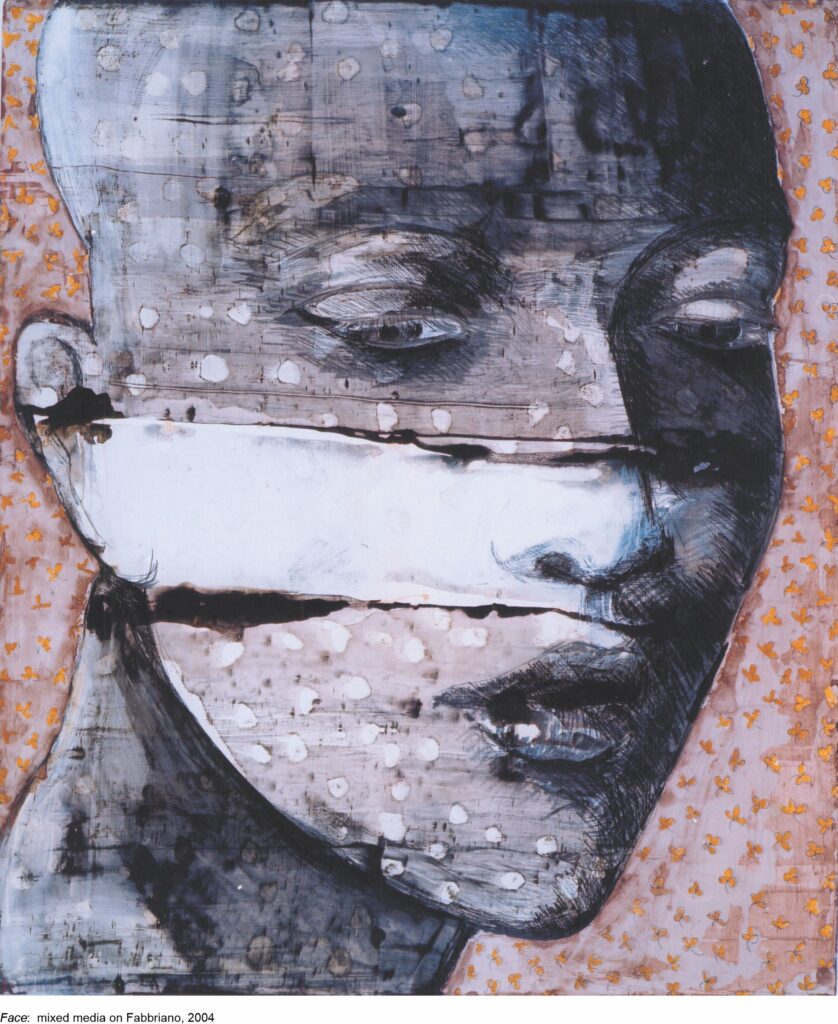
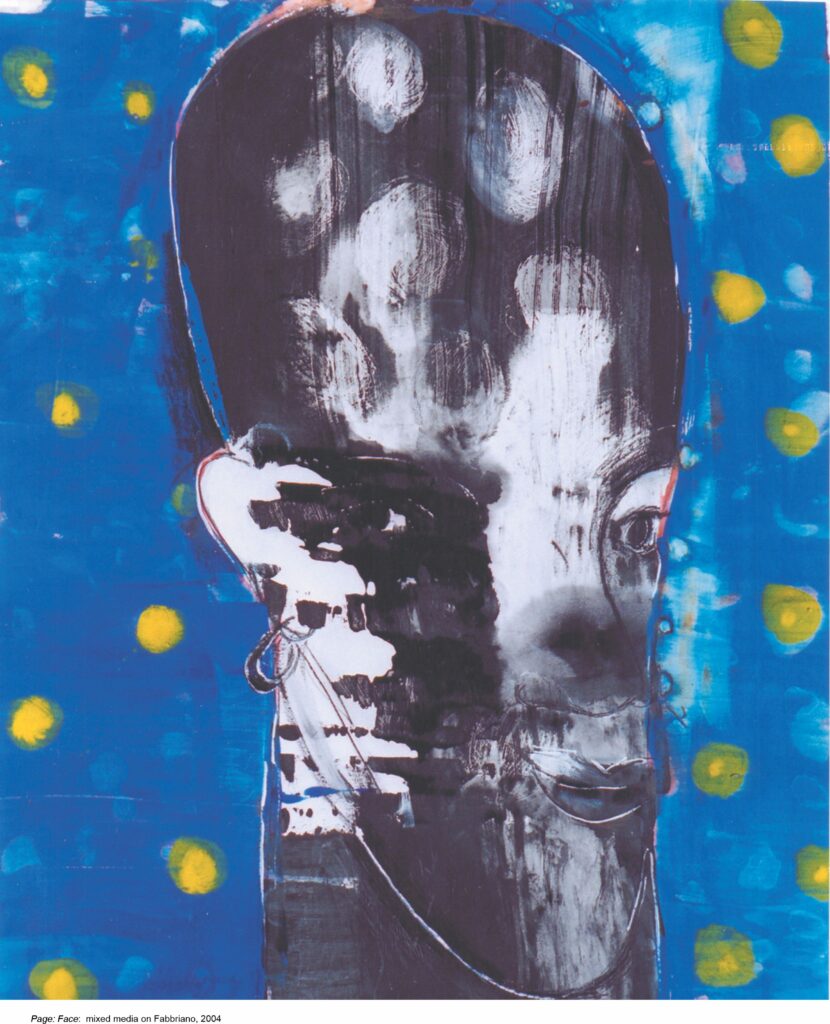
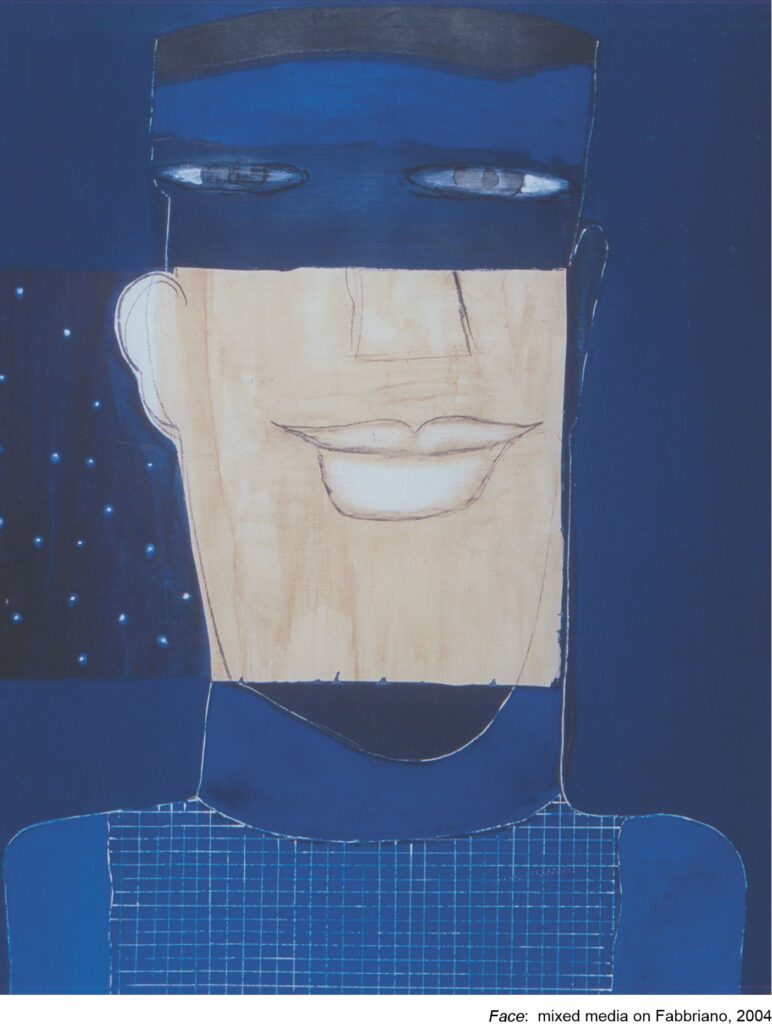
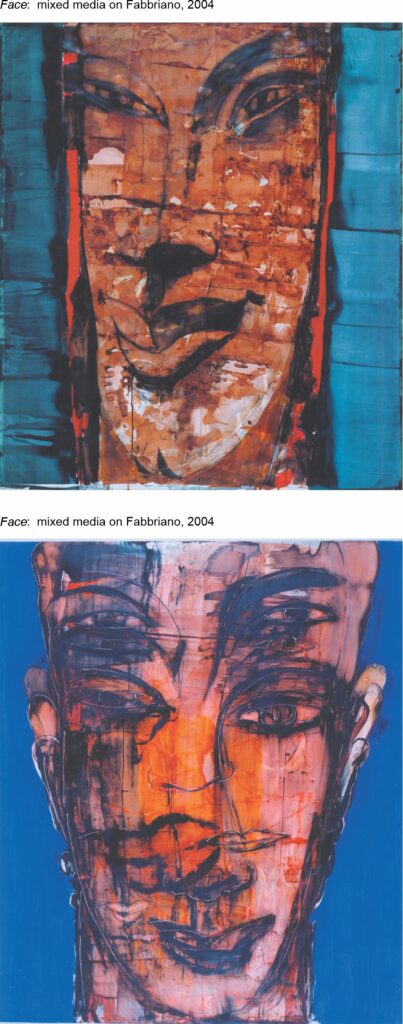
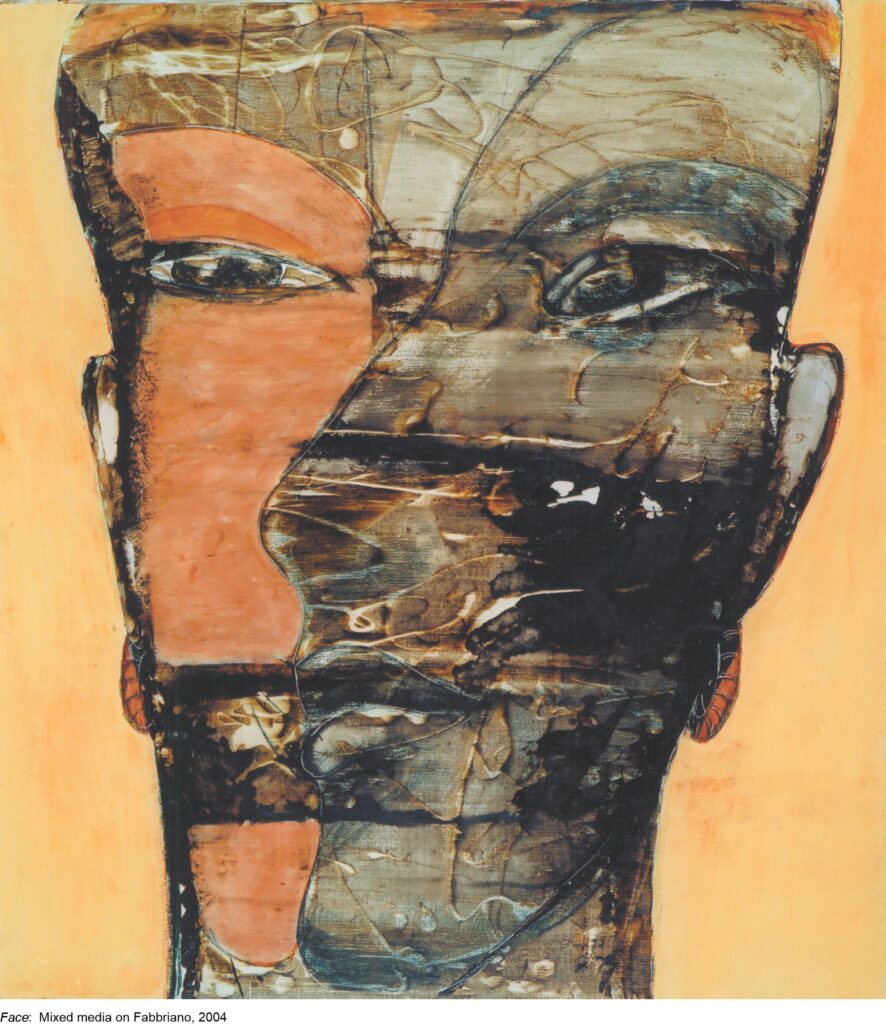
A multi-faceted artist, a humanist, and an outspoken intellectual, born in the ancient town of Behera in Upper Egypt on the lush Delta of the Nile, the artist Adel El-Siwi is a well seasoned man; he has lived in diverse parts of the world, explored the winding path of art, and exhibited on every continent. At present, in his paintings he explores what it is to be human. The endless faces he draws and paints are often genderless and race-less; they could be anyone from anywhere, from any time in history. They are the faces of a ‘global’ world
As an artist, or rather on the path to becoming one, I had the opportunity to meet Adel El-Siwi in 2001. The place was the Kingdom of Bahrain; Siwi had been invited as a jury member and a guest speaker at the Annual Art Exhibition for leading Bahraini artists, organized by the Directorate of Art and Culture, and overseen by the Ministry of Media. The event is a major one and is officially opened by the Prime Minister of the country every year, where three major awards are given out to best artworks. Siwi was there with two other international members to choose the winners and to talk about art. Three years later, he came back to Bahrain for a solo show of his latest artwork at the Riwak Gallery, a private leading art establishment in the Arab Gulf. I didn’t get the chance to meet Siwi again, but I met his paintings instead.
Years ago, the 53 year old Egyptian artist Adel El-Siwi had trained to become a general physician, the safe career option for the youth of the Egyptian middle class and working class members aspiring to better positions. In the late 70’s Siwi rebelled, left the medical profession, and chose to begin the path of self-discovery. Like many artists of his generation who were disenchanted with the political and societal life of the late 70’s and early 80’s, he chose to leave Egypt to live for long spans of time in parts of Europe and North America. But in 1990 he returned to Cairo for good, where he is based to this day. In 1985 he presented his first solo show at the Cairo Atelier.
Throughout the 80’s and 90’s, and until this day, siwi’s artistic path has been characterized by phases, and he has been learning, and accumulating insight gained from every phase. In the 80’s he was preoccupied with the human figure, narrative, and scenes from his immediate environment; he then moved on to ‘spare means’, that is to say, everyday still objects depicted proudly and distinctly, because he believed “the more limited the means the stronger the potential of the expression”. Even his landscapes were brooding, permeated by the “monochromes of the desert and the grayness” of Cairo’s congested landscape. For a long while he believed in ‘pure’ painting, where nothing touched the surface of the canvas or paper except paint and brush. But in the late 90’s his Venice Biennial contribution saw him making an installation with painting. Siwi was still exploring then and he has never ceased since.
He has tried his hand at film art-directing, and community art work (like his grand group effort for the Kom Ghorab Project in 1996); he writes with courage and stark honesty although he is often opinionated; he experiments outside painting. Yet his passion lies in it. At his recent solo show at Riwak, the paintings were of faces, and endless faces at that. Siwi has been composing them for quite some time now. Often a single, large, elongated, and distorted human face will stare at you vacantly. The sex of the face is a mystery, as is the feeling it permeates. One detects a feeling coming out of those features, that mouth either closed or open in a strange smile; those eyes that are there but are not there, and those beautiful colors that strangely says: enough is enough. They are paintings of genderless, sexless, and raceless human beings, humans on the periphery of life, who are “always, but never quite, on the point of dissolution” as Nigel Ryan says of Siwi’s heroes and heroines.
By the times I had met Siwi in 2001, I had also attended one of his lectures. He spoke about the necessity for seriousness in art, the problems artists everywhere, and especially Arab artists, face considering the political, social and economical problems that beset the Arab World. He is convinced that in order for one to make interesting and challenging art one has to get out of the “official” voice of state-funded art. He was constantly asking questions, and provoking his audience into coming up with answers. Siwi’s passionate belief in challenging “the system that grants greater worth to physicians than painters” has earned him respect over the years in art circles locally and internationally. His work has reached South America, and the far edges of South East Asia, and has sealed his reputation as a serious intellectual asking the right questions. In his speech one could feel Siwi’s idealism, his quest for a fairer society, for a world where expression and profession go hand in hand, and are in fact essential for survival and production.
The Crow Hill’s project, better known as the Kom Ghorab Project, started with an initial idea articulated by his close friend, Egyptian art critic Fatma Ismail, and fellow artist Mohammed Abla. The three had a dream: how to transform a life of poverty and misery for a group of people into a better existence through art. Can art affect lives directly? Can art change one’s relationship to the environment, one’s whole perspective on his or her life? The three believed so, and they wanted to prove to others that their dream could be translated into reality. When I met the artist in 2001 he had also exhibited his latest endeavors a documentary film of the Kom Ghorab Project shown to the public at the Museum of Bahrain’s cinema theater. I liked the project immensely and requested a copy of the film to show it to my students at the university where I teach. El-Siwi graciously gave me a copy that I still show to my students every term; it’s an example of the flexibility and expansiveness of art and his belief that it can reach out to improve people’s lives beyond the gallery walls and rarified closed-in circles of artists, writers, collectors and critics. Probably some might even call it ‘social art’.
Fatima Ismail writes in an essay titled “The Kom Ghorab Project in Cairo” in the book Art Criticism and Africa (ed. Katy Deepwell, pub. Saffron books): “The project is located in a squatter area in old Cairo called Kom Ghorab, meaning Crow’s Hill, where a certain indeterminism prevails. The area is divided by a main road with steep embankments. There are many local potteries in this area. The walls of the squatter houses became the site on which the artists began to work. They face each other across a bleak stretch of road. Here everything is a possibility… and everything a mere coincidence. Both noises and poverty prevail. This is a place where chaos rules. The emergence of squatter areas are often seen as an exception to the rule and a place where chaos defies all the established rules of time and place in the city… the experiment started in October 1996 with the interaction between the artists and the squatter neighborhood families… Moreover, the radical change that the district and behavior of its people have undergone is by far the most interesting result.” In the video Siwi expresses his delight that after months of planning this project and inviting as many local artists as possible to participate, the people who lived at Crow’s Hill had become proud of their cleaned up, bright and colorful houses. The trio behind the project had asked local artists to submit mural proposals to be painted on the fronts of houses. As it was a squatter area, the architecture of the two storey and three storey buildings was haphazard; uneven floors, uneven surfaces, and the mixture of building materials test the ingenuity of man in coming up with the concept of a ‘dwelling’ in the most unfavorable of circumstances. It is a place where twisting and winding alleyways, balconies and makeshift rooms precariously jutted out into space. As one of the locals states proudly in the documentary film, “everything you see here we built ourselves”. But the result achieved after months of labor and obstacles was well worth the wait and the agony. As Ismail says, “nowadays, some of the inhabitants of the squatter area could be seen crossing the road to look at the panorama of the whole district.” In interviews conducted with the locals, they are heard talking about how cleaned up their living quarters had become, how bright, and how happy they were to walk to and from their work places to their homes.
Wejdan Almannai is a visual artist, writer and tutor at the University of Bahrain
A multi-faceted artist, a humanist, and an outspoken intellectual, born in the ancient town of Behera in Upper Egypt on the lush Delta of the Nile, the artist Adel El-Siwi is a well seasoned man; he has lived in diverse parts of the world, explored the winding path of art, and exhibited on every continent.…