

axis of power
Mark Sealy investigates the ‘wonderful time’ for photography in Britain
In theory it is now a wonderful time for photography in Britain. Phaidon Press have made a massive foray into photography publishing and Tate Modern have had their first major photographic exhibition, ‘Cruel and Tender: The Real in the Twentieth-Century Photograph.’ There where major photography exhibitions at the Serpentine Gallery and the Whitechapel Art Gallery in 2003. The Victoria and Albert Museum opened a long awaited new photographic gallery. As the brochure for the self-proclaimed ‘Summer of Photography 2003’ stated, we are currently, witnessing ‘the most extensive and varied presentation of photography in London ever.’ With the announcement of London’s first international photography fair in May 2004, which entertained fifty international photography dealers, on the surface it’s an amazing time to be involved in photography.
These are then positive times, for those of us with a vested interest in the industry. All roads seem to lead to London, a city now branding itself, especially in light of its Olympic bid, heavily on the fact that London is more culturally diverse than anywhere else on the planet and therefore a more exciting place to see art and engage with all that diversity has to offer.
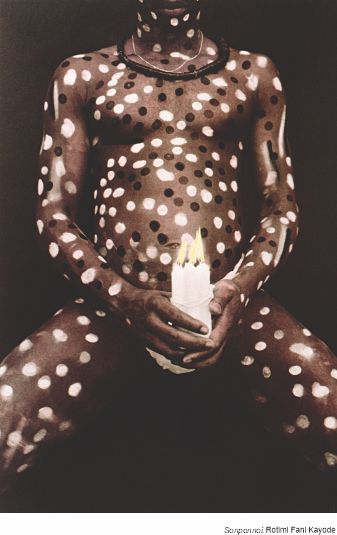
It’s a shame, however, that very few of our cultural institutions can claim the same degree of social inclusion both in terms of staff and the types of work they are prepared to show. It is business as usual, with northern European and North American artists dominating the few spaces that are capable of staging major exhibitions and commissioning new works.
The National Lottery-funded, frenzied refurbished spaces have now truly engaged the term ‘institution.’ Risk and innovation have been replaced with media hype and celebrity, held together by the ever-increasing influence of a few art dealer ‘special’ relationships. The relationship between public spaces and corporate sponsorship has clouded the institutional cultural waters beyond recognition. The corporate success of Tate Modern has seeped horribly down the institutional food chain with those at the bottom paralysed by their desire to compete and those at the top of the pile closing ranks over the ever-increasing globalisation of artistic production and display.
So, in the midst of so much activity it may be useful to reflect on what this new embrace of photography represents, both in terms of photography’s recent past in the UK and its future. Let’s review what has been gained, what has changed and what has indeed disappeared under the weight of all these new, institutional developments and opportunities.
Long gone are the Arts Council England’s special photography funds that supported publications, conferences, and a range of small independent initiatives. These initiatives carved out and are partly responsible the international status that British photography still has today. The agenda in the mid to late 80s and early 90s was driven by difference and debate, rather than by the attendance figures, press coverage, and celebrity that are benchmarks for success today.
However, let’s look past the new National Lottery-funded empowered buildings. They are seemingly here to stay, no matter how badly managed they may well be. They function like black holes with bottomless cash needs that constantly threaten to absorb smaller projects and ultimately each other. We have to look past the international curators with so many accumulated air-miles that they forget which institution they are working for and, in fact, where they even started their journey form, both geographical and political. Past the exclusive world of collectors with a perpetual need for entertainment, and past the array of magazines driven by self-referential content and adverts. We don’t have to look too hard to see that some important markers and voices in the UK have vanished into the photographic cultural ether.
Where then, is the critical mass of dissident voices that once came under the umbrella title of the independent photography sector? Where are the schools of radical thought that are meant to challenge, not simply reproduce the canon?
Independent photography production in the UK has been in crisis for many years. It is probably now in a critical condition. There has been a significant dismantling of production centres for photography in the UK and we are in dire need of a strategic national review of the state of British photography if indeed the medium is to have any meaningful future.
France, Spain and the rest of Europe have for many years been way ahead of the UK in promoting photography as a specific art form, culturally as well a commercially. Their commitment to international festivals is testament at least to a desire to discover what’s new.
Let us take stock. Ten 8 magazine, responsible for providing a much needed platform for emergent photographic talent and new writing, was effectively made redundant in the early 1990s after 15 years plus of photographic publishing. Viewpoint Gallery in Salford, Manchester, closed and was followed by the closure of Cambridge Darkroom Gallery shortly after. Then came the closure of F-Stop Gallery in Bath and Newcastle’s Zone Gallery. Camerawork in the East End of London had its funding cut after receiving a substantial Arts Council capital grant to redevelop the gallery and darkroom facilities. Creative Camera, after 25 years plus of photography publishing, was redesigned and re-launched as D.Pict only to see its funding withdrawn in 2003. The lack of interest in reportage photography means that agencies such as Network Photographers, Magnum Photos Inc. and the Independent Photographers Group are under great pressure from corporate giants to sell up or simply close.
What effectively has happened over the past fifteen years could be seen as a systemic destruction of the backbone of independent photography production in the UK. It’s been attacked quite clearly from both the private and the public sector.
Autograph: the Association of Black Photographers, was founded in 1988 and operates as a key photographic production bureau and information resource for photographic historians, curators, galleries, festivals, and international photographic media. Its primary role is to advocate for the inclusion of photographers from culturally diverse backgrounds in the areas of exhibition, publishing, training, education, and commerce. We have a strong commitment to developing links with photographers and organisations that have an interest in human rights and working with partners that are concerned with issues relating to social change globally.
Publishing, from the organisation’s conception, has been a primary objective and has been an essential part of Autograph’s development. Through publishing, independently and in partnership with other organisations, we have been able to promote and instigate a variety of different projects nationally and more importantly internationally.
Autograph has always been an organisation that has been light on its feet. Flexibility has been critical to the survival of the company. Being able to deliver a sustained and progressive programme has been the key to the organisation’s success.
Early projects tended to focus on group shows, group projects being somewhat easier to sell to galleries, photography festivals and publishers. However the core business of Autograph has always been to support and nurture a constituency of artists that often experienced a shared sense of exclusion, not just within the galleries circuit but also within the photographic industries in general.
As a strategy for Autograph it’s been important to identify key individuals internationally in positions of power that understand the benefits of working within a culturally diverse framework. A key benefit to the organisation is that we have always cultivated partnerships outside of the UK. The appreciation and impact of Autograph in countries like the USA, especially with our partnerships with Lightwork in Syracuse, has been strategically very important, likewise with Drik in Bangladesh. Most of our larger projects have happened outside of UK. In my view there is a real need to engage with key issues relating to ethnicity and representation, and more artists are becoming concerned with the global situation in terms of Human Rights. The changes that have occurred within the landscape of photography have prompted thinking within Autograph of the need to consolidate and to somehow build on what we have achieved to date. It’s crucial that we address the vulnerable environment that we function within, to assist artists in a way that enables their individual contributions to art not only to get recognition, but also to present the work in a form that enables it to be read in its proper historical and contemporary context–not in crass, marginalised circumstances such as Black History Month. The agenda at Autograph is one of total inclusion.
Publishing therefore is an ideal platform and space to work within. What I recognise about publishing is that it lasts forever. The fact that every title that we have published, and there are now around 30, once given an ISBN, is housed permanently in the British Library—this, childishly gives me a thrill.
As Autograph’s reputation grows our initiatives into publishing gain greater recognition. The last three publications on the work of Sunil Gupta, Joy Gregory and Ingrid Pollard produced in collaboration with Chris Boot and designed by Stuart Smith have been great calling cards for the artists. More importantly the publications act as a real points of entry into each of these artists complex and different works.
I now firmly believe that it is important to up the stakes in terms of our organisational aspirations and our ‘sense of place’ within the arts sector here in the UK. We are now working in partnership with the Institute of International Visual Arts, and with support from the second round of the Arts Council Capital Projects scheme we are developing what will become a major new cultural centre in the heart of the Shoreditch in the East End of London. The aim of the new building is to address the lack of a permanent home and ‘sense of place,’ not only for both Autograph and inIVA, but more importantly for the artists and the increasing range of audiences that we serve. By realising this building venture, Autograph and inIVA aim to secure a sustainable infrastructure for a sector that has historically been dependent on annual revenue funding without the security of a capital asset—a permanent site. This shift represents a real desire to break away from the culture of dependency.
The new building will provide a home for the two organisations and a ‘sense of place’ for the work, ideas, and debates of their associated artists and photographers. It will showcase artists from different cultural backgrounds working—often with limited visibility—in Britain today. We aim to provide a ‘window’ for international artists and curators whose work is not regularly exhibited in mainstream galleries here. The project aims to offer fresh opportunities to build on innovative approaches, and reach out to new audiences and engage them continuously. The new building is being developed as both a cultural and social hub that extends the possibilities of interaction and communication beyond the constraints of the traditional white cube.
It’s a seven-million pound plus project and we are working with the architects David Adjaye Associates to build what we hope will be a landmark building project. The building is due for completion in late 2007 and we are now intensely fundraising for the remaining half-million pounds we need to complete the project. This initiative will mean that Autograph will make a key transition, and make the move from agency to institution, which was one of the key founding criteria for the organisation. The challenge is to make an institution work that simply does not replicate what already exists. Mark Sealy is Director of Autograph, the Association of Black Photography in London
Mark Sealy investigates the ‘wonderful time’ for photography in Britain In theory it is now a wonderful time for photography in Britain. Phaidon Press have made a massive foray into photography publishing and Tate Modern have had their first major photographic exhibition, ‘Cruel and Tender: The Real in the Twentieth-Century Photograph.’ There where major photography…