

the latent image
He had been watching for a while as I photographed the kids playing leapfrog. It was for an assignment for Oxfam and I had gone early in the morning, as much to get the dew and the morning light as to find the kids at play before their hard day as rag pickers kicked.
He had politely waited till the end of the shoot and came up to ask which Nikon I was using. That was different enough. What camera I used was as far as any curious bystander would normally get to. Razzak Ali was from Norshingdi, a mofussil town not far from Dhaka. ‘I have a Leica M3’ he told me without a trace of pomp or one-upmanship. ‘My brother who works in Saudi asked me what I wanted and this was my choice.’ He explained that he was a farmer and on days when he wanted a break, he would come into the city and visit its parks. He had never heard of me, but knew all the big names in Bangladeshi photography. ‘Such a pity about Dolly’ he lamented on the sad suicide of the talented actress who had been married to the celebrated photographer Anowar Hossain. ‘You know the photographs by Kazi Mizanur Rahman remind me of the poetry of Jibananda Das he reflected. ‘The other day I was tilling the land, and a white egret sat in the middle of the ploughed field. I framed around the triangle of the plough, put the clods out of focus and placed the egret in the far corner, small but distinctly in focus. I could see the negative space unfolding in the raw earth, the skies in his Ashar landscapes, the wind in the sails of his colourful fishing boats. But I never saw him again. Razzak Ali disappeared without a trace from my life, entering it as fleetingly as he left. A latent image in my pile of undeveloped stories.

There used to be a place where we photographers would meet. Bijon Da would move out the furniture from his guest room and line up the folding chairs for the packed monthly meetings of the Bangladesh Photographic Society (BPS). The rest of the month the room was his. A reasonable arrangement for both parties. The society certainly didn’t have the money to pay full rental for the room.
Having visited camera clubs in over twenty countries, I’ve found a common culture that is quite remarkable. True, the naked woman by the waterfall doesn’t make it to the camera clubs in Tehran, but the same solarisations, the religiously followed ‘rules of thirds’ and the contest veterans who collected exhibition acceptances like badges of honour were pretty standard. And each club had its one winning photograph of a group of veiled women with one looking back at the camera. I have stopped being surprised at how, what is effectively the same photograph, continues to win awards for years on end. Camera clubs have certain rules of engagement, and it wasn’t important for them that I understood.
Despite the trappings of the salons and FIAP certifications, the BPS has played a very important role. Rarely have I seen the likes of the stars of Bangladeshi photography, the Rashid Talukders, the Anowar Hossains and of course the ever present and inimitable Manzoor Alam Beg, gathering under one roof with fellow professionals, keen amateurs and complete novices, without any of the celebrity posturing that one would find elsewhere. Ansaruddin Ahmed would bring his meticulously printed images, and talk of his teaspoon technique for mixing developers. Golam Mustafa brought in elements of video, S S Barua was the bird man. Saeeda Khanam remained the sole woman in a male world. Though many others have shaped this landscape, it was Mr. Beg who was the magnet. Ever present, ever curious, ever patient, this gifted teacher has been the rock of the photographic movement. It was also his ability to bring in as dissimilar individuals as Anowar Hossain with his brief but scintillating contribution in the early eighties, Rashid Talukder with his raw vibrant images of our political struggles and Amanul Huq with his romantic odes to light and colour that Beg used to piece together this curious jigsaw.

Of course there were many who worked outside the collectives. Noazesh Ahmed and his brother Naibuddin Ahmed brought out the books that were the landmarks of photography. Sneered at for being a ‘commercial’ photographer Khan Mohammad Ameer was perhaps the recognized talent. Curiously, even the fact that he was enormously wealthy and had brought out the lavishly produced ‘Rain and River’ failed to bring him the recognition of the photographic community he deserved.
Shamsul Islam Almaji was the maverick who brought his panache and flair to shake the world of photojournalism. Bijon Sharkar with his experimental work, and Muhammad Amin, with his untrained and wonderfully fresh and original eye shook us from the placid world of studied compositions we had got trapped in.
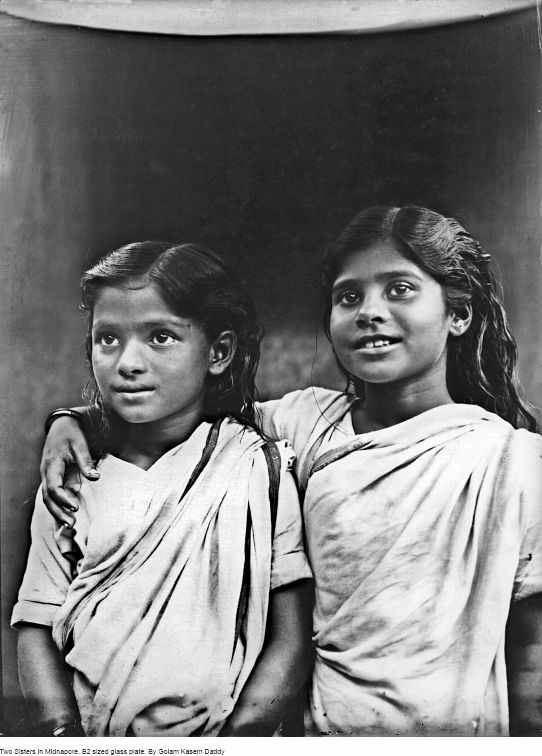
However, it was the Muhammad Ali Selims and the Hasan Saifuddin Chandans who began the break from the orthodoxy. These young photographers with an innate ability to play with light began a move where photography became more than representation. The setting up of Drik began a process of professionalisation. Contracts were signed between client and agent, photographers began to make a living, and the medium began to gain respectability. The agency Map, a cooperative of young photographers, provided strong work of social significance. But it was Pathshala, the South Asian School of photography that really began to make a difference. Abir Abdullah, ABM Akash, Azizur Rahim Peu, Munira Morshed Munni, Sameera Huq and Wahidur Rahman Khandakar were all students from the first batch, and every one of them is a major player in the photographic scene in Bangladesh. And then there was the ever young, grand old man of Bangladeshi photography, Golam Kasem (we called him Daddy). A sprightly 103 year old when he died, Daddy still ran the ‘Camera Recreation Club’ in his Indira Road Residence and organised regular contests and cultural events, where he himself would sing. More significantly, he maintained his own darkroom which he continued to use until his death. Though the Drik Library does hold a few negatives that he gave us (including glass plates dating back to 1918), the bulk of his work has been taken away by people who have promised him much but delivered little. But the best has been saved for the last. The young photographers emerging today, particularly the women, are the ones who are shaking the pillars of our ivory tower. Refusing to conform to norms, breaking the rules, improvising as they go along, they are the ones who might eventually wake up the fossils in Charukala Institute (the insititute of fine arts).

Of course none of these people exist in the the history books on photography. There is no space for their work in the festivals, no references to their style, no analysis of their work. These are the photographers who do not exist, theirs is a photographic practice that never took place. It was these invisible photographers that Chobi Mela, the Asian festival of photography was designed for. The festival was about people, and their engagement with photography. The exhibition on the liberation war of Bangladesh was a way to give back to Bangladeshis their own forgotten history. The show included not only the work of many of the legends of photojournalism (Abbas, Bruno Barbey, David Burnett, Don McCullin, Raymond Depardon, Mary Ellen Mark, Raghu Rai, Marc Riboud), but also work by our own local heroes, Anowar Hossain, Rashid Talukder and the collections of Manzoor Alam Beg. The mobile exhibitions on rickshaw vans, took the festival out of galleries into schoolgrounds, marketplaces and football fields. The workshops brought together the masters of the craft from all over the world, with young photographers from the region, hungry to explore new visual relationships. It also showcased the work of the ones who were invisible, to a photographic world that had long denied their existence. Pristine Salgado prints shared space with the work of emerging students trying to make their mark. The themes dealt with issues that were part of our social practice; Differences, Exclusion, Resistance, and the theme for Chobi Mela IV, Boundaries, were words that reso nated with the social ethos that gave rise to the festival. As participants Peter Fryer and Ozcan Yurdalan have said, they are photographic militants. And the festival is the beginning of a revolution in photography.
Fossils however are stable entities, and not generally impressed by revolutions. Despite the undeniable success of the photographic movement, while the exhibition ‘A Struggle for Democracy’, shown in their own ‘Zainul Gallery’ in Charukala Institute, had well over 400,000 visitors, even today the gallery will only show safe work that will not cause discomfort to the establishment.

Causing discomfort is what our photography has been about. And the comfortable world of fine art has been troubled the most by our vibrancy, choosing instead to bury its head, while the sand has changed to concrete. I remember my note to Bina Sarker Illias after reading the piece on contemporary arts in the prestigious magazine Galleria:
Dear Bina,
I’ve just received the issue of Gallerie ‘Two Bengals’. It is lovely to hold and has been done with the usual love and care that goes into your productions. Congratulations. It was however somewhat disconcerting to find the two introductory essays, both dealing with visual arts, to be so myopically confined to largely painting, with small diversions into three dimensional artwork.

Considering that the magazine itself takes such bold outings into lens based practice, and the enormous energy and diversity in visual arts practice today, to find two central pieces of text, so utterly ignorant of current directions makes me uncomfortable. More importantly, for Gallerie, to choose these pieces for publication suggests a degree of acceptance of such positions which I believe should be questioned. I recognise that you do not have full control over what you either commission or source. Perhaps the situation could have been salvaged by giving the by-line ‘Rip Van Winkle’ and turning it into a conceptual piece.
One does not expect spineless bureaucrats to break the mould and change how the Ekushey awards or the prime ministers’ awards are disbursed. They have little to gain from going out of line, and party politics forms too strong a bond for mere creativity to sneak through. But sadly it is the Rip Van Winkles of Shilpakala and Charukala, and the art critics of our region who are the gatekeepers, and their blinkers have restricted the nation’s vision. Of course subservience to our colonial past does rear its head. While photographers from foreign lands may win grand awards at our biennale, local photographers have never been invited to the event. From the Tracy Moffats of Australia to the Turner winners in the UK, it is the lens based practitioners who have been making the waves in the visual arts. But waves are not nearly enough. It will take a tsunami to wake the fossils we are surrounded with.

As the little prince would have looked up at the sky and searched for the star with the rose that he had planted, I look through this morass of ‘intellectuals’ and ‘artists’ and am comforted by the knowledge that Razzak Ali with his Leica M3 is somewhere out there. He at least saw the poetry in Kazi Mizanur Rahman’s skies.Shahidul Alam is Managing Director of Drik.
He had been watching for a while as I photographed the kids playing leapfrog. It was for an assignment for Oxfam and I had gone early in the morning, as much to get the dew and the morning light as to find the kids at play before their hard day as rag pickers kicked. He…