

a once-popular art, or, can the subaltern chant?
Sometimes my students come to me and ask, perhaps not in so few words but always in various degrees of panic, can the subaltern speak? Some have been known to gesture wildly—clothes dishevelled, hair astray–at Gayatri Spivak’s famous essay of that title. Usually I try to calm them down and discuss the issue with lengthy quotations from theorists whose thinking I always follow (Antonio Gramsci), often follow (Gayatri Spivak) and occasionally follow (Homi K. Bhabha). They go away looking doubtful but perhaps, or so I would like to imagine, less inclined to jump from one of the classroom windows.
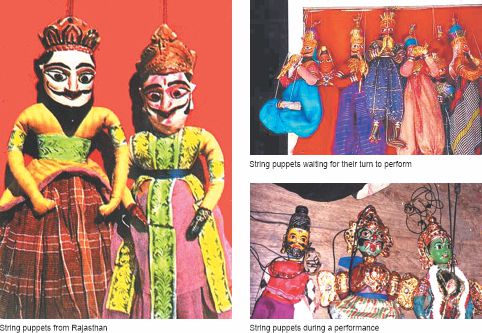
But the situation has haunted me for years now: the situation of subalternity in which I place my students by quoting texts and terms I do not always follow fully, and the look of half-comprehension that some of the faces retain as a consequence. Perhaps, I have thought in recent months, I ought to avoid the sort of discourse that places my students and me in such a situation. Perhaps I should talk to them in another manner. Perhaps I should delve into my own memories and stories and explain the matter as I see it. I could perhaps come up with the story of the Tashaywallah. But something prevents me from answering their questions in that language: the dialect of the popular, or at least the once-popular. It worries me, this something; for I come from cultures in which the weightiest, trickiest questions were very often answered in the language of stories, anecdotes, fables, myths, parables. Art used to be popular in my cultures. Even ‘theory’—or philosophical thought, anyway—was often part of popular verses, those by Kabir or by Ghalib.

Perhaps thought still circulates in popular artistic and discursive forms, and not just in the cultures I come from. Perhaps also in places like Denmark. Where I now reside one simply has to open a national daily and various bits and ends of stories, parables and myths fall into one’s lap: about the immaturity or laziness of Africa, the viciousness and violence of Islam, the cupidity and duplicity of Jews, the brutality of Third World men etc. Yes, these are crumbs and pieces of stories that I hastily brush away from my lap. But I continue to hear them on buses and trains, in offices and playgrounds. Sometimes they come as coherent discourses (say, a news item about rape by, what is stressed, a coloured immigrant; or a politician’s statement about high criminality among Somalis that overlooks their economic status) and sometimes they come as one loaded term in a peculiar context (political correctness, bra-burning, etc). But they are there, these stories that give us the ‘answers’; except that these are usually not the stories Gramsci, Spivak, Bhabha, I and (most of) my students wish to recall or retell. These are anti-stories to the stories we no longer even tell.
I am afraid that even as we are restricting ourselves to a certain kind of language, the dialects of ordinary (not ‘literary’) story telling and the languages of popular art forms have been taken over by those who specialize in various kinds of hate speech. Perhaps this is one of the reasons for the success of the ‘Right’. It has taken over the most common and basic mode of answering weighty and tricky questions: not in theoretical or scientific language, but in the language of stories, myths, anecdotes, parables, popular art. Even at the highest international level, its stories can be as complex as the epic war against Evil being waged by Bush and as simple as that unbelievable Wild West announcement: We got ‘im.

Perhaps then I ought to tell my story of the Tashaywallah next time a student comes and asks me to specify my position on the possibility of speech for the subaltern. Perhaps all of us need to return and regain that language of ordinary storytelling and popular art that we have largely abandoned to the ‘Right’, for in all languages that remains the language of the subaltern The Cry of the Tashaywallah
The silence of the extended afternoons of early summer would deepen and stretch each vendor’s cry in my small-town neighbourhood. The belated sabziwallah with his machine-gun listing of ‘fresh vegetables’; the raddiwallah with his booming claim to our waste paper and bottles; the ice-creamwallah with the staccato whump of the lid of his box; the bahroopiya with his many-faced mimicking of voices; and, what was probably the sound that brought all children running to their gates, the once-in-a-year singsong of Ramji, the puppeteer, and his wife.
Ramji claimed to come all the way from Rajasthan for the sake of us, the children, the ‘bachcha log’. That was the reason, he would explain to us, he could make it to our street only two or three times each summer. India is a big-big place, he would say, conjuring up for us images of the mustachioed and leathery Ramji walking across deserts, fording rivers and climbing snow-covered mountains, accompanied by his bundle-carrying wife in her mirror-studded skirt-cum-sari, all for the sake of pampered middle-class children like us.
Having been allowed in by our parents, he would sequester a couple of charpoys while his wife would launch into a singsong that would now be termed an advertising jingle. By arranging the charpoys parallel to each other at a distance of about six feet and draping dark cloth over and behind them, Ramji would create an impromptu stage for his play of puppets. The stage would be set as a court: two rows of lesser thrones for minor royalty to flump on would lead to a high double-throne back of centre. There would be ministers and commoners, half-naked tribals and red-coated British soldiers. But there was one little figure that remained almost overlooked until the play started with a roll of drums and vocal tracks from Ramji and his wife. This was the Tashaywallah, royal herald and common drumbeater. He sat crumpled in one corner of the stage that was, of course, the entrance to the royal court. A little, sharp-nosed, big-eyed puppet with incredibly mobile arms, drum sticks permanently affixed to them, and a colourful drum hanging from his neck, his dress would not be as glittery as that of the courtiers or as threadbare as that of the commoners (except for some obese merchants).

The play would start and the Tashaywallah would jump to his feet, his strawy arms moving in a flurry, his drum exploding into the background frenzy of dapli beats. A newcomer would be announced. Ramji and his wife would take turns giving a voice to each of the puppets. The Englishmen, for obvious reasons, never spoke: they had been muted by Ramji’s non-anglophone subalternity. The play itself would be simple, a collage of legends and stories concocted by Ramji who generally did not differentiate much between fact and fiction and employed all the tech niques of post-modernism two decades before anyone had heard of it in my part of the world. Commoners and courtiers would walk into Ramji’s court, with various problems and complaints. The King (sometimes accompanied by his queen) would pronounce judgement. Stories would range from the legend of the child who was claimed by two ‘mothers’ to petty squabbles over the ownership of land and run-away wives. Ramji’s wife would contribute a complete song or two in a dialect we could not understand and break into occasional lines of singsong rhymes. In later years, Ramji and his wife were accompanied by a baby who would contribute a wail at some crucial juncture of the play, at which Ramji’s wife would unceremoniously break her song to mutter a lullaby to the baby or to scold it.
The King, like most kings, was unable to hang on to his throne. He would quarrel with the queen and his courtiers. The princes and the Englishmen would bicker and scheme. While the commoners drummed in by the Tashaywallah with a cryptic introduction (‘Petitioner: farmer and his wife from the village of X’) would mostly ascend out of the court after their business was over, the royalty and the courtiers (given an elaborate introduction) would stay on. Petty kings would be added to the royal tamasha on the stage. With every royalty drummed in by the Tashaywallah, the bickering and the fighting would increase. The Tashaywallah would himself remain a watchful figure in his corner, seemingly aloof but quite capable of tripping the occasional minister or putting in a word or two of satirical description while heralding a stuffed prince. He would receive a clout on his head for such acts and submissively flop down in his corner.
Towards the end of Ramji’s hour-long plays, the stage would explode into the thrash of stuffed arms and the flash of tinsel swords. The princes would first fight the English soldiers, who would be conveniently disposed off; and then, after a minute or two of peace, would set about killing each other. It was in moments like these that the Tashaywallah came into his own. He would watch the ‘battle’ from his corner, dart suddenly at some prince, English officer or courtier who had humiliated him earlier on and deliver a few lightning-quick blows with his drum sticks. Ramji would play the same, though shorter, heralding ‘drum-beat’ to express the sound of wooden sticks striking a privileged head. There was something incredibly funny and impressive in the sight of the puny Tashaywallah foraying into clusters of armed aristocracy, inflicting a few choice blows on some royal offender and returning nonchalantly to his place by the ‘entrance’. We, Ramji’s bachcha log, would laugh until tears streamed down our eyes.

But sooner or later, the princes would catch on. One or more of them would grab the Tashaywallah and, after a failed attempt or two, throttle him to death. There the Tashaywallah would lie in a corner, a crumpled and lifeless heap, while the princes and their ministers continued their orgy of violence. Soon Ramji’s stage would be more clogged with more bodies than the last scene of an Elizabethan tragedy: no one would be left alive. Then, as we would be about to leave our stools and mats, one crumpled body would stir. The Tashaywallah would gather himself up into a sitting position, reiterating in his nasal, squeaky voice, ‘Abhi bhi zinda hoon! Abhi bhi zinda hoon!’ (I am still alive, I am still alive!)
I have not seen Ramji for two decades now. He stopped visiting our street in the late seventies. We had grown older and educated enough to disdain his slapstick humour, his unrefined parodies. The Tashaywallah, I later discovered, had been a stock puppet character from pre-independence (probably pre-British) times. An Indian Punch, he had cropped up in puppet plays all across North India: my aunts had seen him when they were children, so had a friend who grew up in a city a thousand kilometers away from my hometown. However, I could not spot him in the only ‘cultural festival’ puppet show that I saw recently. No research papers appear to have been written on him, though all Indian papers carry occasional articles on Punch and most literary journals discuss Bakhtin’s notion of parody. Faced with daily evidence of the fact that Ramji and his family are a species endangered by modern forms of entertainment, I nevertheless cannot help hoping that somewhere the Tashaywallah is still proclaiming his light and brittle immortality, that somewhere he is still chanting: ‘Abhi bhi zinda hoon! Abhi bhi zinda hoon!’
Tabish Khair is Associate Professor of English, University of Aarhus, Denmark. His recent books include the poetry collection, Where Parallel Lines Meet (Penguin, Delhi, 2000), and the novel, The Bus Stopped (Picador, London, 2004)
Sometimes my students come to me and ask, perhaps not in so few words but always in various degrees of panic, can the subaltern speak? Some have been known to gesture wildly—clothes dishevelled, hair astray–at Gayatri Spivak’s famous essay of that title. Usually I try to calm them down and discuss the issue with lengthy…