

women artists in europe
Europe is far from being a homogenous block culturally or politically. It is extremely varied in the range, size and diversity of its arts communities, many with unique and divergent cultural and political histories. With the expansion of the European Union, the boundaries and characteristics of a Europe are in the process of changing dramatically
In 2001, a major study was published surveying the position of women in the Arts and Media Professions in Europe. This 3-year study is rich in information from the last two decades about the share of women in the cultural labour market; their presence in decision-making roles; the numbers of scholarships, grants and awards given to women, and of women students, lecturers and professors. Important distinctions are made throughout between the ‘artistic’ roles of artists, composers and writers and the ‘non-artistic’ roles of cultural managers, gate-keepers and decision-makers as well as those of librarians, administrators, and technical support staff. Musicians and actors are placed in a separate category for ‘artistic execution/ interpretation’, drawing an important distinction between this and creative ‘authorship’ amongst women which has for too long been neglected as a distinct category in the arts. The often-notorious presence of women musicians or actresses or the study of images of women in artworks have tended to obscure questions about the position of women as creative ‘authors/artists’ in cultural politics. This report makes interesting reading as a snapshot of women’s position but also for its rather weak call for ‘gender mainstreaming’ without any legal framework, placing instead all its hopes in a general widespread education about women’s cultural production to overcome their lack of recognition within European culture.
Europe is far from being a homogenous block culturally or politically. It is extremely varied in the range, size and diversity of its arts communities, many with unique and divergent cultural and political histories. With the expansion of the European Union from 15 countries to 25 earlier this year, the boundaries and characteristics of a Europe formally divided, post-1945, into East and West are in the process of changing dramatically. In territorial terms, the new boundaries of Europe are defined as stretching from Iceland to Cyprus, from Portugal to Latvia and from Slovenia to Ireland. Russia, Belorussia, Albania, Turkey and Israel may now represent its borders and frequently enter into dialogue with their European colleagues. Comparisons across the eight European countries at the heart of this academic report (written before expansion) are rendered extremely difficult because of the inadequacy of facts or statistics collated from governments in each country because the presence of women as cultural producers has rarely been monitored. Nevertheless, when it came to looking at the level of women in the visual arts, some homogeneity appeared in the numerical presence of women as fine art students (30-60% of all students), as visual artists (40-50%), or in collections (c. 20%). A general expansion across the cultural industries was noted in the last two decades, but increases in women’s participation were attributed to a general growth, not to their increasing share in any professional group. Nevertheless what was also clear from the statistics is that as the marks of prestige in the visual arts increase the numbers of women decline in both creative and management processes. This is in keeping with a well-known sociological phenomenon about the distribution of women in professions.
The main and problematic finding of this report drew on the conclusions of an earlier and more detailed study of the position of women artists in Germany. That study presented the picture of women’s position as an inverted pyramid with regard to their advancement in the arts in so far as 60% of art students being women, compared with 3% of art professors. While the pyramidal model for women artists from students to professors offered a significant benchmark to measure the position of women and their unequal distribution in the hierarchy, it was not used as the model in all the eight European countries surveyed. Clear cultural differences remain. The situation in Czech Republic, for example, where only 31 % of art students are women but many women artists also teach, forming 36%-49% of professional artists associations, shows that the correlation between women’s position in education and their professional activity is not absolute where teaching itself is not well-paid. From my own figures for the UK, a comparison between the volume of women artists given professional opportunities or awarded a prestigious prize is often marked. In the UK Year of the Artist scheme in 2002, a publicly funded national programme of 621 visual arts residencies, 261 were given to women artists (42% – based on figures from the scheme itself). Yet, if winning the Turner Prize in the UK, the most significant award for contemporary art, was a measure of achievement, the figures for women would drop to less than 8% in the last 20 years, in spite of one year’s tokenistic all-woman shortlist. The model from Germany more significantly excludes two of the most important measures of success for any international ‘professional’ artist today: (i) the numbers of women given solo shows in kunsthalles/museums; and (ii) the level of critical attention given to women artists in arts publishing. It is my perception that the number of solo shows in kunsthalles across Europe has been rising in the 1980s and 1990s but women artists generally receive this kind of attention much later in their career than their male peers and fewer monographs are published on women as a result. Without a more factual assessment of the situation, one is left only with an anecdotal impression. A separate detailed study of the position of women artists in the galleries and museums of Dusseldorf 1969-1988 draws attention to the level of women’s representation in solo shows, often at less than 10% in major galleries and lower than their showing in group exhibitions or in less prestigious spaces. Critical attention (especially reviews, interviews and articles in art journals) is one of the key indicators of ‘artistic success’ in the contemporary art market—it is a factor more important than median income or sale prices as it largely determines these within the art market. The level of critical attention for women artists hovers at around 20% in art journals. The correspondence between this and their numbers in international biennials or large scale exhibitions is striking—indicating its role in selection procedures.
The position of women artists from Europe in international biennials is changing but the picture is uneven and subject to much variation. Women’s representation at many international biennials generally hovers at around 20% (the magical figure of their press representation), and this is often without regard to the gender of the curators or the jury selecting the works. The curator Rosa Martinez selected 60% women for her Istanbul Biennial in 1997 and this was the only time that a woman curator has succeeded in achieving such a high level of representation for women artists. A female successor to the post in 2001, Yuko Hasegawa, selected only 20% women, even though one woman artist from Korea and her work, Lee Bul’s cyborg sculptures, stood as the principal artistic concept for the whole show. However, when women curators are present the margin of women selected does usually increase. Manifesta 4: European Biennial of Contemporary Art in 2002 in Frankfurt-am-Main, Germany presented 83 projects from young artists working in Europe; of these, 31% were by women artists or mixed groups which included women artists. The curators were three women. Manifesta 5, held in 2004 in San Sebastian had a male and a female curator and selected 56 artists or groups living or working in Europe: 13 of whom were women (23%).
Documenta 11 (Kassel, 2002) (with a team of 7 international curators, among them 2 women) presented 131 artists and/or groups living and working in 34 countries around the world. Thirty-one women artists (26%) amongst 116 individual artists and 8 groups with women members (53%) amongst 15 named groups were included. While Okwui Enwezor disclaimed the exhibition’s recognised ‘prognostic’ status as a benchmark for contemporary art in the next five years, preferring to see it as ‘diagnostic’, this exhibition presented itself as ‘transnational, transgenerational and transmedial’ even though only a minority of these artists (10%) lived outside the metropolises of Europe and the USA. While the majority of the artists selected lived either in America (30, mainly from New York) or Europe (60, of which 13 were based in France, 12 in Germany, 9 in UK, 7 in Netherlands, regardless of their country of birth or family origin), this percentage was far higher amongst the women artists selected. While the work of the women artists was very diverse and included many new commissions made especially for Documenta, the representation of women artists working outside Europe or North America remained very poor. Nevertheless, these figures for Documenta should be compared to previous Documenta exhibitions. In the 1977 exhibition, for example, of the 350 artists selected, only 46 were women (c.13%). In Documenta IX , there were 186 artists whose work was selected and shown, of these only 24 were women (13%). It is also necessary to register the fact that only one woman curator, Catherine David, (Documenta X, 1997) has ever been selected as artistic director of this important contemporary art event held every five years since 1947. In that year, 30 women artists were represented amongst
107 projects (28%), but again only 2 women selected lived outside cities in Europe, USA or Israel (namely, Lygia Clark and Penny Yassour).
Having quoted at length so many statistics to give an indication of the breadth and scale of women’s representation in Europe as visual artists, it is also necessary to highlight the arguments about aesthetic merit. We are often rather patronisingly told that women’s representation in the visual arts is not a significant measure of anything, as quality in art is what counts. The category of separate and different remains as a measure of how many critics survey and discuss women artist’s work. Women artists are still treated as something ‘exceptional’ to their sex—and status claims about a ‘rare’ phenomenon ‘as a woman’ underpin many of the comments on women artists who receive significant press attention. Isn’t it time to think about ways to ‘normalise’ the situation given that the proportion of women artists is rapidly approaching their proportion in the population, even when critical reception remains biased against them? Their absence historically in discourses about contemporary art in the context of art history, however, remains a significant stumbling block for many in doing so—especially given their dependence on received knowledge. The fact that exhibitions of many women artists receive no critical coverage remains a significant problem as their work is just ignored and positioned outside ‘critical discourse’, adding more weight to the problem.
The history and legacy of European feminist art practices remains an important topic for discussion and is periodically reviewed in exhibitions and in art journals in Europe. Feminist art practices emerged in the 1970s across Europe and America both in the form of an international women’s art movement and specialist exhibitions that profiled distinct aspects of women’s art practices. An emphasis on alternative media, performance, photography, mixed media installation and video was a significant feature of this work. There was also a move away from traditional forms of painting and sculpture. Most avant garde work in contemporary art since the 1970s has also embraced these forms, but what was distinctive about feminist art practices was the approach women artists took to the exploration of the experience of women in the work. Many of the pioneers of the feminist movement have received one person retrospectives in recent years which have enabled new audiences to see and understand the important contribution they made. Women artists here include: Valie Export from Germany; Kirsten Justesen from Denmark; Marina Abramovic from former Yugoslavia and Sanja Ivekovic from Croatia.
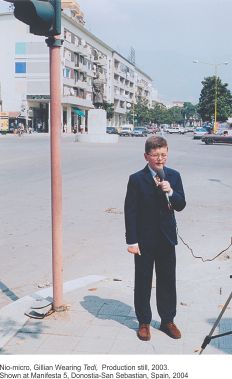
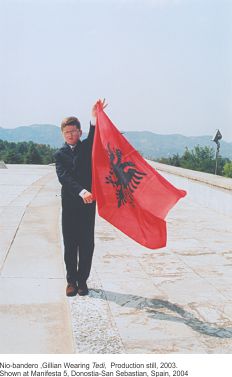
Certainly, the identification of women artists’ names with some of the leading trends in contemporary art in Europe is now quite significant, but all too frequently the separation of their work from that of their male peers occurs as the question of their ‘feminine’ approach as well as their relationship to legacies of feminism is explored. In the early 1990s, much was made of the phenomenon of Young British Artists (yBa’s), headed by the ubiquitous self-promoter, Damian Hirst. Surrounding him was a close circle of friends and acquaintances, who participated in early exhibitions and whose work was rapidly purchased by the collector Charles Saatchi. Among the women artists in this group were Sarah Lucas, Gillian Wearing, Sam Taylor-Wood, Georgina Starr and Tracey Emin—all of them claiming a high level of visibility in the media, in solo exhibitions in the UK and abroad and in international exhibitions of British art in the last 14 years. Gillian Wearing’s recent video work ‘Tedi’ focuses on a young Albanian boy, who delivers a lecture in the form of a guided tour of his city’s Socialist/ Nationalist heritage. It is filmed in a dead-pan realist way, a form of documentary, but the short scenes and the sequences as well as the sub-titles in English highlight both the irony of the speech and the ideology behind it. This kind of approach, a mismatch between what is seen and what is heard or understood characterises much of the work of this group. Tracey Emin’s tent, for example—innocent but highly charged—on which she has sewn the names of all the people she ever slept with—from childhood friends to her adult partners, is typical of this as well. In June 2004 this work and others from Saatchi’s collection were destroyed in a serious warehouse fire in London, where many works stored by the transport company Momart were housed.
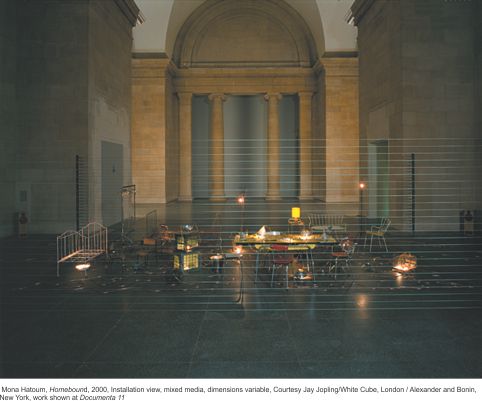
Among the women whose work was purchased by Saatchi at around the same time and promoted by the British Council as part of the same phenomenon were: Rachel Whiteread, Anya Gallacio, Ceal Floyer and Mona Hatoum. The group displays a much more formal approach to sculpture and materials, and a post-conceptual quality marks its works. Anya Gallacio, for example, makes installations with fresh flowers, expecting that they will perish during the course of the exhibition. Rachel Whiteread makes negative monochrome casts of a variety of objects from entire rooms—bookshelves (the subject of her Memorial to the Holocaust in Berlin), the undersides of chairs, plinths or mattresses. Most of those named above have been nominated for the Turner prize. However, at the British pavillion in Venice, only Rachel Whiteread’s work has been shown, in contrast to the numbers of men from the same circle: Gary Hume, Mark Wallinger and Chris Ofili. The British Council’s ‘export’ exhibitions of young British art, however, contained considerably higher numbers of women in their group exhibitions.
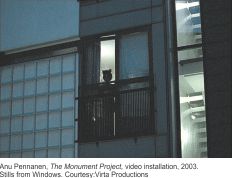
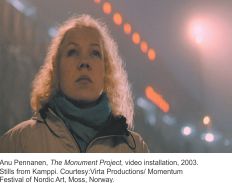
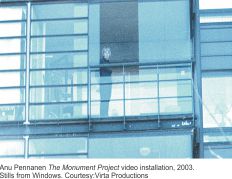
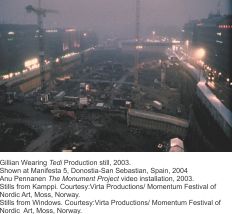
In the 1990s, a similar phenomenon was created in Scandanavia called the ‘Nordic miracle’. This too was part of a promotional ‘export’ drive for art from the region by state-funded agencies. Simon Sheikh has characterised the video from this region as a form of ‘bedroom culture’, in an attempt to situate the way many artists used videos to create individual scenarios and performed live to camera. Young women artists, particularly video and performance artists, featured strongly in the trend: Eija-Liisa Ahtila; Annika Lundgren, Lisa Strombeck, Ann-Sofi Siden; as well as painters like Cecilia Edefalk and Simone Aaaberg Kaern. Many of the videos were shown in Venice at the Scandanavian pavillion and have been the subject of several impressive touring shows around Europe in recent years. A critical examination of facets of modern life and a certain inner retrospection characterise many of the works. Anu Pennanen’s two-part video installation,” The Monument Project” (2003) achieved the distinction of being selected for both Manifesta 5 in Donostia-San Sebastian, Spain and for Momentum: Nordic Festival of Art in Moss, Norway, this year. It is a continuation of the self-reflective and often slightly melancholic character of much of the video making associated with the Nordic Miracle: but especially the surreal qualities of surveillance upon women characters in the work of Ann Sofi-Siden and Eija-Liisa Ahtila. Pennanen’s video follows the path of a blind actress moving through the city at night. While one projection tracks her movements, a second set of projections traces the appearance of people in windows at night. The question of who is watching whom or being watched as well as what they see in the city at night is poetically raised.
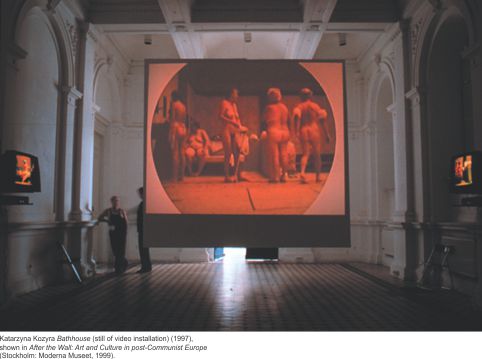
Attempts to analyse again the relationships between Eastern and Western Europe after the fall of the Berlin Wall (1989) and in the post-Socialism era have led many European kunsthalles to organise group exhibitions of Eastern European art from the last three decades, such as: After the Wall at Moderna Museet in Stockholm (1999-2000) and Davaj! at MAK, Vienna (2002). Women artists have been a strong and significant feature of this reassessment of Eastern European contemporary art. Kataryna Kozyra, from Poland (a video artist whose BathHouse series received international acclaim), Elena Kovylina from Russia (performance/happenings) and Sanja Ivekovic from Croatia (video/installation artist) are some of the most significant women artists. Several countries in Eastern Europe have also started to re-examine the history of women artists in major historical exhibitions, frequently with a section on contemporary women artists: Women’s Art in Hungary (Budapest: Ernst Museum, 2002); Femme Art (Moscow: New Tretyakov Gallery: 2002) in Russia.
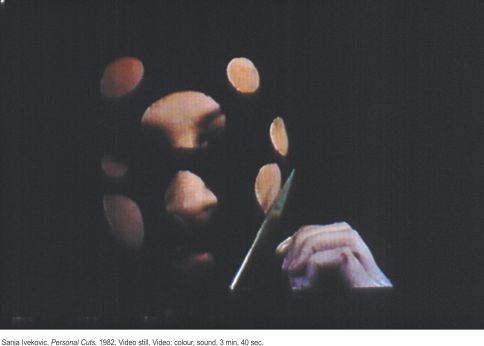
An influential theorist about contemporary art, Nicolas Bourriaud, argues that in order to discuss art today it is important to recognise that the formal approach to the art object which characterised modernism has lost its importance in the situations, installations and almost virtual works created today by many artists. His book Relational Aesthetics and his theory of post-production aesthetics form the basis for his personal curatorial practice as Director of the Palais de Tokyo in Paris. ‘Relational Aesthetics’ is a model of sociability for artworks which invite dialogue and participation from their audiences and is to be judged ‘on the basis of the inter-human relations which they represent, produce and prompt’. Bourriaud cites a handful of artists as his examples: Felix Gonzales-Torres, Rirkrit Tiravanija, Phillipe Parreno, Carsten Höller, Liam Gillick, Maurizio Cattalan, and includes several women, Christine Hill, Angela Bulloch, Dominique Gonzalez-Foerster and Vanessa Beecroft. No style or formula unites this group of artists and it could be said that although they initiate situations in their exhibitions and installations, what is also suppressed—as Bourriaud’s analysis bears out—is politics, except in an ‘art world’ sense as a revolution in method. It is significant that so many of the works Bourriaud discusses are formal and offer innovative interventions, but works with more direct critical, social and political import which challenge ideological assumptions are excluded from his view. Here, Dominique Gonzalez-Foerster is praised for her exhibitions devoted to the biographies of her gallery owners: ‘where the main factors are provided in the forms of ‘hints’ or ‘clues’ by the person commissioning the work, [which] conjure up the portrait commission’ in a dispersed collection of objects and memorabilia from their lives. Perhaps it is worth remembering here a work made 20 years earlier which documented people’s lives and routines in an effort to provide a social critique of their experience from a feminist perspective: Sanja Ivekovic’s “Personal Cuts” (1982), a video portrait in which extracts from propaganda films of the former Yugoslavia (taken from TV) are juxtaposed with the image of the artist’s face as she cuts away sections of a balaclava. Her action reveals the ‘blanketing’ effect of such ideologies but also her resistance to them. Political engagement with social issues or political and personal histories is not rare amongst European artists today but the discussion of its impact and effects, especially in terms of feminism, has shifted.
Katy Deepwell is Editor of n.paradoxa: international feminist art journal
Europe is far from being a homogenous block culturally or politically. It is extremely varied in the range, size and diversity of its arts communities, many with unique and divergent cultural and political histories. With the expansion of the European Union, the boundaries and characteristics of a Europe are in the process of changing dramatically…