

the enduring allure of vintage photographs
It all started quite by an accident. In 1981, while visiting the Metropolitan Museum of Art in New York, USA, where the India Festival was being held, I came across some remarkable vintage photographs of British and Princely Indian states on display. As I stood transfixed in front of a photograph of an Indian potentate of yore, a gorgeously attired old Maharajah who stared balefully at the camera, a thought struck me. Would it be possible to locate, retrieve, collect, identify and faithfully document vintage photographs in Bangladesh? I was, of course, aware that given the climatic condition in our deltaic country, which is averse to any sort of preservation, let alone survival photographs, it would be difficult to find them in a good condition
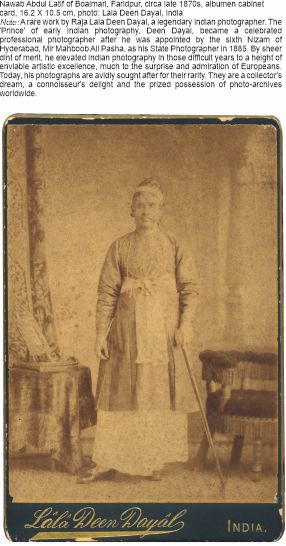

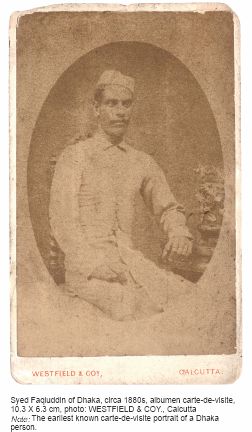
The idea then lay dormant in my mind for over a decade. From 1997 onwards, by stages, I actively started working on self-initiated projects of rediscovering, restoring, researching and writing the photo-history of vintage photographs I managed to locate mostly in private collections. Most of these photograph I come across are invariably in varying stages of damage and decay. Sadly enough, this primarily due to the callousness and lack of the application of basic preservation techniques by the owners. Consequently, valuable photographic collections have perished in private hands over the decades, even in institutions, where I found them kept in utter neglect. Many a rare photograph could have been saved with even rudimentary attention and care.
The painstaking task of locating, restoring and research of vintage photograph has become a consuming passion of mine. The hard work that went into producing the first manuscript finally paid off in 2003 through a generous corporate sponsorship, culminating in the publication of a limited edition coffee-table book, the first ever comprehensive catalogue in the country on vintage photograph, entitled: Rare Photographs of Eastern Bengal (1880 — 1940), an array of 122 old photographs thematically arranged in relevant chapters with photo captions and explanatory text.

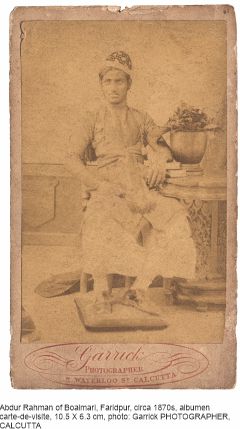
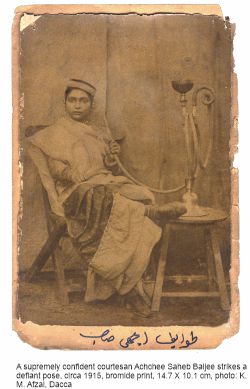
Since the publication of my first book, I have not looked back. Although I am not even an amateur photographer, I remain interested in photography primarily as a form of fine art. My quest for vintage photographs, in particular, is for reasons historical, sociological and aesthetical.
I am in the process of setting up a vintage photo archive and website, which I believe shall facilitate academics, research students, the curious and even armchair aficionados, providing them with visual glimpses and textual information into our social history. Through dissemination of specialized information, the intent is to introduce a new agenda in academic / intellectual discourse pertaining to cultural studies. As interpretation of images gradually move away from the accepted sphere of photography as a typical social document and enter the precincts of a more fluid and relatively new discourse. It is a need to exercise restraint. We should try to to ensure that an archetypical work does not become a stereotype when seen through the eyes of a social/cultural historian or a critical theorist. My concern is to dissuade the viewer/reader, particularly those uninitiated and thus gullible, to be careful and not get unduly influenced by authors whose works tend to constitute discursive meaning of images. I remain convinced that in most instances it was never really the intention of the photographer to make his work unnecessarily controversial. For example, my entire collection of hundreds of vintage photograph retrieved from private collections, encompassing a broad spectrum of visual images, are actually snapshots, basically acts of self-memorialization of people who got caught up in the excitement at the advent photography in the colonial era. There is no need of reading too much or too little into them. It is, of course, not to suspend objective discourse but to strike a balance in our judgment. In the end, these rare photographs should be celebrated and enjoy as photographic art of the past.
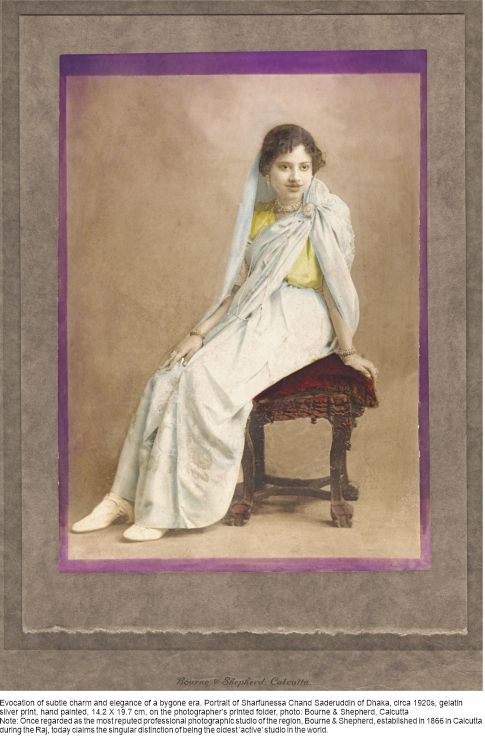
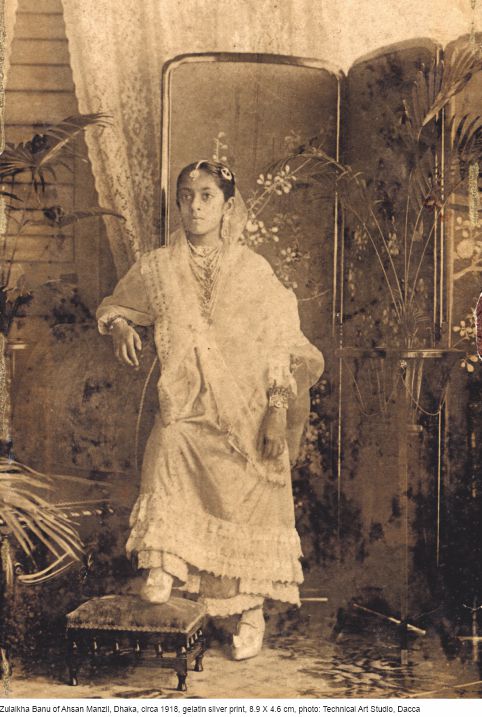
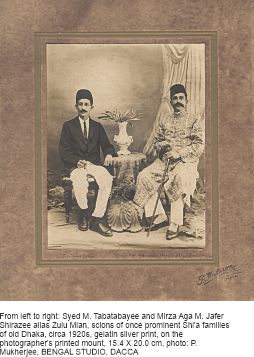
Restoration and thus conservation of vintage photographs is not an institutional priority in our country. It is somewhat understandable. Although photographic collections have existed since the 19th century, the willingness to create a museum / archival photographic collection at the level of a drawing or painting collection is recent—may be only decades old, depending upon the country. Photography is a relatively new medium. To an extent, it is only natural that its appreciation as a form of art had lagged behind other disciplines like painting or drawing, which have been researched, appreciated and displayed for centuries. Therefore, compared to other forms of image making, photographs still represent a small portion of collections in archives and museums worldwide.
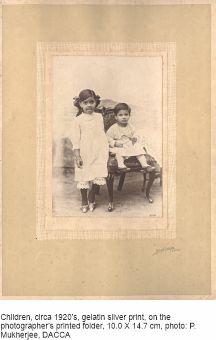
Vintage Photographic restoration and conservation —an education in the field—must strike a balance between the treatment of individual works and more holistic approaches to entire collections. What must be preserved for posterity are individual photos of varying value and lasting quality and large photographic collections that collectively need specialized care.
I have made it my mission to envision, revision and reconstruct the past from assorted clusters of damaged vintage photographs—the repository of lost memories. It gives one intrinsic satisfaction to be able to restore and write the photo-history of these compelling testaments of a bygone era. Perhaps, the best tribute to these immortal images is to let them do their own narration!
Waqar A. Khan is a writer on art and cultural heritage
It all started quite by an accident. In 1981, while visiting the Metropolitan Museum of Art in New York, USA, where the India Festival was being held, I came across some remarkable vintage photographs of British and Princely Indian states on display. As I stood transfixed in front of a photograph of an Indian potentate…