
rokeya sultana seeking freedom in nature
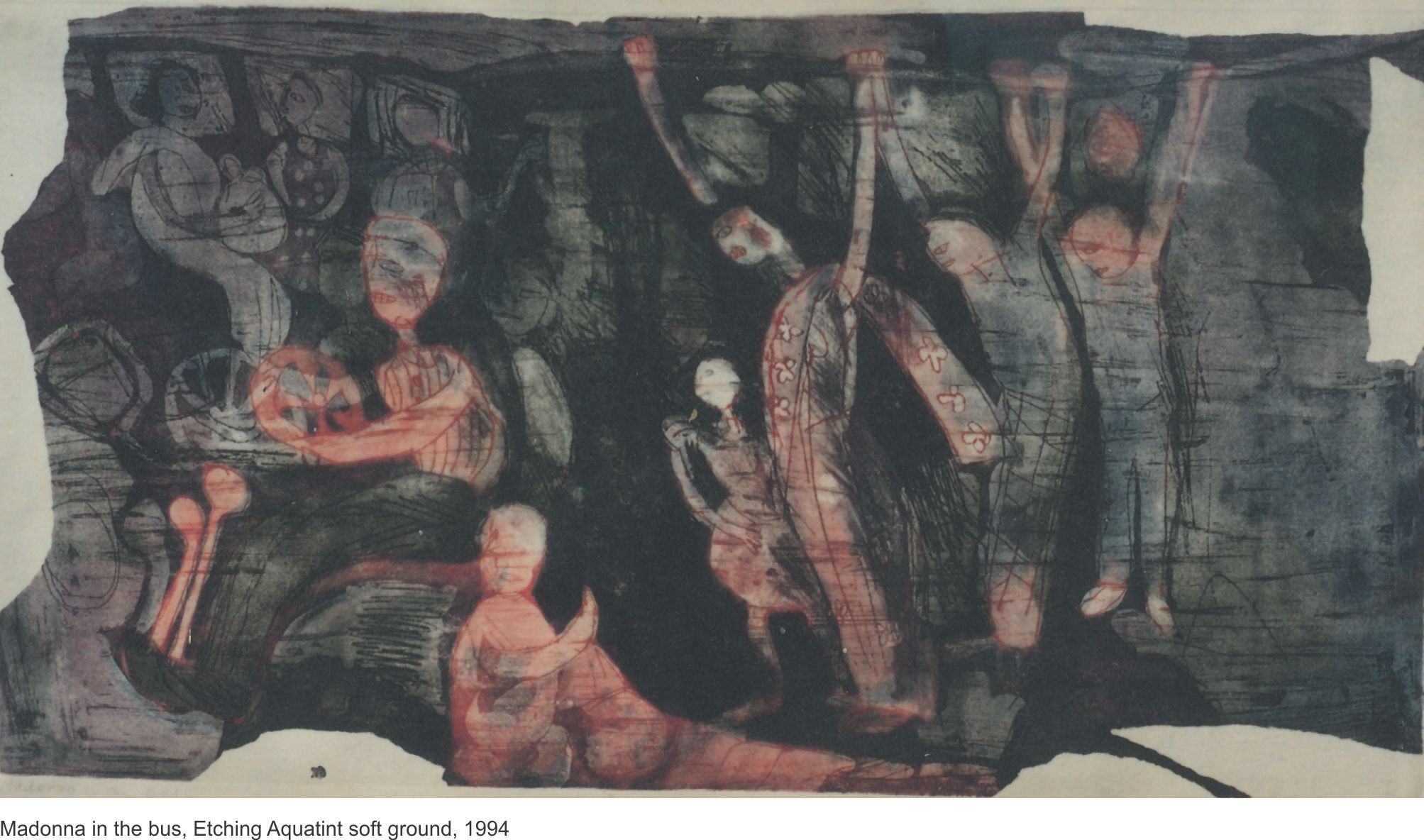
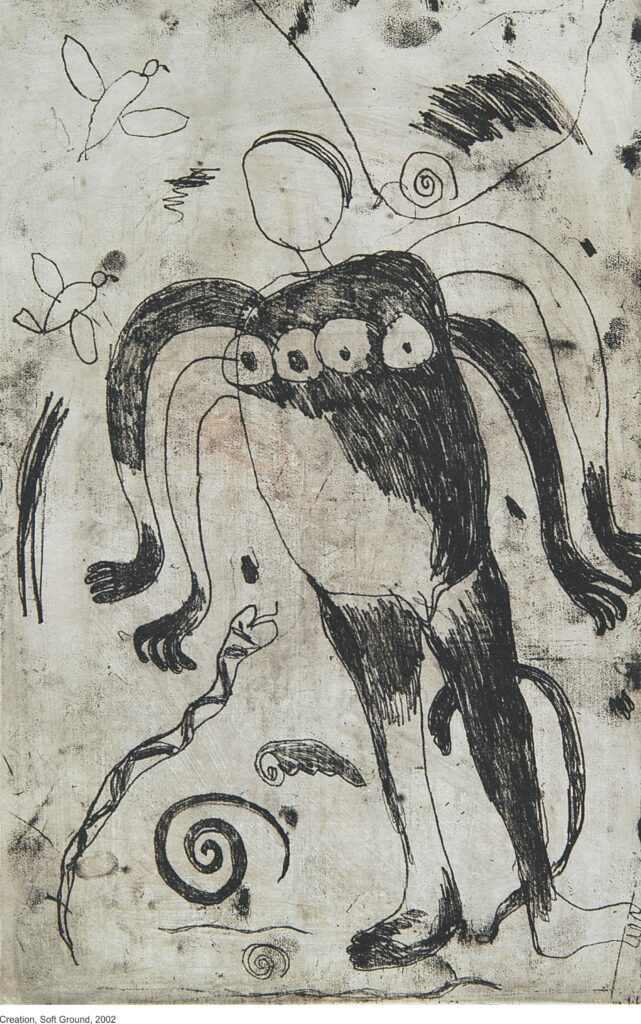
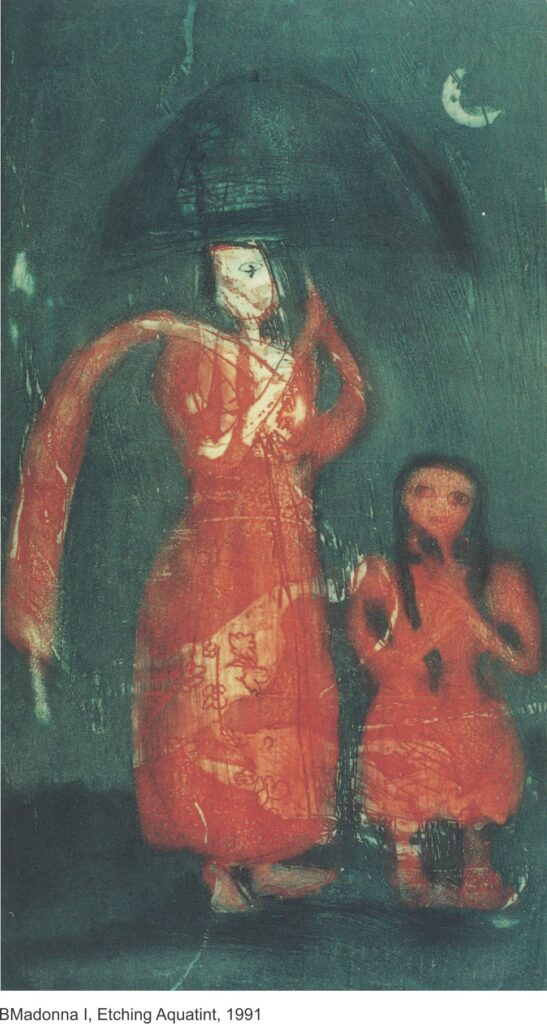
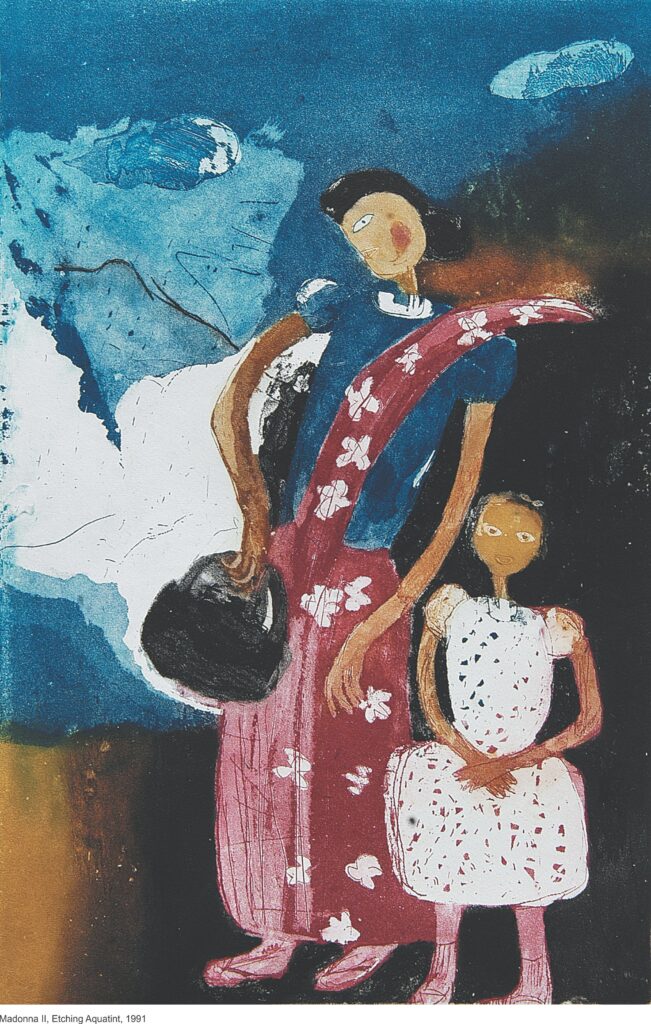
Rokeya Sultana is widely acknowledged to be one of the most gifted of contemporary Bangladeshi artists. Her canvas has a wonderful quietness, depth and lyricism. She was born in 1958 in Chittagong, Bangladesh and did her BFA from the Institute of Fine Arts, Dhaka and has an MFA from Vishwa Bharati University at Shantiniketan, India. She has exhibited widely in Asia, Europe and America and won numerous prizes including the Grand Prize at the 3rd Bharat Bhaban International Print Biennial, India in 1995 and the Bangladesh Silpakala Academy National Award for Best Work in 1998 and 2002. She is currently teaching print-making at the Institute of Fine Arts, University of Dhaka. Jamini Executive Editor Ziaul Karim recently spoke to Rokeya Sultana at her studio in Dhaka on various aspects of her life and work.
Looking back, what do you think are the
factors that inspired you to take to art?
Well, I don’t have an exciting story to tell as many artists do. Our family was a cultured one, like many other Bengali middle-class families. Culture was also something in the air. I watched in great amazement my two elder sisters dabbling in drawing. They drew their inspiration from the simple and bold line drawings of Abanindranath Tagore and Nandalal Bose. We were in Rawalpindi then. We knew artist Syed Jahangir who lived there at the time. All in all, the atmosphere that I grew up in was not that alien to visual art.
But when did you decide to
take up art seriously?
By the time I finished my high school we moved to Dhaka. Everyone in the family knew about my passion for art and during family gatherings my relations used to say, ‘Since you have a knack for art why not get yourself admitted to Dhaka Art College?’ Then one day I told my parents about my desire to get into Art College. There was initial resistance but they softened after intense persuasion. I thus finally managed to make it to Dhaka Art College. But the first two years there were nightmarish. We had to work outdoors after college and remain outside until sunset and that caused a furore in the family. You see, a Bengali Muslim girl staying outside until sunset was quite unthinkable in Dhaka in the 1970s. It was very difficult for my family to accept this situation. But I hung on. With awards and good grades coming my way, I could eventually prove my worth and pacify my parents. Of course in the 1970s, Dhaka was a much safer city and a girl like me could move freely without the fear of arousing the ire of fundamentalists!
How did you negotiate the resistance from
your family?
If you can’t find pleasure in what you do, work will always be a burden to you. I can see now that the intense pleasure that I derived from work helped me keep my nose above water. That the biggest achievement in a girl’s life was to be married off to a suitable boy was the notion prevalent in society. But I couldn’t accept this. Someone inside me always kept telling me that I could be what I wanted to be. Indeed, resistance and gender discrimination helped me to acquire a steely determination to achieve something and prove my worth. You are acclaimed as a print-maker. When printmaking was introduced in Dhaka Art College people hardly had any idea about the medium. What inspired you to take up printmaking?
It was Shahid Kabir who inspired me to take up printmaking. He was one of the most popular teachers. He used to tell us ‘If you love to experiment then print-making is the right department for you.’ I believed him and was amply rewarded. And I found the department to be an exciting place. However, the first couple of years of printmaking were quite baffling for me. My encounter with all sorts of printmaking techniques was mind-boggling and mastering all these techniques proved to be nightmarish. But it was also refreshing creatively and in the end I felt my thirst for experimentation fulfilled.
Tell us about your influences and your struggle to find your own idiom.
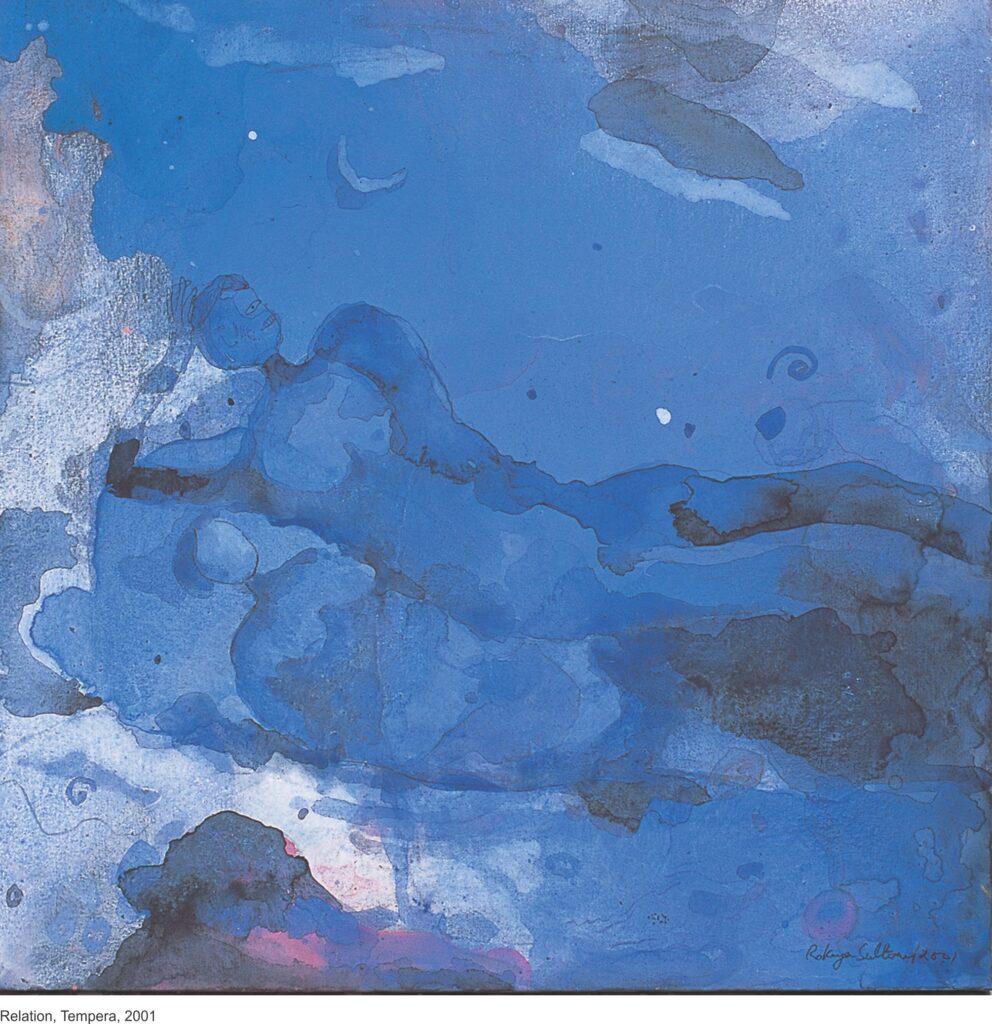
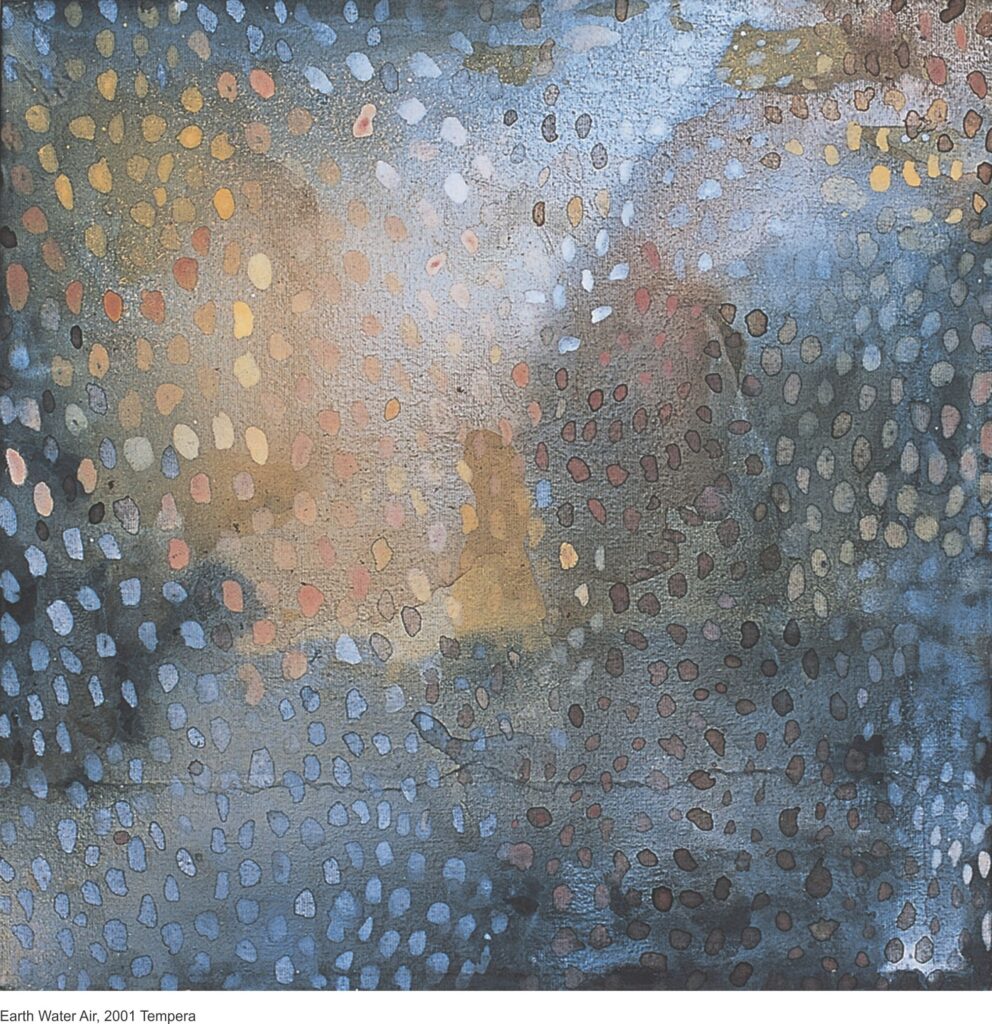
It is very difficult for me to name a particular artist who has influenced me most. At different phases of my life I have been drawn to different artists. Artists of contrasting spirit and approach have caught my fancy. I am eclectic in my taste and that has shaped the language of my expression. For example, I am a great fan of Marc Chagall but Van Gogh is my all-time favourite. Dali excites me while Monet is a treat too. If I have to credit anything it is nature that has been the fountain of my creative imagination. In moments of pain or in the ebb and flow of feelings and moods, nature has always been a great solace to me. I am also very sensitive to seasonal variations in nature. I became particularly aware of nature while I was in Vishwa Bharati University doing my MFA in early 1980s. The pensive landscape of Shantiniketan with its winding rivers, tall palm trees, swamps and meadows sent me on a spiritual journey–a journey where I could discover myself. I began to ask myself–who am I? What did I want to do? I began to inquire into the why and how of things. At the same time we were taught Zen and Taoism and were exposed to Chinese scroll painting. The way the Chinese philosophers and mystics interpreted nature was a revelation. Gradually, I began to feel a new bond with nature, a spiritual affinity with it. I was also extremely lucky to have great teachers in Lalu Prasad Shau, Somnath Hore and Sanat Kar, who stoked my imagination.
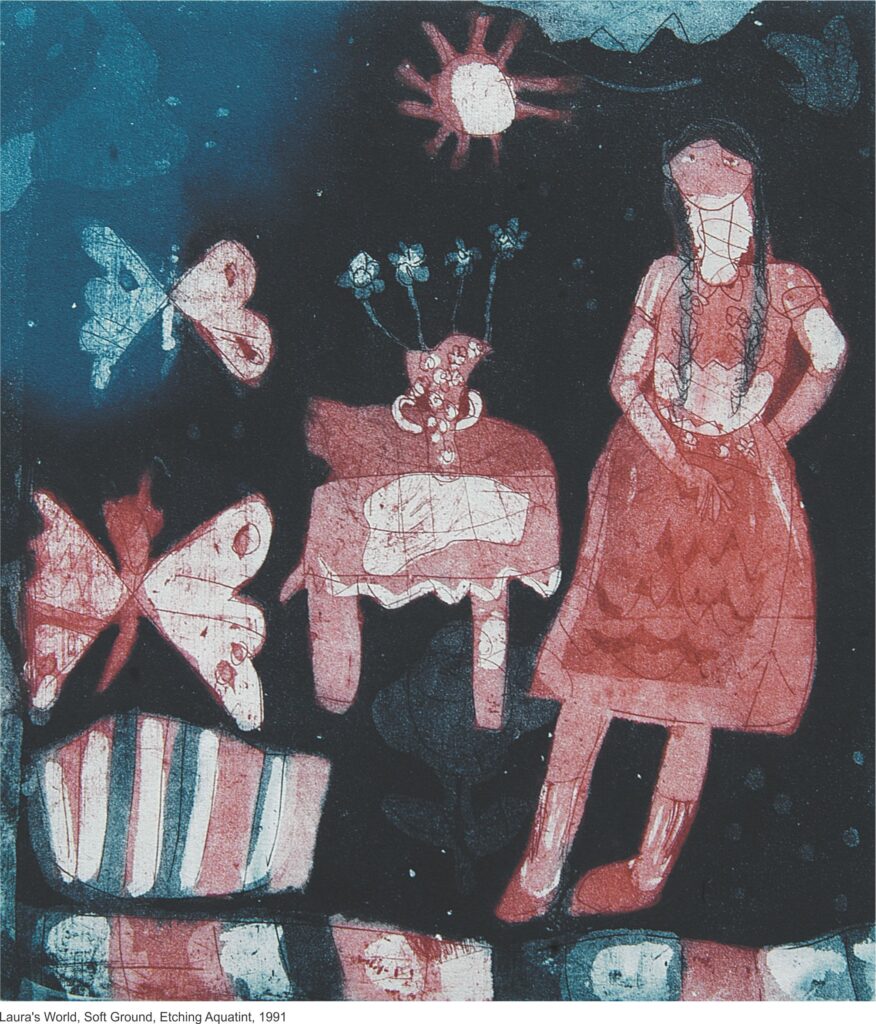
I was particularly fond of Lalu Prasad Shau, perhaps because of his somewhat abstract landscape paintings. I thought I had found the path that I had to follow. I then began to pursue the line that I had charted in my mind. It dawned upon me while following Lalu Prasad and drawing and sketching Shantiniketan landscapes that it was in nature that I had to seek my freedom and my language of expression. What I want to achieve in my work is the spontaneity of nature.
The experience that your canvas offers is very calming. Even when you portray inequalities of society or voice your concern over gender discrimination the images are not startling. Perhaps you do not like to shock your audience.
For me art is an indirect comment. If you want to get your statement immediately across to the audience you can draw a poster rather than do a painting. Art should be contemplative. When you approach art you are approaching something transcendental. I apply the term ‘discovery’ to convey the experience of art. Experiencing art should be a process rather than an act. One slowly absorbs the language of art, feels the subtleties of a work and then contemplates it. In other words, you will discover the meaning of artistic expression at your own pace and will not be dictated by the artist. Painting is like meditation. You go into a trance while working. An internal dialogue takes place with my subject when I work and I would like this dialogue to continue with my audience. Do you then need an uninterrupted dialogue with your subject? What I mean to say is do you work in solitude?
Absolutely. I do not even want the fan switched on while I work. An intimate bonding with the canvas and the subject is essential for me to give expression to my ideas. I am talking about a kind of union that the Sufis or mystics seek with the divine spirit.
Do you do sketches of your ideas and then elaborate them on your canvas? How does the chemistry work in your case?
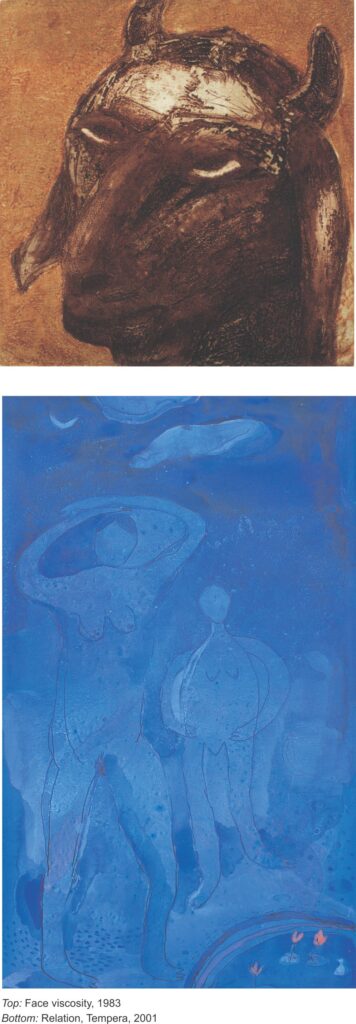
Sketches are for me what rewaz or practice is for a musician. There is a big difference between practicing at home and singing for an audience. If I practice by sketching at home then my canvas is what I work on for my audience. But I don’t develop what I doodle on my sketchbook. My sketchbook is the record of the uninterrupted flow of my emotion while my canvas is the expression of my meditation. And I do not want to control the outburst of my emotions while etching. Again I do not like to chain myself to my primary sketches. Primary sketches, or in the words of Van Gogh, studies, once done, stay with me: they evolve and grow in my thoughts and mature till they get their fullest expression on my canvas. Do activities of everyday life find a place in
your canvas too?
Yes. For example, I do yoga nowadays and my experience with yoga and postures relating to the exercise are finding expression on my canvas. My early work shows a caring mother trying to protect her child. Now you will find two images of grownup girls recurring in my work. I have seen my daughter grow up, have shared her anxieties and her worries. Her journey into womanhood and the attending psychological situation has made a deep impression on my work. Watching her I realized how identical our struggles are; in fact she is the mirror image of me in my youth.
From the very beginning your canvas tends to tell stories. However, in your recent series Water, Air, and Earth you have abandoned narration. This series is a philosophical journey to search for primordial stuff; it goes beyond the surface to the essence of materiality. Also, I have been trying to understand the harmony of nature and the series is an expression of my understanding of nature. I searched for the chemistry of nature’s harmony and tried to see how these three basic elements complement each other. I think my exploration of nature, which began in Shantiniketan has now reached a metaphysical level and aims to look beyond matter and into its essence.
Rokeya Sultana is widely acknowledged to be one of the most gifted of contemporary Bangladeshi artists. Her canvas has a wonderful quietness, depth and lyricism. She was born in 1958 in Chittagong, Bangladesh and did her BFA from the Institute of Fine Arts, Dhaka and has an MFA from Vishwa Bharati University at Shantiniketan, India.…