

questing for harmony
Noazesh Ahmed has been pursuing photography as an art form for a long time now. The earliest of his photographs on display in his solo exhibition, ‘Quest for Harmony’, held from July 11 to July 24, 2005 at the Bengal Gallery of Fine Arts (Bengal Shilpalaya), is a black and white piece titled, ‘Struggle’, produced in 1947 when Ahmed was only twelve years old. The exhibition also features over thirty photographs he has taken in this new millennium and includes at least one photograph that he took earlier this year. In all, one hundred and twenty-four works were represented in the show. The evidence they provide is compelling: Ahmed has been photographing his world devotedly and competently for almost six decades now

`struggle’ is a vivid representation of men at work–a favorite theme. It reveals Ahmed’s humanism and shows that the twelve-year-old had already decided to commit himself to photographing everyday life artistically. However, he went on to become a student of plant genetics and was awarded a Ph. D. in the subject by the University of Wisconsin in 1957. He then went on to do research and work as a successful professional agro-botanist, at first in the Tea Research Institute in Sylhet, Bangladesh, and then as an international consultant all over Southeast Asia, before retiring and settling down in Dhaka in 1998. Not surprisingly, the photographs on display in ‘Quest for Harmony’ testify to the wealth of experience accumulated from the places he visited and the people he met. They are testimony too to his commitment to his craft, his humanism, cosmopolitanism, and love of nature. At the same time the photographs reveal that he is one of a breed of photographers who are, thankfully, always around us: the dedicated amateur, pursuing photography not as a profession but as an avocation that comes from an innate love of the beautiful, an inner harmony, and the ability to frame the quotidian imaginatively.
It is good to have what, in effect, is a major retrospective of this distinguished amateur photographer, keen-eyed scientist, lover of the arts and of the beauty of his country, and of the world and its peoples. Viewing the exhibition is like getting privileged access to a distinctive album assembled from a lifetime of appreciation of everyday life, nature’s bounty, and those transcendent moments that illuminate life.
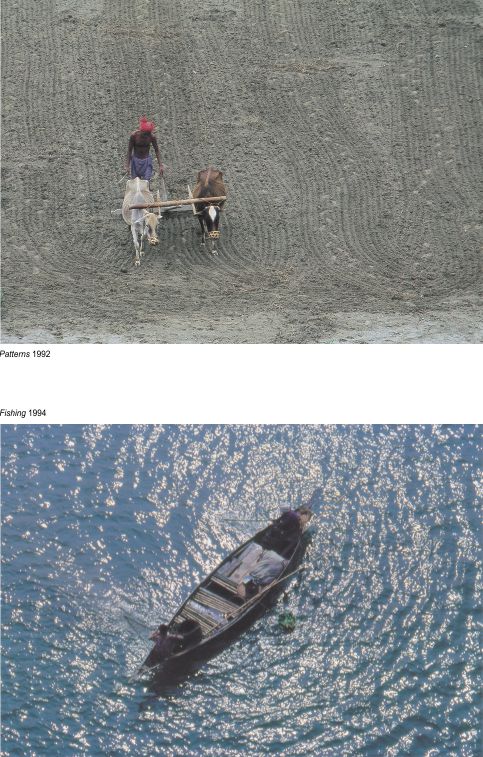
Among the earliest photographs on view are those selected from Ahmed’s sojourn in the United States where he spent five years doing graduate studies. There are photographs here that take us to the lush green loveliness of the campus where he studied, of students relaxing, and of a toddler and his parent—Ahmed has an affectionate eye for soothing sights everywhere and treasures tranquil moments. An enthusiastic traveller, he also has taken impressive photographs of places he later visited all over the world. His exhibition thus features shots of the solemnity of days and nights in Hiroshima, the serenity of tea gardens in Japan, the mystic moments surrounding Buddhist rituals in that country, and the fabulous structures of Samarkand. Readers of Jamini may remember here his magical photographs of Thailand’s Loy Krathong festival, featured in the February 2004 issue of our magazine. However, these photographs are not on view in the present exhibition, reminding one that it only displays a selection of the impressive work he has done over the years.
Ahmed’s strengths as a photographer include his ability to capture in the frames of his camera the poetry of ordinary life. Like many dedicated practitioners of the art of photography, he is able to show us through his works that the transient moment can be made vivid and unforgettable when framed in a perfectly taken photograph. On the other hand, Ahmed is also committed to painterly effects in his photographs and this no doubt will explain his preference for colour photography. In fact, there are only three black and white photographs included in this exhibition, indicating not only Ahmed’s disinclination for the medium but also his romantic and colour-filled cast of mind.
Among the memorable photographs on view of ordinary people and everyday moments made vivid by the photographer-artist is the portrait of the kashundi vendor, a flute player, a labourer emerging from a brick-filled landscape, a plowman tilling the field, country roads, decaying walls, cow washing, boats being pulled by men with ropes, a fisherman flinging his net, a basket weaver, riverscapes, country fairs, and village life. Noazesh loves the Bangladeshi countryside and life in its byways and its rivers and is able to capture the pictorial qualities of rural life with ease in his photographs. Indeed, Noazesh’s love of Bangladeshi culture is evident in all phases of his career. The works of Rabindranath Tagore and Jibananda Das—the two poets of Bengal he affiliates himself with most—inspire him again and again. Like Rabindranath he seems to be enamored of the mighty Padma and the simple people inhabiting the river’s banks. Like Jibananada, he likes the winding rivers of the lower Gangetic plain, late autumnal landscapes, and faces of women that can possess us for eternity. The exhibition, in fact, features at least a few of the photographs he has published in his books of photographs based on images culled from his reading of these two great writers of Bengal, Rabindranath Tagore’s Chinnapatra and On the Banks of the Dhanshiri.
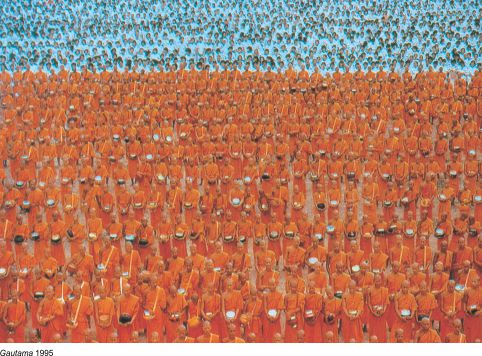
On the whole, Ahmed prefers not to focus on the dark sides of life. Images of urban squalor or moments of stress or pain do not detain him. This, no doubt, is one of the reasons, why he prefers colour photography to works done in black and white. This, also, may explain why in the few photographs where he is bent on experimenting, he strives for painterly effects, as in the significantly titled, ‘Harmony of Colours’ or ‘Two Sisters’. Whenever he appears to be in a mood to experiment, he has the eye only to capture vivid patterns, splashes of colour, geometric forms, and expressionistic textures
One of the few photographs in the exhibition that shows a face riven by stress, is the significantly titled photomontage, ‘Let me Live’. Even in capturing the ravages of war and the traumas they create in our lives, he prefers to affirm life; Ahmed is, quintessentially, a photographer questing for rhythm and harmony all through his eventful life.
Fakrul Alam is member of the Jamini editorial board
Noazesh Ahmed has been pursuing photography as an art form for a long time now. The earliest of his photographs on display in his solo exhibition, ‘Quest for Harmony’, held from July 11 to July 24, 2005 at the Bengal Gallery of Fine Arts (Bengal Shilpalaya), is a black and white piece titled, ‘Struggle’, produced…