

illusions of nearness
A man from the BBC asked me to show him my ‘favourite parts of Calcutta’; this was towards a year-end programme on cities of the world. The idea was to locate me in the whirl of the very street I was talking about, and catch the sounds on tape; the sort of verisimilitude that the radio used to be so good at before the chatter of the small screen entered the household.
1. Miss Havisham’s House
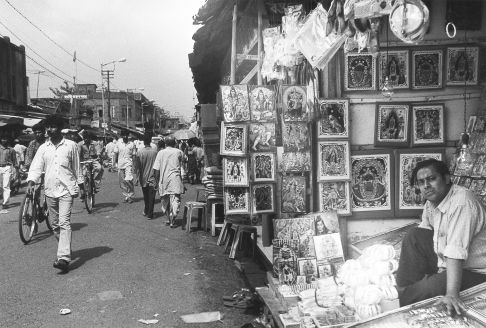
I decided to take him to the North, beyond Mahajati Sadhan, into a tiny lane on the left whose entrance was signposted, coincidentally for those about to make a programme for the radio, by a shop called Betar Mahal, a place for ‘wireless’ repairs. This was not one of my familiar worlds; every time I came here, I would be partly appalled and partly wonder-struck. I could have taken him to the area in Bhowanipur I had written of so often in my fiction; but that would have been too easy. Even the appeal of that street in South Calcutta had been deceptive. The first Bengali readers of my first novel had been convinced it was set in North Calcutta. I had gradually realized that it was not a sense of home I was trying to articulate in my writings, as I had earlier thought I was, but a sense of elsewhere.
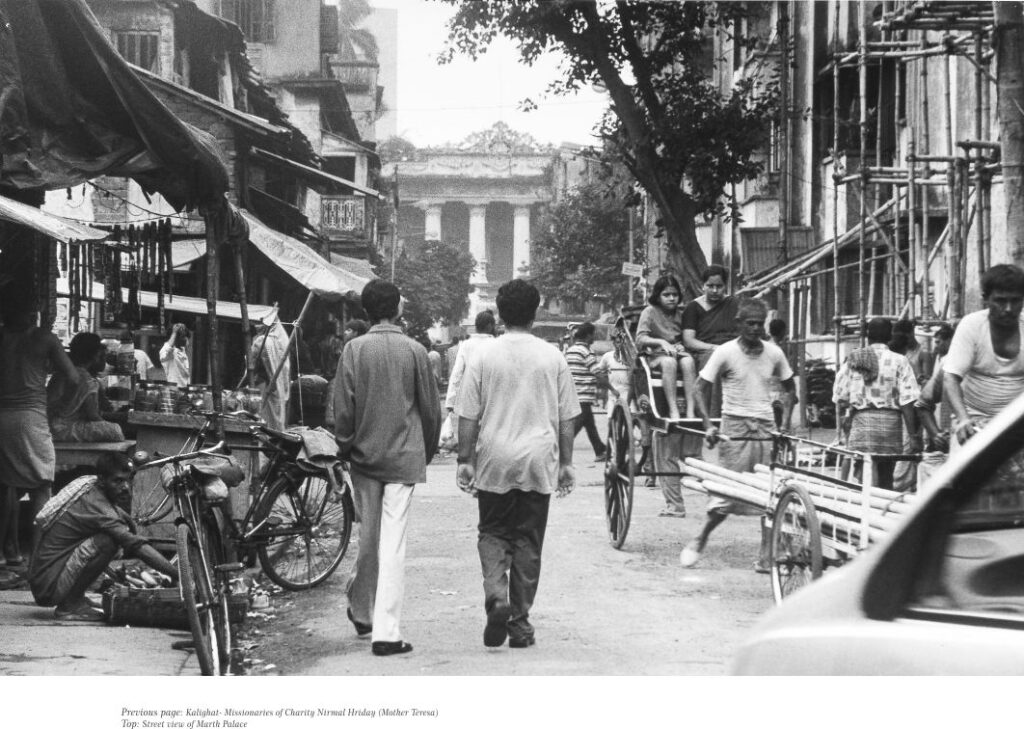
Instead of turning left at Betar Mahal, we turned into the lane before it, which led straight to Mullickbari, the Marble Palace. This was part of my reason for coming here: this strange house. It was a house¾if you could call this immense, uncommunicative building a ‘house’¾whose existence I’d been unaware of on my many visits to this city as a child. When I heard of it later, I felt no curiosity about it. It was only after I moved to Calcutta in 1999, and made my wife’s childhood a sort of guide to my new life in the city, that I began to visit cemeteries and places in her company that I’d never known before, the Marble Palace among them. Apparently a mamima had once said to her when she was a schoolgirl, ‘What, you’ve never been to Mullickbari?’ and dragged her off to see it.
My companion from the BBC nodded and said (he is a Bengali), ‘It’s only after people leave Calcutta that they think of seeing the Marble Palace.’ This sounded like an indisputable bit of wisdom and a shrewd piece of analysis; and, if it were true, I wondered why it might be so. My interlocutor, who had grown up in Calcutta and knows it far better than I do, had never seen the Marble Palace himself.
After parking the Maruti Omni in the shadow of the great mansion, and promising largesse to the spear-bearing darwan (the spear not so much an instrument of defence, apparently, as a talisman decreed by the family), we walked straight from the gates of the palace to the CIT buildings, about five minutes’ walk away. This was my other reason for coming here: the dreary block of flats on the left, arrived at by a narrow lane ending at the Marble Palace on one end, with petty traders and labourers and their families, most of them fourth-generation migrants from North India, on either side. Many of them were interested in the interview; in fact a toothless rickshawalla, reclining on his rickshaw, pouted and demanded to be questioned.
In the CIT buildings lived my mother’s childhood friend and her older sister; both of them unmarried, both retired schoolteachers. From my own childhood onwards, every visit to Calcutta entailed an excursion to these buildings, to meet these charming and humane women now ailing in body and spirit who had lived here with their brother, then their brother, sister-in-law, and their four children, and now alone. I thought of the women as displaced people, and I said so to my interviewer (watched by four children who, noting the mike, had asked my companion if he would deliver a bhaashan); and I wondered why I thought they were. They had lived in the small flat, after all, for forty-six years. What made me think this was not their home? Was it the fact that they were still tenants, and did not own the flat; or was it the women’s personal sense of exile, which they expressed continually, their sense of having been uprooted by Partition from Sylhet? What would it take to make the CIT buildings and the dirty, crowded lanes outside feel, after forty-six years, like home?
From where we stood, before the gates to the CIT buildings, studied by Rajasthani children, we could see the Marble Palace. If this had been a television interview, it would have made a good, if paradoxical, frame, the corridor-narrow lane telescoping toward the mid-nineteenth-century mansion at its end. My mother’s friend, I know, has never been to the Marble Palace. Perhaps, like the Bengalis my companion had been talking about, she needs to make an infinitely longer journey before she can make this relatively simple one. How do we measure distance, or define location? How do we know when something is part of ‘our’ history, or choose what is foreign to it? Is history actually accessible to us, and do we decide when to deny it; or does it create a distance sometimes that makes the path towards it impossible to traverse? All the routes to the Marble Palace are wayward ones; and some journeys have not been made at all.

I am reminded of Amina, the mother in Naguib Mahfouz’s novel, Palace Walk, who, one day, makes an excursion to a famous mosque in Cairo in the company of her son. Amina’s life is contented but constricted; it revolves around the patriarch who is her husband, and her children. She seldom steps out; it is as the patriarch wishes. The novel is inflected, implicitly, by what she can’t see but must imagine herself located in, or close to: the coffee-houses and shops her husband visits; Cairo and its alleys; the mosque that, through its muezzin, is at the centre of her life. One day the son exhorts her to ‘have a look at a little of the district you’ve lived in for forty years but never seen.’
The journey, the pilgrimage to ‘the shrine of al-Husayn’, is like an adventure, a minor act of transgression for the woman. It ends in a small disaster; Amina is hit by a taxi and breaks her leg. Mahfouz has confessed his admiration for Proust; and his narrative of the mosque is a rewriting of Proust’s account of the church steeple in Combray in Swann’s Way: ‘Saint-Hilaire’s steeple, so slender and so pink that it seemed to be no more than scratched on the sky by the finger-nail of a painter…’ It was this steeple that provided a definition of locality to the narrator’s childhood, ‘that shaped and crowned and consecrated every hour of the day, every view in the town.’ The vehicle for these airy ruminations is, however, an insomniac who compares himself, early on, to an invalid who finds it difficult to sleep or wake (Proust suffered from chronic asthma). The pain of the invalid, the simultaneous excitement and difficulty of movement, the transcendence offered by history and its monuments: these elements in Swann’s Way permeate Mahfouz’s description of the mosque, Amina’s journey, and her accident. My mother’s friend, too, is now a near-invalid, stricken by osteoarthritis; the physical dimensions of a journey are no longer, for her, a cause for pleasure.
We went, later, into the interior of the extraordinary mansion; more largesse was promised to the numerous attendants. There is a small cottage industry of attendants in the palace; and, inside, among the splendid items of nineteenth-century kitsch that populate this once emphatically nouveau riche Bengali household, is the Rubens I had told my companion about, and which we had come to quickly investigate. I thought of what a fourteen-year-old American cousin had said to me on a previous visit here: ‘It’s like Miss Havisham’s house!’ Was it Pip’s terror she was expressing, that feeling of hesitation and uncertainty that descends on us in certain places in the first stage of life’s long journey?
2. Kalighat Fragment
When I was a boy, Calcutta to me was my uncle’s house on Pratapaditya Road in Bhowanipore. On the right, the road passed a few houses and turned right again toward the direction of Kalighat. Although not quite a ‘stone’s throw’ away from my uncle’s house, it was probably no more than a twenty-minute walk away; yet I never went to the temple. I didn’t think that the supernatural beginnings of the great city had taken place not far from where I was; or, if I thought about it, pushed it to the back of my mind.

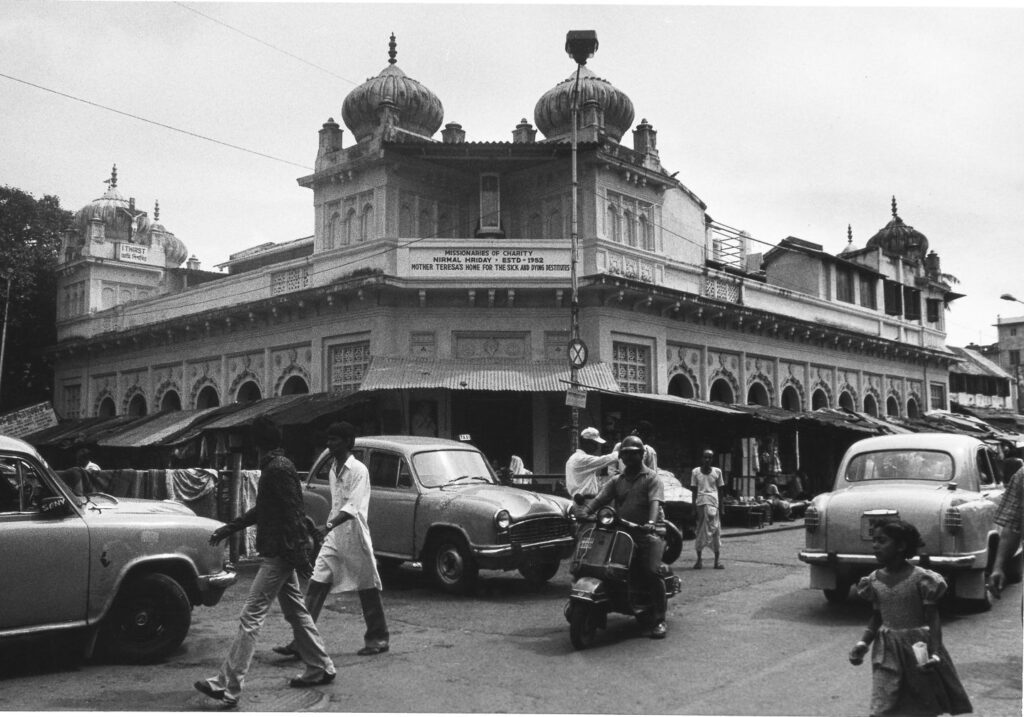
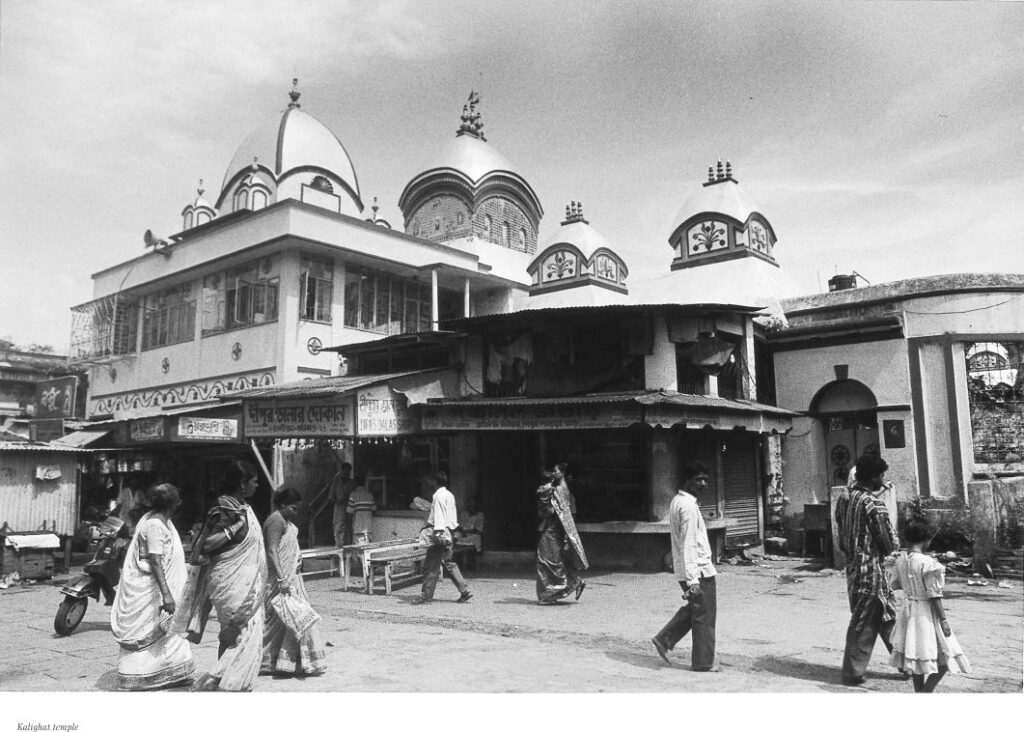
Now, after all these years, I find myself going to the Kali temple for the first time¾to honour a journalistic assignment. It’s late afternoon, and still light. I get out of my car; before me, the Nirmal Hriday ashram of the soon-to-be-beatified Mother; and, near it, another building, whose white dome is visible: I think, this must be the temple. Two such contiguous and pervasive feminine presences from two distinct religions must surely be unusual.
I don’t know what kind of air possesses me as I stand there: certainly not that of a visitor from Wyoming or Birmingham; I’ve come here, after all, from Ballygunge.
A man is standing next to me. ‘You’re fortunate to come here today,’ he says. ‘It’s less crowded¾and it’s the day of Ma’s birth.’
The man turns out to be a brahmin, a small-scale travel agent to ‘darshan’ and salvation. ‘I’ll take you inside for twenty rupees,’ he says. ‘You won’t have to stand in line. But first you must take off your shoes.’ He takes me up a couple of steps into a roofed room that’s open in the front and on one side, where two or three other facilitators of ‘darshan’ are casually lounging. Here I find a small, short-sighted woman with dark patches on her face who address me as ‘Tumi’. ‘Tomar juto ekhane rekhe dao’: Keep your shoes here. I am deeply reassured by her. But I won’t walk across the street barefoot; my Brahmin guide offers me his rubber sandals, still warm with his soles’ temperature, smudges of blue discolouration upon their white instep.
Then there is a crisis. The twenty rupees has turned out to be a decoy. With the flowers and sandesh for the offerings, which are also sold here, and other bits-and-pieces expenditure, I’ll have to pay about a hundred and fifty rupees. I know the sum is ridiculously exaggerated; I won’t pay. ‘Won’t you give flowers to Ma?’ they ask in mock astonishment. ‘It’s not a question of giving flowers to Ma; it’s a question of how much I give you.’ They shuffle about with intimidating expressions, like customs officials. ‘Besides, I’m not here for all that. I’m not a devotee.’ There is an embarrassed silence.
We coldly arrive at a compromise. My brahmin companion has disowned me; he will not take me inside the temple. Instead, a younger brahmin in tucked-up dhoti and vest has been delegated the task. In the usual container made of leaves, I’m given sandesh and flowers worth sixty-five rupees. Before I touch the container, I must wash my hands in Ganga water, because I undid my shoelaces not long ago.
We pass through arches with other people, and a small temple that is not the actual temple. Here I must divest myself of the borrowed rubber sandals. I slip them off on the lowest rack of a cupboard, but don’t push them inside far enough. ‘Why are you behaving stupidly?’ asks the young brahmin. ‘Do you want them to be stolen?’
A long queue of people cradling the offerings in their hands has formed outside the shrine where the deity resides. The queue goes up about seven or eight steps, hovers on a raised platform, then stops outside a door. I’m taken straight up to the door; the small advantages extracted by money in a poor country. ‘Be careful of your cell-phone and your wallet,’ says my companion. In his next breath, he begins to chant, ‘Om Vishnu…’ miming to me that I should repeat the words.
As in most Bengali houses, two doors open inwards in the doorway. One is closed; through the other enters the long line of humanity. You glimpse the rectangular room you are to enter; it’s lit by daylight coming from the other end, and the electric light from the shrine on the left. There is a melee of priests and devotees before the shrine, people shouting, colliding, and moving on. ‘Don’t go too near,’ warns my guide, ‘or they might pull you towards them.’ It’s too late to go back; a bell is being rung constantly.
Around the shrine, people are milling around like commuters waiting to get on a local train. I glimpse the autochthonic image lit by electric lights; her eyes are like careless streaks of mascara that have been applied to a face that is unrecognisable. Someone puts a red tilak on my forehead; I leave behind the roar of the departing train; I’m not sure what to do with the offerings. My guide wants to know if I’ve had ‘darshan’.
‘Darshan’, I suppose, is the act of ‘seeing’ the sacred; it’s neither quite prayer or obeisance. In a sense, sacredness is conferred on the deity by the act; because seeing becomes a form of apotheosis. We’ve all experienced this when we’ve fallen in love; the helpless but deep satisfaction of spectating silently. This busy little railway platform of a place facing the shrine must be one of the few remaining public places in the world where photography is prohibited; and, yes, I had my ‘darshan’¾the din, the refulgent image, the sketchy sense of headlong inevitability¾and have committed it to memory; ‘darshan’ cannot be reproduced on a photograph.

Later, I return to the room where I’d left my shoes. I’d thought the bespectacled lady might be angry with me; but she asks me — addressing me again with the informal ‘tumi’ rather than the formal ‘aapni’¾’Would you like some water? People always like some water when they come back.’ Her name, it turns out, is Savitri Chatterjee. I walk about in the environs of the temple, impelled by some superstitious belief that this is where the city began. A woman standing next to a scooter with her child joins her palms together and closes her eyes. A young priest asks me if I want to go to the temple; his friend says, ‘Idiot, don’t you see the red tilak?’ Priests, eighteen or nineteen years old, in white shirts and dhotis, move about in bands of two or three, like scholars on graduation day. I am reminded, for a moment, of Oxford. A man comes and stands before me. He speaks to me in Hindi: ‘Sir, I am an army man. I can show you the holster where I still carry my gun. Someone has just stolen my train fare and I’m stranded. I just need money for my fare, sir.’ The story is an old one, but the embellishments are new. ‘You have a gun?’ I say. He unbuttons his shirt just above his trousers, and reveals a sort of jute pouch in the shadow of his shirt and undergarment. ‘I don’t have the gun with me today, but that is where I keep it.’ ‘I’d give you ten rupees,’ I say¾he brightens immediately: ‘That is all I need, sir’¾’but I’ve exhausted all my change.’ It’s true; after the various payments and purchases, I only have a five-hundred-rupee note in my wallet. He stares at me, sobs in frustration, then moves on brusquely; he doesn’t have a moment to waste.
I begin to realise I have nothing to do here; not beg, not pray, not steal. Everyone here wants something tangible; I am not sure what I want. My purpose has become furtive and inadmissible; I feel like I’m cruising, like an old man on Broadway.
Amit Chaudhuri is an award-winning novelisti
A man from the BBC asked me to show him my ‘favourite parts of Calcutta’; this was towards a year-end programme on cities of the world. The idea was to locate me in the whirl of the very street I was talking about, and catch the sounds on tape; the sort of verisimilitude that the…