
reminiscences of obaidul huq an extra-ordinary life
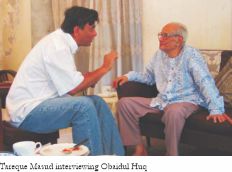
This interview was taken shortly before one of the legends of Bengali cinema, Obaidul Huq, passed away in October 2007.
Tareque Masud (TM): You’ve had such an exciting and interesting life, as the pioneer Muslim Bengali filmmaker. Please tell us about your early life.
Obaidul Huq (OH): I have had a very ordinary life, nothing mentionable and nothing too horrible. All I can say is I have always tried to maintain my sense of humor. I feel that life without wit and wisdom is absolutely meaningless.
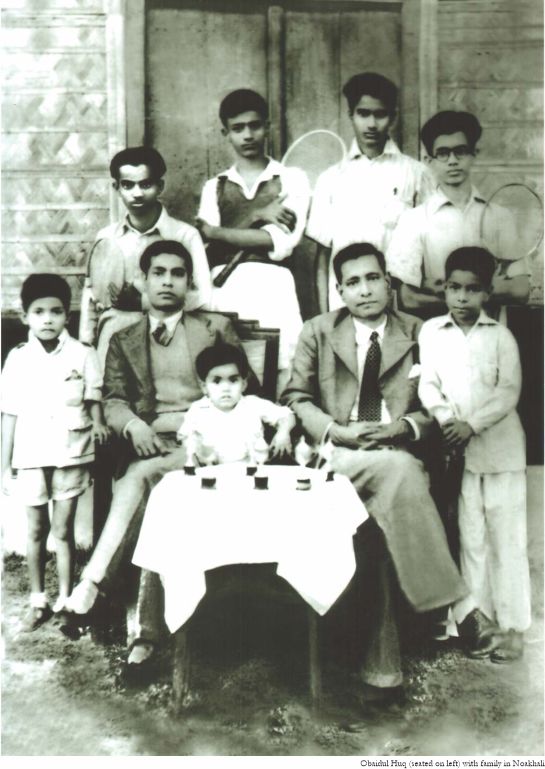
My father ran a local insurance company. He became a member of the local Council in 1920 in Feni District of undivided Bengal. Since my childhood, I had a knack for writing. I used to read more outside the domain of text books. That’s how I first came across cine magazines and became interested in film.
went first to Calcutta in 1928, just after completing my school matriculation exams. At that time, Calcutta was like London for us. We had to get on train from Feni at midnight and reach Chandpur Station in the morning. After getting down from the train at dawn, we would embark on a steamer ship and reach Goyalondo in Faridpur in the afternoon. From there we would take the train to Calcutta’s Shealdah Station, arriving in the late evening. Altogether it was a 24-hour journey.
TM: How did you become interested in cinema?
OH: When I was in Dhaka in the 30s it was the Golden Age of New Cinema. I watched movies like Devdas, Chondidas, Rani Dhopani Rojokinir Prem, Boishupokkho Laboni a number of times. Not content to only watch films, I was also keenly enthusiastic about the making of films. One film from that periodI’ve since forgotten the namewas about a man who becomes a member of Congress. He was described as “a distinguished man, not an extinguished one”those kinds of lines stood out in my memory. I used to read whatever writing I could find regarding filmmaking. From London, a magazine used to come out called Illustrated Weekly. In that magazine, there used to be a section on films that was very informative. I made sure that I always read it. I had to manage a copy of it from wherever possible. Around that time I began writing on film also.
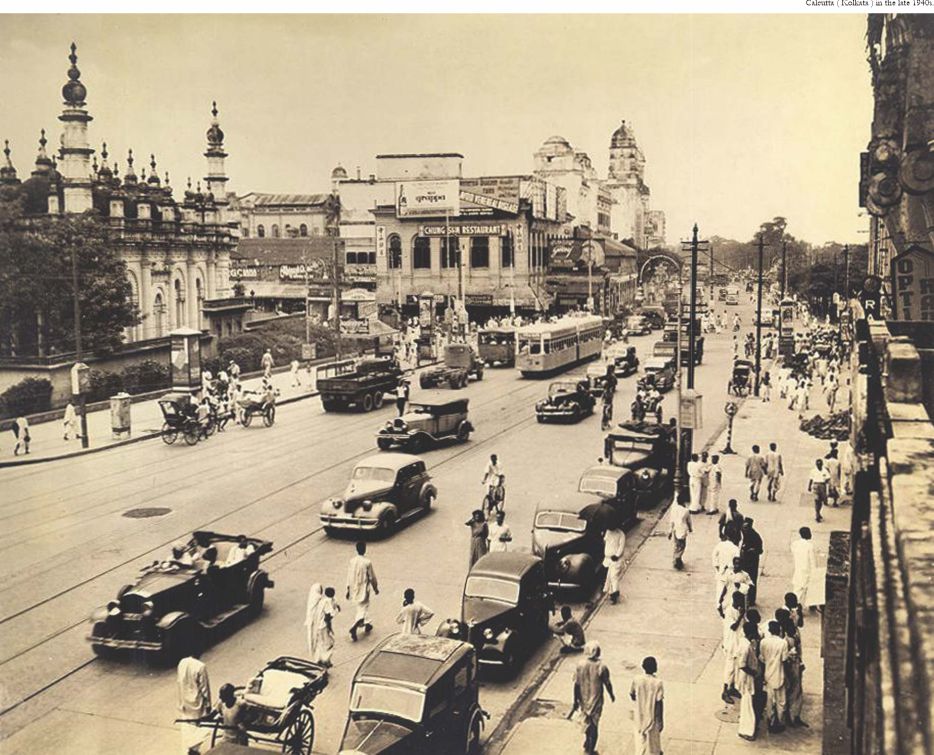
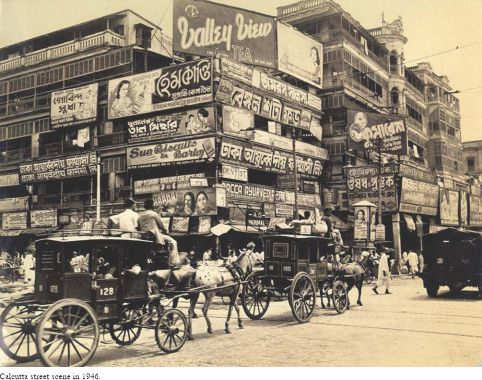
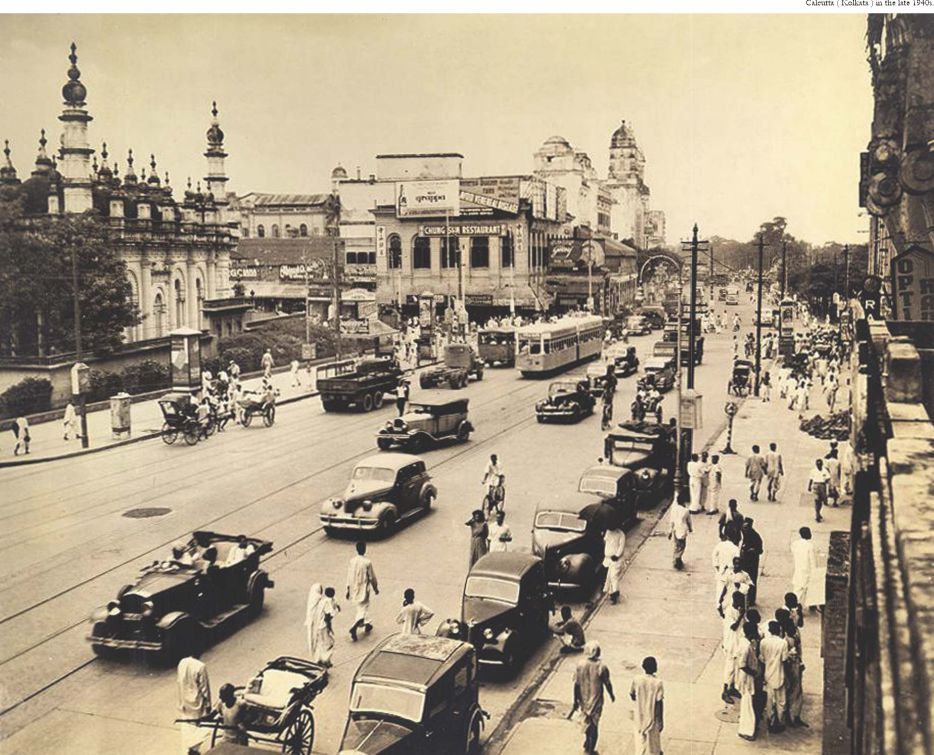
TM: The late 1930s and early 1940s were an extremely tumultuous time in Calcutta. You were there during this time. Please share some of your memories.
OH: I went to Calcutta in the late thirties for my Law studies. It was 1937 and my father had recently passed away from cholera at an untimely age.
At the time I was staying at the home of my brother-in-law, who was a section head in the Writer’s Building. One of my father’s closest friends had been a man by the name of Mukund Bihari Mallik. He was from Khulna originally and had a high post in the goverment. One day my brother-in-law came home and told me, ‘Mukund Bihari is looking for you, he wants to see you immediately at the Writer’s Building. Come with me.’ The Writer’s Building was
a very imposing, in the London style. When I went to see Mr. Mallik he was meeting with the District Magistrate, a Mr. Holland. I was astonished when he immediately got up from his meeting on seeing me, and said to Mr. Holland, ‘Please give me at least one hour time.’
He asked me to sit down but I was too overwhelmed. ‘How is your mother? How are your siblings?’ I replied. He continued, ‘Why are you standing, sit.’ He made me sit and continued, ‘Your father and I had a very strong bond of friendship.
Only I and he could understand. He left before his time.’ Mr. Mallik said, ‘When I will go on tour to Feni, I will meet your mother. You keep in touch with me.
The reason I have called you now is that a law called the Date Settlement Act has been passed by Fazlul Huq Saheb.’ Huq Saheb was not known as Sher-eBangla at that time yet. Muslims used to add titles
with their names such as Bahadur, Khan Bahadur. But Huq Saheb didn’t use these titles. He was just known as Huq Saheb. He was an intellectual leader, but also a man of the peasants. He passed the Settlement Act cancel the debts of the farmers to their feudal lords.
Mr. Mallik informed me that the Co-operative
Ministry was handling its implementation, and there was one post open in the board, an officer’s job with a good salary. He said that he had already given my name as recommendation. He said, ‘It is my attempt to repay my debt to your father. It will be my tribute to him.’ I could scarcely believe my luck. At that
time, we used to hear common expressions like ‘A gentlemen and two Muslims are standing there.’ In
the station, there were two tea stalls, one marked ‘Hindu Tea’ and the other ‘Muslim Tea’.
Mukund Mallik asked me to sign on a blank paper and said I don’t need to apply, they will make the application for me. However, at that point I hesitated.
My family wanted me to take the place of my father.
That was why I was completing my studies in law.
After passing the preliminary, I would sit for the final examinations. I had already completed the course. Mr.
Mallik said, ‘That can happen later. Even if it’s only
for a brief period, you have to work here.’ I finally agreed. He was after all like a guardian, my father’s friend, I could not say no. I began the job in 1938.
Second year I got a promotion. A few years passed.
And everything was going in my favor. Even while I held my job, I continued to write for the local newspapers.
Then came the famine of 1943. It was absolutely a man-made artificial food crisis. At that time, my writings used to be published in newspapers like Mohammadi, Monthly Bulbul, Habibullah Bahar. They used to send me letters asking for my articles. Abul Kalam Shamsuddin asked for my writing for an Eid publication. Seeing this famine I was very emotional.
Why do we have to die? Of course I was not dying after all, I was not feeling any shortage of food. Only the general poor mass is dying. Why? I used to ask these questions to myself in search of answers. Of course the real reasons were not publicly discussed.
If I sent this kind of writing to a newspaper, they could not print it. I began to feel it was pointless to write, since the people whom I really wanted to address in my writing could not read, or write themselves. It struck me as just another kind of hypocrisy. Then realized I could only reach the common man through film, visual images. The general, uneducated masses watch films. They can understand the story plot when they see it but they cannot read.
TM: What were the obstacles you faced in getting started in filmmaking?
OH: When I decided to make films, I was first
faced with the problem of how to go about it. On the one side there was the matter of finance. I had limited funds, but my sister was very affluent. She agreed to help. Then there was the filmmaking aspect. I knew the theoretical side of film-making, but I needed to know the practical and technical aspects of it. Nazrul Islam used to write songs, but he was not connected with production. For the entire movie he was a codirector but he knew nothing of production. Then I spoke to someone by the name of Nalini Babu, who worked in the industry. At that time (1943) he was making a film called Poushoprito. The central character was played by Shishir Bhaduri, who had earned a lot of fame nationally and internationally through acting in a drama called ‘Sitar’.
While Nailini Babu was making his film, I had the chance to watch both the indoor and outdoor shooting. He said, ‘Now you know the techniques, how the film is made. Carefully watch the technical aspects for both indoor and outdoor.’ I found that making a film is not difficult, but creating a film is difficult. There is a saying that when a sculptor is hammering a stone, he knows what he is making, but not what he is creating. Once he has shaped the stone and molded it into a sculpture, people will identify it as his. It is no longer just a piece of stone. Putting things into matter is an art. And it is difficult to create art. To conclude, it is not difficult to make a thing but to create it is difficult. So at this point I learned the making of a film, but not creating.
TM: Weren’t you still working at your regular job during this time?
OH: Actually, I had decided to quit my job, much to the displeasure of my family back home. I informed Mukund Mallik that I am not going to continue the job anymore and requested him not to try to stop me.
He asked me why I wanted to quit. I told him I want to make films. He was very disappointed, and commented that I had a very rebellious nature. I couldn’t answer him, but I remained firm in my decision although I was sorry to hurt him. After all I am a very simple man, and ordinary man, I was unable to really do anything really extraordinary in life.
Although no one supported me in my decision, after a while everybody took it as a fact of life, just
like the famine was a fact of life. Only my father-inlaw did not create any obstacle for me. He was a very broad-minded man. He was well-read and educated.
He said, ‘Your passion for film is such an intense one, that negating it will mean negating you. That will be harmful to you.’
Around this time, a Hindu gentlemen who was a renowned palm reader came to our house. So to test his knowledge, I told him, ‘I have a job, advise me whether I should continue or quit it? And in case I leave my job, what will happen?’ He said, ‘You have already left your job because you were forced to do so.
You had no other way but to leave. Why? Because you have an insect in your head that will not let you continue with your job. All this is very crystal clear.’ And regarding how many children I will have, he said, ‘You have one son and one daughter already. So don’t ask me any further questions. If you ask me any further questions, I will tell you about the complexion of the person, the quality and texture of his hair.’ What he said was true, there was really an insect in my mind. Otherwise does any person quit a job like mine!
TM: How did you set up your new office?
OH: I took an office at Dharamtala, which comprised of two rooms. One was used as an office room and another was my lodging. My bathroom was larger than my room. The doors of that age, my God, so huge they were! And the French windows. I found that in order to make a film, I needed an office, I needed to recruit a manager and another person to look after the financial aspects. My younger brother took the responsibility.
TM: Did you face any particular problems as a Muslim trying to make films?
OH: The Second World War had just ended and everything was still being rationed. The central government had issued an ordinance in wartime called the Raw Film Order. It meant, in order to make a film I first had to apply to the government. The government will allot a quota, and then confirmation of the allotment lets you purchase the raw film. I sent a man to Delhi, but unfortunately he returned after a week empty-handed. What happened? According to the
Raw Film Order, those who had not completed four films before the passing of the ordinance were not eligible for the quota. My blood began to boil. I addressed my opinion in a letter to the Visor that this was illegal. It discriminated against the Muslims of the sub-continent. The Muslim film-makers wouldn’t accept it because no Muslim had made any film before the control act. I was also one of them. Isn’t this an offence? I wanted to take my case to the court. The Visor laughed after reading my letter. He remarked, ‘I agree with you. But this is a law, whether it is a fair or unjust law, the bottom-line is it is a law. I have to abide by this law. But the war has ended, and within a
month this law will be withdrawn. So you will just
have to wait a little more time’
Around that time, I went to a film function at Chowrangi Street where a Mr. Mukherjee was present.
Mr. Mukherjee was the head of the Calcutta Film Office. I noticed that every now and then he was glancing at a very fine pen that was sticking out of my brother’s pocket. After the function, we were talking about the control act, since I had just written an
article about it in the Mohammadi newspaper. He assured me that this new control act for films would
be eliminated soon. Suddenly, on an impulse, I took the pen from my brother and presented it to Mr.
Mukherjee. He was very happy to receive it. It was the beginning of a good friendship. He told me if I ever I need any help with films, he would be eager to
provide it.
The control act was eventually withdrawn and I was able to get my stock. But I needed a studio where I could shoot, and actors. Wherever I went, I was
treated like a nobody. They would laugh and say, ‘An illiterate Muslim man from East Bengal wants to make a film!! Not even from Calcutta, he’s from East Bengal. All of a sudden he wants to make a film, he doesn’t even have any background. He has never
made a film, never worked on one.’ It was very discouraging, to say the least. I went to Kazi Film Studios, then Raja Film Studios, but nobody wanted
to speak to me. Only Indrapur Studios was left.
Indrapur Studios belonged to Indar Kumar Karnagi, grandson of Rai Bahadur Shukla Karnagi. Even though they were non-Bengalis they owned a lot of assets in Calcutta. They had lands in Comilla, Tripura, and Noakhali that were rented by tenants. They had a huge coalmine at Jarira. Shukla Karnain had become blind and very old. He used to go every afternoon to Eden Gardens to take in the air from the Ganga. He had a private secretary called Ajit, who was known to my friend Horen. One day Horen came and told me, ‘I’ve got an idea. I have a friend named Ajit who is an employee of Karnagi. Ajit is the one who takes Karnagi to Eden Gardens every afternoon.’ Through these connections we contacted Ajit, who said he would help me to get permission to use Karnagi’s studio, but on one condition: I had to help them to recover the rental money for their lands and houses in East Bengal. Luckily the judge of that region was my relative, so I said I could approach him for help. Ajit was very pleased to hear this and took me to meet Karnagi. Karnagi, who was blind, told me in Hindi to go to his studio the next day.
The next day when I went I was introduced to Indar Kumar, who ran the studio. I can still recall it very clearly. He instructed his subordinates in Hindi, ‘Help him. Make sure Huq Saheb is not disappointed or insulted.’ After a lot of inquiries, I was allowed into the studio on the condition that I would help them with their rent problem. Otherwise they didn’t have any faith in me. They all thought, what film can this man make?
became a member of the Bengal Motion Picture Association in Calcutta after paying the required fees.
Advocate Murlidhar Chatterjee was the secretary general of this association. It was a very powerful organization. It had 7 to 8 studios. Only a few makeup men were Muslims, everyone else was non-Muslim.
At that time many Muslims working in the industry had to take Hindu names. For example, Yusuf Khan became Dilip Kumar. His first movie ‘Jowar Bhata’
was screened at Dharmatala Street. Even then, it was clear he would become a major film personality.
able to keep their Muslim names and still make it big.
‘Mujhe lakho bura kehtahe to kya hota hai? Vohi hota hai jo manzoor e khuda hota hai!’ (People say bad things about me, but what does it matter? What will be will be, it’s all God’s will.) A verse from Urdu poet Ghalib’s poetry was supposed to be recited at the beginning of each film. In Bombay, there was no discrimination between Hindus and Muslims. There was another Muslim actor, I can’t remember his name, who used
to carry his jainamaz with him, and during namaz time he used to perform his prayers on the studio floor.
But the scenario was completely different in
Bengal. Whether Hindu or Muslim, the Bengalis were very low and narrow-minded. Bengal was full of cowardly and disloyal people, and too many internal clashes. It’s the same throughout history Sirajuddoullah’s reign was destroyed by Jagat Seth, and they were just fighting amongst themselves.
TM: Tell me about the film. Who was involved and who acted in it?
OH: First I set up a production company. I gave a grand name to it, Chhayaghar Pictures. At the request of my producers, I had to change my script several times and eventually I had to change all my characters to Hindu ones. For the role of the Muslim estate manager Shaptarshee, the actor was Johar Ganguly, then an active member of Congress. I requested to keep at least one of the characters as a Muslim.
Finally they agreed. I had to ask Ganguly to wear pajama kurta since the character he was portraying
was a Muslim one. He agreed but refused to wear a tupi. When he put on the pajama for the first time, he only put one of his legs in, and then said he’d put in the other leg once I paid him. The movie was finally released in the beginning of 1946 in Prince Hall.
One day Fateh Lohani came to my office with 2 or
3 people. He was known then as Kiran Kumar.
Although he was only doing neighborhood plays, still he kept a Hindu name, such was the conservative situation of Bengal. I tried to think of a good role for Lohani to play, as Renuka Ray had asked me to, and eventually cast him in the film.
During the production, we would have regular meetings in my office. One of the key members of the team was a certain Kalish Mukherjee, who edited a monthly tabloid Rupmancha. Everyone in the studio was very impressed with him including Indar Kumar.
One afternoon during the office lunch break I was sitting on the floor eating when a gentleman walked
in. He started pacing the floor restlessly. I asked
whom he wanted to meet. He said a producer named Obaidul Huq. I told him I was that very man, and asked him what he wanted. He introduced himself as Mreenal Ghosh, who did the Shyama Sangeet at the Radio and also recorded with HMV. He wanted to do 2 songs for the film, ‘Mohakaler Koley Eshe Kali Holo Mohakali’, and ‘Bolrey Joba Bol.’ Both songs were written and composed by Kazi Nazrul Islam.
TM: What do you remember of the 1946 riots?
OH: Direct Action Day took place on August 16, 1946, a few days before the completion of the shooting. A meeting had been called at Suhrawardy Hall. My younger brother, who was assisting me, went to attend the meeting. He returned, but one of his sandals was missing and his shirt was torn. After the meeting the riots started.
This was during the month of Ramadan. I was at my residence in Park Circus. All hell broke loose.
People were being killed left and right. Many were forced to hide inside manholes. Park Circus turned into a battlefield of Pakistan. North and South Calcutta were both Hindu areas and Central Calcutta was neutral. You had to wear trousers to Central Calcutta, neither pajamas nor dhoti would do.
We had to stop the film shooting because of the riots. For 3 months everything was on hold, and I was a virtual prisoner in my home. We could manage a pumpkin, some gourds and other vegetables to eat.
For 3 months this is what we survived on.
TM: The area you used to live in was it a Muslim area?
OH: 100% Muslim. Park Circus was the Pakistani Bengali zone. There was a mini Pakistan there. After the riot was over, we finished the remaining part of the shooting. The artistes also started demanding higher rates, otherwise they refused to work. They claimed that they had offers for more money elsewhere.
TM: When was your film released?
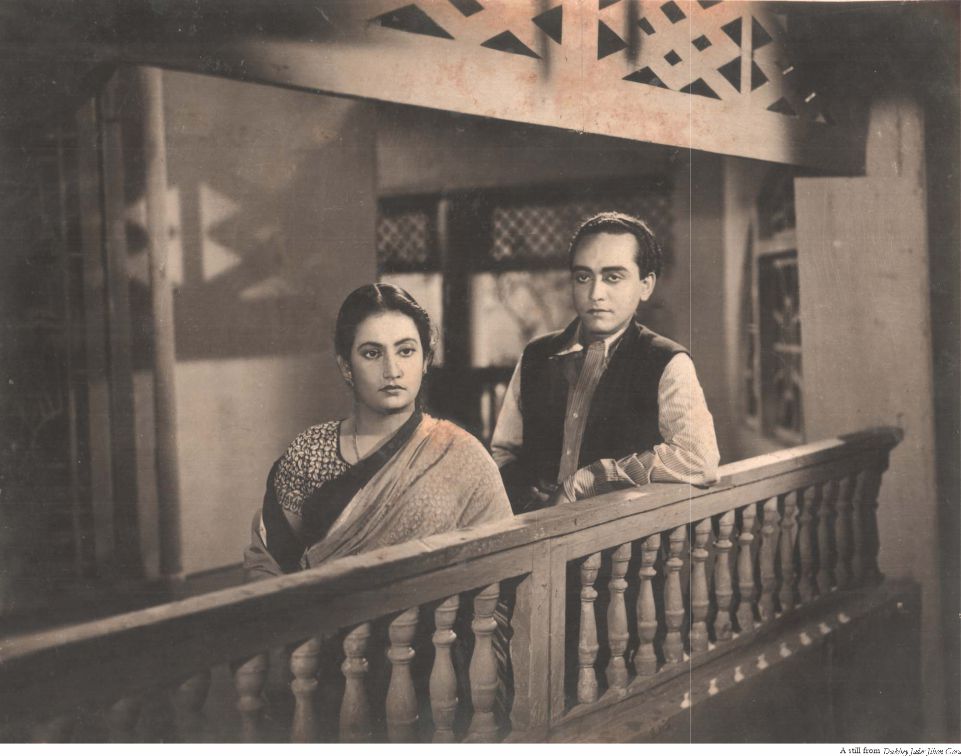
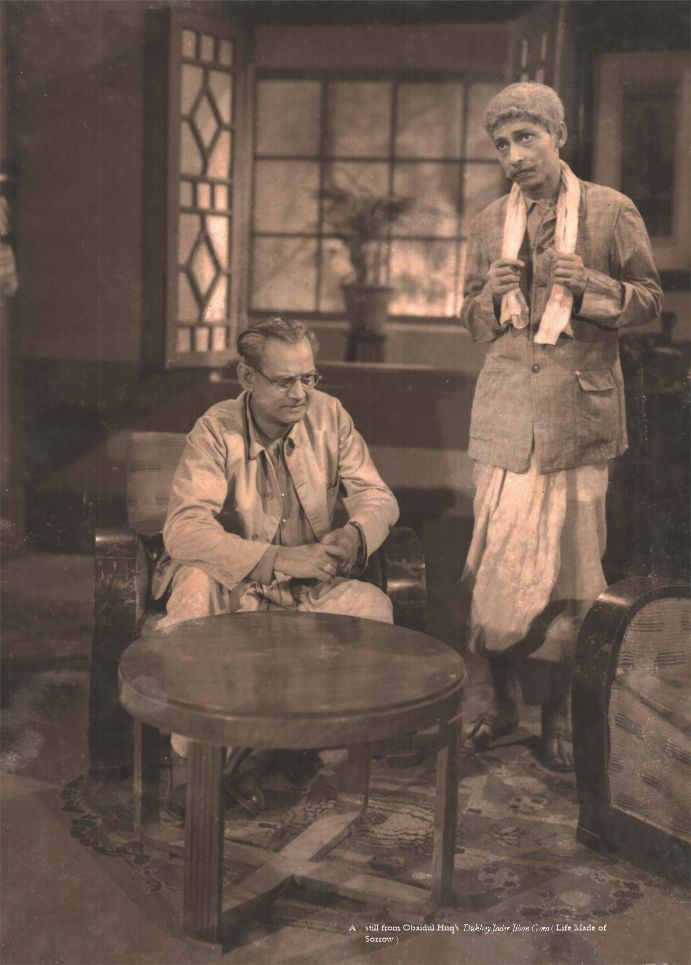
OH: Dukhey Jader Jibon Gora was finally released in end of 1946. All the prints required for a release were ready. The distribution regions consisted of Central, South and North Calcutta. Sea Hall, in North
Calcutta, was the biggest hall. My movie was released there with no problem, and there was a 3-day advance booking for tickets. In South Calcutta I booked Rupam Hall, which was in a non-Bengali area.
Everything was all set, and then suddenly I was couldn’t be run. Why? Because I was a Muslim. I told the distributor that I have a contract with you, a written one. He told me, “Yes and you could go to court to prosecute me for breach of agreement.
Maybe I will be punished, but I have been threatened that if I run your film my hall will be burnt down.” Then he said that he would risk releasing the film on one condition, that I changed my name. Like Kiran Kumar and Dilip Kumar I would also have to adopt a Hindu name. I went to Mururidhar Chatuggey, general secretary of Bengal Motion Picture Association, of which I was a member. He was also an advocate at High Court. I asked him for advice. He said, “Try
your best from your end. Be realistic and understand the situation. All these months numerous people have died in the riots. Everybody is burning with anger. When people are angry they are not in their right senses anymore. I don’t support it, but why would that man let his hall be burnt because of you?” Finally, I agreed, and the film was released under the name of Himadri Chowdhury. Himadri means the top of Everest. Nazrul had used this name in one of his poems. My thinking was, if I have to bow down to anything, I’ll bow down only to the highest place, Everest. This was my protest.
This interview was taken shortly before one of the legends of Bengali cinema, Obaidul Huq, passed away in October 2007. Tareque Masud (TM): You’ve had such an exciting and interesting life, as the pioneer Muslim Bengali filmmaker. Please tell us about your early life. Obaidul Huq (OH): I have had a very ordinary life, nothing…