

city lights
Abdur Razzaque, one of Bangladesh’s senior artists, is known for his work in several mediums. He was born in Shariatpur, Bangladesh and educated at the Dhaka Government College of Arts and Crafts and the State University of Iowa. He has travelled extensively, capturing the details of cityscapes worldwide. The colours and shades, moods and passions as well as the vitality of city life have found expression in Razzaque’s bright and opulent palette and expressive sculpture work. Razzaq has had seven one-man shows so far. He has exhibited in several international shows including Expo 70, Japan; Asian Fair, New Delhi 1972; Asian Art exhibition, Fukuoka, 1980; and The Sixth Festival of Asian Art, Hong Kong. At 71, he still retains a youthful exuberance and is even still searching for ‘the divine harmony’ that binds human beings to nature. In a conversation with Ziaul Kaim, Abdur Razzaque talks about his artistic development, his inspiration and the influences on his work.
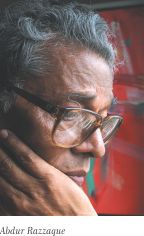
Ziaul Karim: Over the past five decades of your artistic career you have handled almost all the mediums of fine art¾oil painting, watercolour, sculpture and graphic print.
Abdur Razzaque: Well, to me all mediums of art aspire to the condition of a greater harmony. The differences that we perceive are basically at a primary level. Whether it is oil painting, sculpture or graphic print, what artists try to achieve in their work is harmony. It is more like playing the sarod or sitar: Your fingers play on the strings and search for the musical essence that you have in your heart.
ZK: You have never shied away from showing your drawings alongside your paintings and sculptures.
AR: If painting or sculpture constitutes the superstructure of visual art, then drawing is its infrastructure. Or to use a musical metaphor, I would say it is like the ragas in Indian music from where all musical compositions originate. Drawing captures the essence of a subject that an artist likes to portray. In other words, drawing is what the spine is to animals.
ZK: Which artists influenced you the most in your formative years?
AR: It was James Leachey, Professor of Drawing at Iowa, who made me aware of the significance of drawing and opened my eyes to its beauty and grace. For him everything began and ended in drawing. Leachey had a huge collection of drawings by great masters including Paul Klee and Picasso. Every class with him was a grand tour of the tradition of drawing. And every day we were invited to a delicate ritual of savouring drawings with him in the class. He sensitized us to the subtleties and nuances of drawing and got the message across that drawing is the core of visual art.
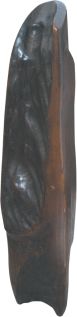
ZK: There has been a resurgence of artistic activities in Bangladesh. Young artists mount exhibitions regularly and find patrons among business people and corporate houses. Society is more supportive andÊenthusiastic about artists and their work. How do you evaluate the present art scene?
AR: The current art scene here is almost electrifying. I feel its pulse and inhale the exuberance. Young artists have injected new cadences and vitality to our art. They are searching for new pastures, trying to break away from established norms and the influence of the West. What I particularly appreciate about them is that they are more focused on their subjects and are politically sensitive. They are more global, if you will, than we were in our twenties, and keep track of what is happening in the art world. Monirul Islam and Shabuddin have put us on the international art map. One of the keys to artistic development is creative interaction. As opportunities for artists expand, they are getting more involved in creative interaction with their foreign counterparts than we were in our time.
ZK: But was it not the generation of the sixties who expanded the horizon of art?
AR: Yes. We were the first generation of artists who brought internationalism into our art with Mohammad Kibria introducing Zen minimalism after returning from Japan, Aminul Islam coming up with suave Italian touches, Hamidur Rahman injecting enthusiasm for a new-found metropolitan sensibility and I myself returning infused with the verve and vitality of American internationalism. All in all, we formed the new wave in our art scene then.
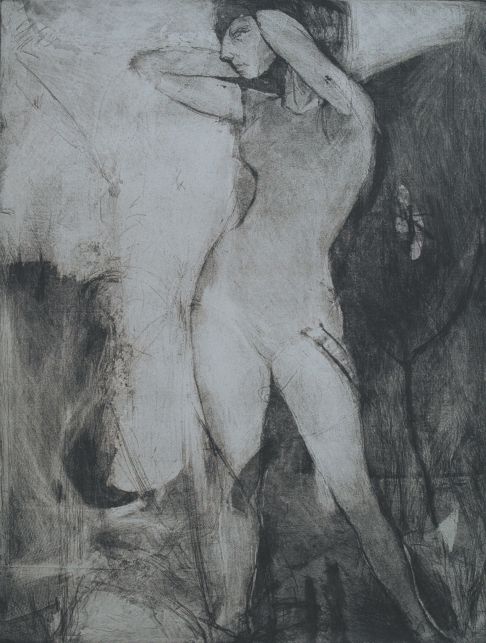

ZK: How do you prepare yourself, intellectually or emotionally, for your work?
AR: I always try to draw the subject in my head before giving it shape or form. Groping in the dark for an unknown form is something against my nature. That does not mean that I know exactly what I want to achieve when I start. Rather, I have an image of a form or a shape in my mind which I want to capture in different mediums. All mediums have their own charm and taste but I always try to exploit their unique possibilities. I believe that every artist lives in a unique space and time and there is no way one can get away from one’s social and cultural spaces. I feel I am continuously nourished by the tradition that I have inherited. Artists have invisible antennae sensitive to likely subjects. The chemistry that works with me is: I wait for the information, images, and emotions to sediment in me and form their own collage and then I pick and choose my theme from that mixed bag.
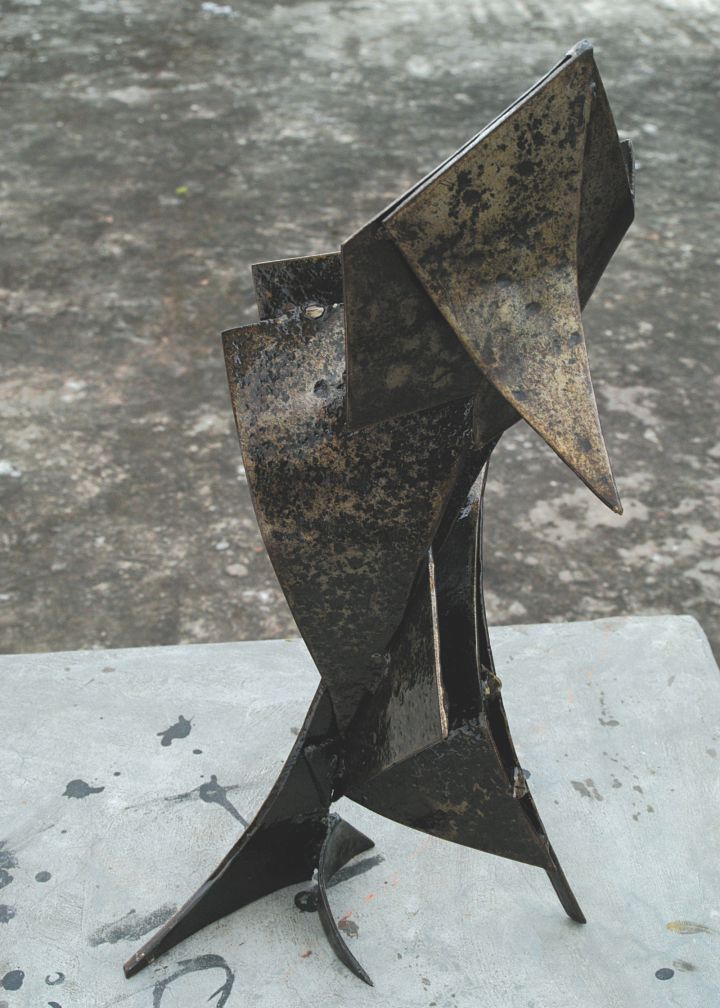
ZK: You have moved a long way from realistic representation and your canvas now reminds one of American action painters and your sculpture bears the mark of constructivist influence.
AR: Abstraction frees you from the clutches of a fixed point of view and I do not want my viewers to look for a specific meaning in my work. But though I enjoy the work of the American action painters, I do not think they have had any direct influence on me. Neither have the Russian constructivists. I am not what you might call a cerebral artist or even an artist who paints or sculpts on impulse. I paint from the images that I have gathered over time in my heart. If something attracts my attention or I am overwhelmed by something, I make doodles in my notebook and then put them aside and wait for these doodles to return to me in the form of compositions. Whatever you do you have to get your creative nourishment from tradition. I collect traditional artifacts, dolls, mats and go back to them whenever I am bored with my work.
ZK: But traditional motifs and designs hardly surface in your work.

AR: Space and colour are fundamental to my composition but I get my inspiration from traditional artifacts. The influence or borrowing from tradition is indirect for me. Lately, nature has become a great source of inspiration for me. The death and decay, the birth and growth that I perceive in nature every day have made me rethink my relationship with the great cycle of life.
ZK: Your recent work is a quest for that great mystery of life.
AR: I came to Dhaka in the 40s and observed the rebirth and growth of this city and captured the urban scene in my canvas. Wherever I have gone the hustle and bustle of city life, its magic and splendour have always attracted me. But of late nature attracts me more. And, yes, my recent work is a testimony to my understanding of the great cycle of life, its divine harmony.
Ziaul Karim is Executive Editor of Jamini
Abdur Razzaque, one of Bangladesh’s senior artists, is known for his work in several mediums. He was born in Shariatpur, Bangladesh and educated at the Dhaka Government College of Arts and Crafts and the State University of Iowa. He has travelled extensively, capturing the details of cityscapes worldwide. The colours and shades, moods and passions…