

Notes on film festivals
Every art form has its own tradition of festivals, and cinema is no exception. Film festivals are a celebration of cinema, a means of bringing together makers and takers, viewers and reviewers for a buffet sampling of films from far-flung lands and diverse cultures. Side by side with the sheer joy of immersion in cinema, film festivals also have a strongly functional role, in enabling various parties in the ‘business’ of filmmaking to link up, to make ‘the deal’ for distribution, or to pitch a future project to producers. But each film festival also has its own character, shaped by its own peculiar history, focus and location. As a frequenter of film festivals over the past two years, I have had the opportunity to observe and compare a number of festivals, from Cannes to Palm Springs, Marrakech to Karachi. Here are a few of my observations—the observations of a novice, I must emphasize, as I’m not one of those seasoned festival-goers who return year after year, like migrating birds, to make the same unvarying circuit.

CANNES
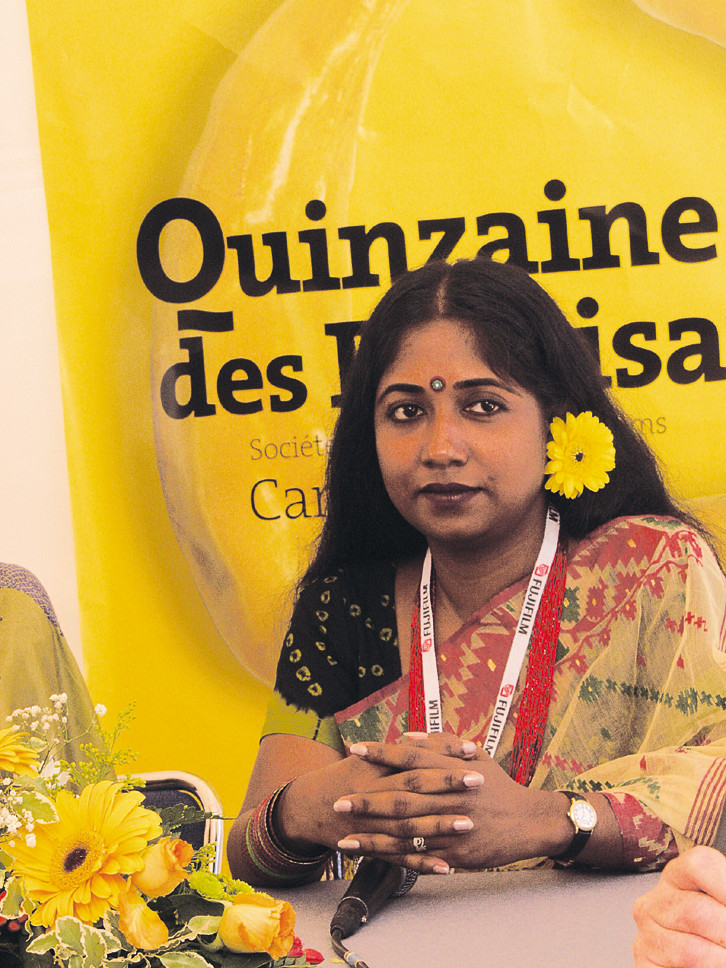
The festival ‘circuit’ is actually constructed like a pyramid, and the Cannes Film Festival, along with Berlin and Venice, is firmly placed at the top. Cannes, unlike its two rivals, is an extremely insular festival; whereas tourists and locals alike flock to Berlin and Venice to bask in the festival glow, ordinary residents actually flee the city of Cannes to escape the festival’s hullabaloo. Whereas most festivals have a handful of delegates who mingle among the general audience, in Cannes, everyone is a card-carrying delegate, with their own professional agenda. Festival screenings are free, but they are by no means open: without your card, you simply cannot enter. The cards themselves are colour-coded to establish the holder’s place in the delegate hierarchy, and to determine their level of access. In fact, Cannes is a bewildering maze of ritual and hierarchy—and to the uninitiated, it is like viewing a pagan festival through a telescope. There is simply too much happening at any one time, whether it’s a passel of celebrities sauntering up the red carpet, the world premiere of an Iranian film, a demonstration of new digital technology, a seminar featuring world-renowned directors, a black tie dinner at the Palais (main festival venue), or the screening of specially restored classics on the beach. And everywhere are the paparazzi, clustered like crows at a feast, their telephoto lenses perched on tripods, cameras dangling from their sides, waiting for the next photo-op. Our first few days went by in a dizzying blur, as we were propelled through a gauntlet of press conferences, interviews, and screening parties. Some time during the second half of the 10-day event, we finally began to realize what it was we should have been doing from the start; we finally procured our badges, began to move from place to place with a purpose, seek out people and take note of the day’s events. But it was too late; the festival had already passed its zenith, and we were too exhausted to properly avail the
tail-end of festival activities. In the end we escaped to our friend’s idyllic country house in the mountains, thinking that we’d seen the last of Cannes. But it was not to be: on the last day of the festival, our mobile rang as we were finishing lunch; we had won an award, and had to return to claim our prize. With only three hours to spare, we sped down the mountains in record time, and the grand palace of Cannes beside the azure sea floated once again into view. Back in Cannes for the second time, we already felt like veterans; if we ever return again, we’d have a better idea of what to do.
EDINBURGH
Unlike Cannes, the Edinburgh International Film Festival has a decidedly more accessible and friendly feel to it. It is much smaller, first of all, and secondly, the audience mostly comprises reassuringly real people–people from Scotland, who are there not because they plan to skewer your film in the next issue of Variety, but because they read the blurb in the festival catalogue and were simply and genuinely curious to see
your film. Nourished on a diet of international cinema through the festival and ongoing screenings at Edinburgh’s excellent art house theatres, the local audiences are impressively informed and sophisticated, and festival screenings are followed by lively Q&A sessions with the directors. We were amazed to find that our two festival screenings of Matir Moina were sold out several days in advance, and the after-film discussion was one of the most in-depth we’ve had anywhere. The town of Edinburgh also adds to the general mood: in contrast to the chic Mediterranean resort atmosphere of Cannes, Edinburgh is a beautifully quaint medieval city, filled with picturesque castles and cobblestone streets. Edinburgh residents try to make the most of the few weeks of the year when the weather is predictably pleasant, and in addition to the film festival, a number of other cultural gatherings and events are simultaneously scheduled in August, creating a carnivalesque atmosphere throughout the city. In fact, this cultural free-for-all is simply referred to as the Edinburgh Festival, a cultural cornucopia of theatre, dance, music, painting, and street performance that draws enthusiastic crowds from all over the UK.
MONTREAL
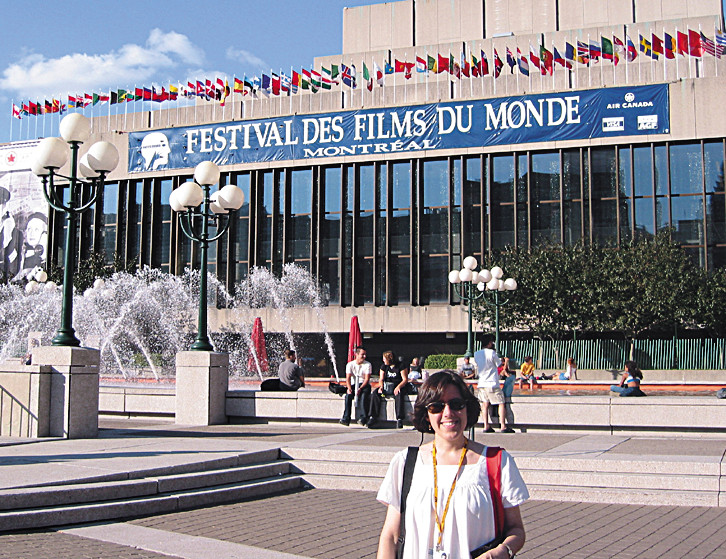
The Montreal World Film Festival is enormous, almost to the point of being unmanageable. Unlike the carefully culled and finely crafted selection of Edinburgh, the Montreal festival screens a bewildering array of films, over four hundred of them, scattered in venues throughout the city, to audiences numbering in the tens and perhaps even hundreds of thousands. The catalogue alone is intimidating enough, barely contained by its binding, bursting with information and film listings, too heavy to slug along in a side bag from screening to screening. One can try to make do with the schedule, but that alone takes several hours of study to untangle. The geographical focus of the Montreal festival helps to anchor the event; unlike many festivals, which scatter their guests in various forms of accommodation throughout the host city, all the delegates to the Montreal festival are housed in a single monolithic hotel, the Wyndham. This is where the festival offices are located and parties, and seminars take place, and the wide Plaza in front of the hotel is a central gathering place throughout the day and night. Despite its intimidating size, the Montreal festival is full of celebration and fun, and we found it easier to wander about with no plan, stumbling upon a seminar here and a film there, rather than trying to make sense of the labyrinth of activities. The city of Montreal, though firmly in the Canadian heartland, has an unmistakably European feel to it, and while its competitor festival in Toronto caters to the glitterati of Hollywood, Montreal slants towards European and international cinema. The audiences were enthusiastic, and we were amazed to find our 9:00 AM Sunday screening in a 500-seat auditorium completely packed.


PALM SPRINGS
Palm Springs, located in the desert hills beyond the dust and smog of Los Angeles, is an oasis of palm trees and upscale living. Most of the population is of retirement age, and the pace of life is leisurely. Likewise, the Palm Springs International Film Festival is a leisurely event, with none of the frenetic activity that characterizes Cannes or Montreal. Audiences are polite and patient, and delegates meander from one venue to the next, assuming the unhurried pace of the vacationer. At the same time, the Palm Springs festival is a strategically important event. Because of its proximity to Hollywood and its timing just before the Academy Awards, Palm Springs has become a showcase for the competing Oscar films, particularly those in the Best Foreign Film category. The aura of the Hollywood industry is palpable, and assorted celebrities frequently pop up to plug their films at festival events. But the jaded residents of Palm Springs, many of them retired veterans of the industry themselves, remain unfazed and even the paparazzi seem to be on holiday. The focus is rather on speculation about the likely Oscar nominees, and the festival is less a celebratory event than a low-key preview of the official line up. Thus Matir Moina came to the California desert a few weeks before it screened for the Oscar committee in Hollywood.
MARRAKECH
One of the most remarkable festival experiences of our travels, the Marrakech International Film Festival lived up to its promise of pageantry and pomp, and much more. Held under the patronage of King Mohammed IV of Morocco, the Marrakech festival is a truly royal affair. Launched in 2001, unfortunately just weeks after September 11th, by 2002 delegates numbered in the thousands, among them some of the most revered names of world cinema. Francis Ford Coppola, Catherine Deneuve, David Lynch, Costa Gavras, and other stellar personalities mingled together at spectacular functions and parties… it was like Cannes crossbred with Hollywood and

transplanted to North Africa. The city of Marrakech alone is enough to strike awe into the heart of even the most seasoned traveller. An ancient imperial city tracing its origins to the 11th Century, Marrakesh has a legacy as one of the Islamic world’s most important artistic and cultural centres, and it is studded with palatial architectural gems and colourful markets. The festival organizers use this exotic backdrop to its
utmost. While many festivals are content to let participants wander about on their own, the Marrakech festival carries its delegates along on a magic carpet of non-stop gala events. The opening ceremony at the 2002 festival was held in the ruins of the 16th century Palace el-Badi, which served as a surreal backdrop for a spectacular outdoor cinema theatre, complete with a huge screen, lighting scaffolds, a sophisticated projection
and sound system, and seating for over one thousand guests. Of course, more than mere spectacle, the Marrakesh festival is first and foremost a venue for the screening of films, and a chance for filmmakers to meet other filmmakers and present their films to an international audience.
Although we were warned in advance that Moroccans can be quite reserved and unwilling to participate in public question-answer sessions, after the screening of Matir Moina there was a lively discussion participated in by Moroccan students, journalists and filmmakers as well as festival delegates. The following day, the Moroccan press carried reviews of Matir Moina under the Arabic version of its title, Taier-uttin, praising
the film for ‘revealing the inner beauty of Islam, and the danger of its false façade.’
KARACHI
The Karachi International Film Festival, also known as Karafest, is only in its third year, but it has already established itself as one of the most dynamic and well-organized festivals in the region. The only film festival in Pakistan, Karafest is run by a group of young filmmakers, and as such, it has a very different atmosphere from the impersonal professionalism of most other festivals. Already festival veterans by the time we attended Karafest, we had been slightly hesitant to attend ‘yet another’ festival, but we were pleasantly surprised and impressed by the warmth of our welcome and the spirit and dedication of the organizers. Although operating from a threadbare budget, Karafest is able to stage a far more impressive and successful event than many festivals with ample funds and infrastructure, using functional sponsorships from major hotels, airlines, equipment supply houses and media outlets to ensure proper hospitality, technical support and press coverage. Paradoxically, the festival was running without official permission from the authorities, but it didn’t seem to matter; even Musharraf’s daughter attended the screening of our film. The incongruousness of it all was what struck us most: here, in the middle of Karachi, a city where AK-47 toting militias can be seen on every streetcorner, Karafest was hosting its opening party at a Hindu temple, with singers performing ghazals all night long in the open air to a crowd of thousands. The venue for screening of films, on the other hand, was quite basic: a single theatre, with seating for roughly 300 people, and a few tables clustered outside for tea and snacks between screenings. But the enthusiasm of the festival team was undeniable; as fellow filmmakers, they bombarded us with questions about filmmaking in Bangladesh, and we compared notes on digital formats and post-production technology. A sizeable Indian delegation, many of them also delegates to a parallel peace conference in Karachi, enriched the atmosphere of discussion and sharing. Much more than a festival, Karafest is a mission to break down the artificial barriers of politics, religion and culture, and create a new platform for creative cinema in Pakistan.
Catherine Masud is a film-maker and co-producer of Matir Moina
Every art form has its own tradition of festivals, and cinema is no exception. Film festivals are a celebration of cinema, a means of bringing together makers and takers, viewers and reviewers for a buffet sampling of films from far-flung lands and diverse cultures. Side by side with the sheer joy of immersion in cinema,…