

raghu rai exhibition commemorates victory day in 2012
The Bengal Gallery of Fine Arts hosted an exhibition of celebrated Indian photographer Raghu Rai’s famous photographs of the 1971 liberation war in Bangladesh, titled “The Price of Freedom”. The collection depicts scenes from pivotal moments from the war including those of the mass exodus of refugees to the eastern borders of India, the Indian army’s intervention, Pakistan’s defeat following the nine-month conflict and the birth of Bangladesh as an independent nation. Rai, who was a young photographer for The Statesman at the time, documented these events and was awarded the prestigious Padmashree Award for his work. The negatives of these images were presumed to have been lost but were recently found and brought to Dhaka for this exhibition, which was organised in collaboration with the Indira Gandhi Cultural Centre and the Indian High Commission, to observe Bangladesh’s Victory Day celebrations in 2012.
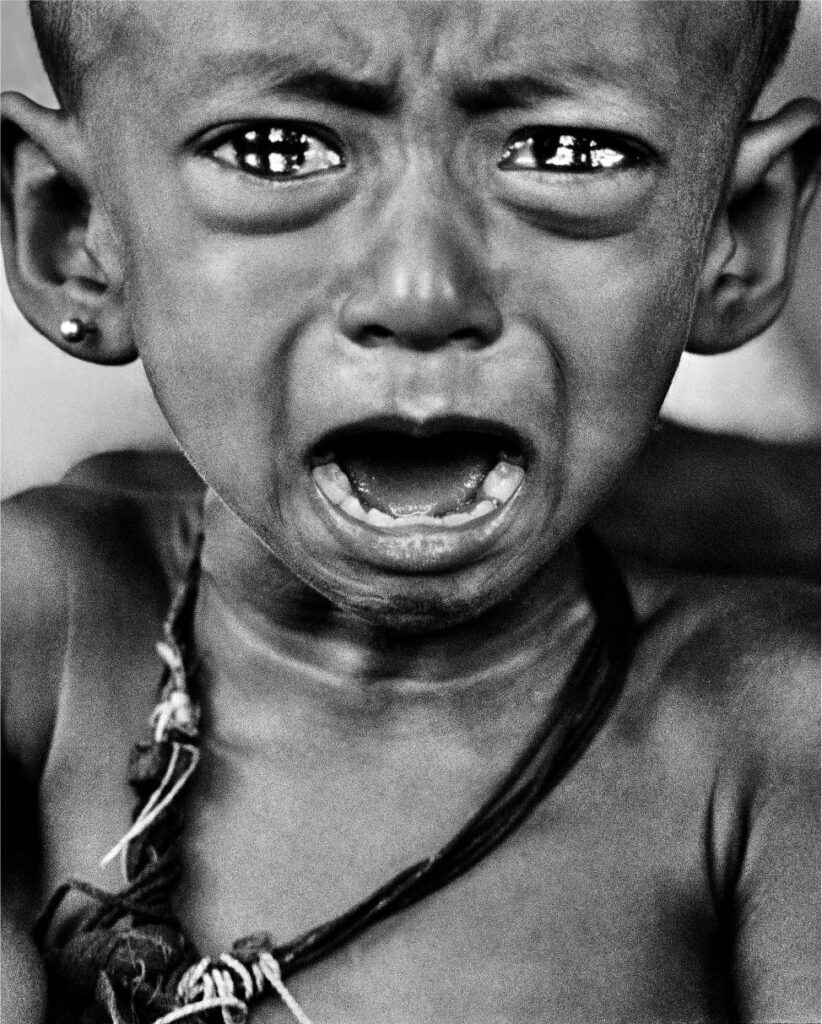
The exhibition was divided into two parts, called “Refugees and “After the Victory”. Each had its own distinct themes but taken together they constitute a larger narrative that the photographer weaved through the sequence of these images. “Refugees” presents an emotionally jarring depiction of the destitution faced by those who fled their homes in the aftermath of violence. The series begins with scenes from Jessore Road, showing refugees with their meagre belongings bundled up in sacks carried on their heads or on the backs of bullock carts as they sought asylum in India. Rai then takes us to small camps outside towns near the Indian border where they huddled together inside sewage pipes, left discarded in nearby fields. Though Rai does not show the inhuman acts that forced these people out of their homes, they hover in the background of each image, like ghosts from beyond the photographs reminding us of atrocities committed during the bloody birth of Bangladesh.
The narrative sequence in the exhibition takes the viewer from refugees living in camps along the border to scenes of India’s intervention in the liberation movement in “After the Victory.” Rai prepares us for this transition through the placement of his photographs in the exhibition. First, we see Indira Gandhi, her hands clasped together in greeting, standing in an automobile as it makes its way through a refugee camp. Then we see images of the resistance movement’s spirit reflected in the faces of ordinary Bengalis. A rickshaw puller rides down a street with a Bangladeshi flag fixed to the handle bars; soldiers board ferries to cross into occupied territory; a group of men board a bus and the man sitting by the window closest to the camera has a rifle between his legs. Next, we see tanks cross Bangladesh’s borders as helicopters land in air fields and troops prepare their weapons for combat. Rai places his viewer in the middle of this conflict, watching from a bush or the relative safety of a tank. The narrative ends with Pakistan’s defeat and the return of refugees to their homeland.
“The Price of Freedom” is a title that could be taken as an admonition to Bangladeshis born since the fall of East Pakistan who have perhaps forgotten or never known what was exchanged for the freedom and civil liberties we now enjoy. In this sense, Raghu Rai’s photographs tread a fine line between what we call photojournalism and what we exalt as art. These photographs are informative, acting as historical touchstones and taking us to a time of strife and bloodshed. They would have been perfect for the glossy pages of an international news magazine. But due to his careful compositions, his delicate balance of light and shadow and aesthetic excellence, Rai’s photographs transcend the photo spreads of news bulletins and are appropriately placed along the walls of exhibitions.
The Bengal Gallery of Fine Arts hosted an exhibition of celebrated Indian photographer Raghu Rai’s famous photographs of the 1971 liberation war in Bangladesh, titled “The Price of Freedom”. The collection depicts scenes from pivotal moments from the war including those of the mass exodus of refugees to the eastern borders of India, the Indian…