
editorial
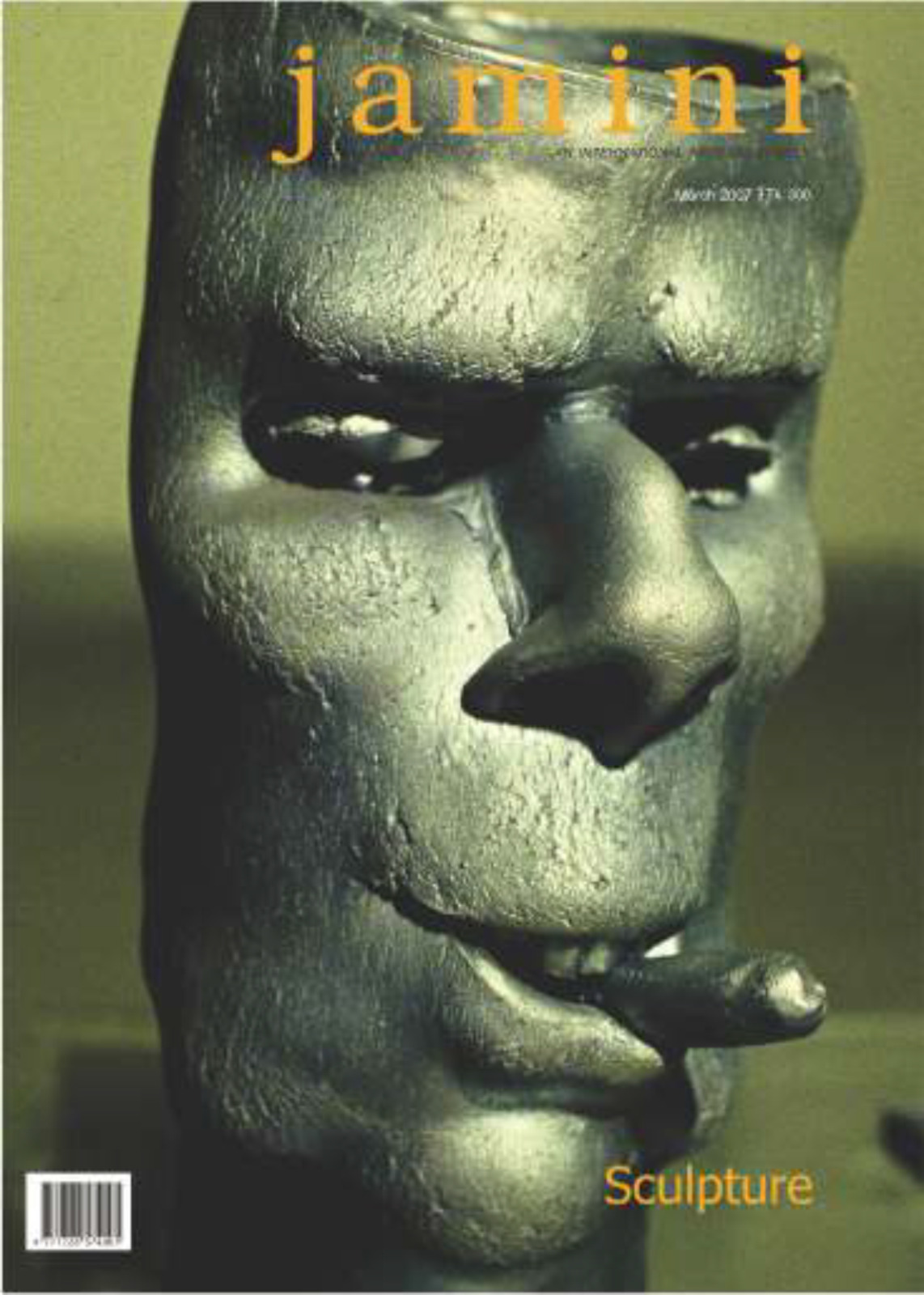
In its three years of publication Jamini has devoted issues to virtually every major art form, but we would not be rash enough to claim that none had been left out. With this issue we try to make up for the most obvious omission, which we hasten to add was not willful. It was pure happenstance. Sculpture aficionados, we hope, will be pleased with the motley assortment of pieces on their favourite art form.
We begin with an interview with Hamiduzzaman Khan, who has specialized in metal sculpture, often working on an imposing scale. That he is doyen of Bangladeshi sculptors at some months under sixty speaks volumes about the relative position of sculpture vis-à-vis other forms in our country. Fortunately, change is in the air, and we can sense a sculptural tradition taking shape before our eyes. We have followed up with a feature on Alok Roy, celebrated for his highly sensitive moulding of clay into terracotta sculptures.
The sculpture of two other Asian countries has been spotlighted. Salima Hashmi writes on a young and adventurous generation of Pakistani sculptors who squarely confront the horrors and injustices so much in evidence all around. Mee Ae Lee provides a thumbnail critical history of modern Korean sculpture, which has already attracted worldwide attention. Gina Fairley explains how the Phillipines have inspired the Australian artist Tony Twigg to look for Asian found objects that go into the making of innovative installations. Jonathon Thompson expatiates on the Asian connection of the American sculptor Richard X. Zawitz, for whom the tranquil mood of santa rasa becomes the ultimate goal of artistic endeavour. Tabish Khair focuses on the postcolonial counterflow that has landed Asian artists in Denmark where, sadly, they have been condemned to a cultural ghetto.
Of ‘pure’ Western sculpture we have the experimental British artist Brian Catling’s recent show ‘The Stumbling Block’, as interpreted by Shamsad Mortoza. Henry Moore, perhaps the best known of modern sculptors, appears in the role of a graphic artist. The write-up is by Ann Elliot who accompanied the Moore graphics that were recently brought over by the British Council and exhibited at the Bengal Gallery.
As usual, we round off with varied notes and reviews. Our indefatiguable antiquarian Mahboob Alam lovingly presents aspects of Company drawings in Bengal. Syed Manzoorul Islam descants on the Recherche du Temps Perdu that characterised Rafiqun Nabi’s recent exhibition at Bengal. Naeem Mohaiemen has contributed a lively piece on the on going exhibition of anti-war art in Italy, System Error: War Is A Force That Gives Us Meaning. Two articles bring to life the last photography biennale organised by Drik: Fariha Karim captures the excitement of the discussions, while Hana Shams Ahmed and Nader Rahman take us on a guided tour of the mammoth show that was spread all over town. By courtesy of the Swiss Embassy comes an informative article on the current Swiss art scene.
Work on our next issue is almost complete; once again we will spotlight a form unintentionally scanted so far: Architecture.
In its three years of publication Jamini has devoted issues to virtually every major art form, but we would not be rash enough to claim that none had been left out. With this issue we try to make up for the most obvious omission, which we hasten to add was not willful. It was pure…