

capturing brick lane

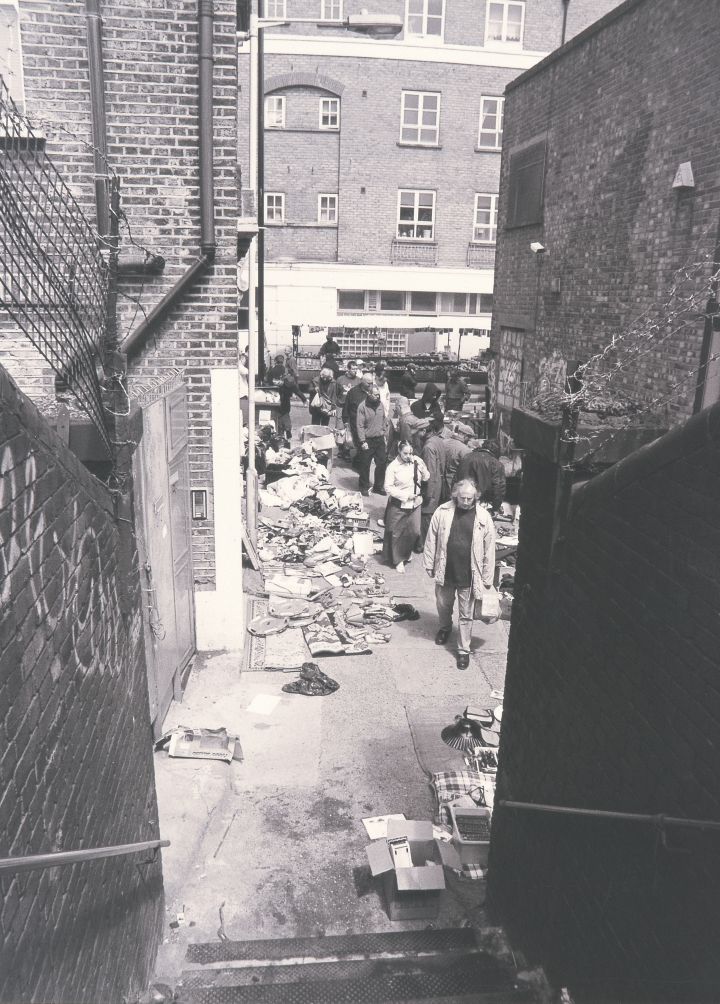
The first time I went to Brick Lane it was market day. The thing that struck me most was that some of the stallholders had no stalls. They laid out their goods on rugs, cardboard or on the pavement. One man stood by a mound of rusting bolts, screws and nuts. An old woman squatted down and began to turn them over. ‘Look,’ I wanted to say to her, ‘be sensible, you’re never going to find what you want in there.’ She turned and looked at me, though I had not spoken, and I moved on. Another pavement stall offered second-hand pornographic magazines and an assortment of battered shoes. I wondered briefly what the link could be. Shoes and dirty mags.


That was fifteen years ago, when Brick Lane had nothing like the cachet it holds today, long before the East End became a destination for bright young things looking for a night out on the town. My most recent trips there have been for photo shoots. There is a particular crossroads with which I have become very familiar. Photographers are attracted to it. They see (or perhaps it is simply that they smell, because the lens does not capture it) some essence of ‘Bangla Town’ here and they set up their tripods. The first couple of times I stood there, dodging in and out of the traffic and trying to smile, the waiters would come out of the corner restaurants. ‘Are you famous?’ they’d say. No, I’d tell them, for I could not lie even to please them. They adopted sympathetic expressions. ‘Not yet, not yet.’
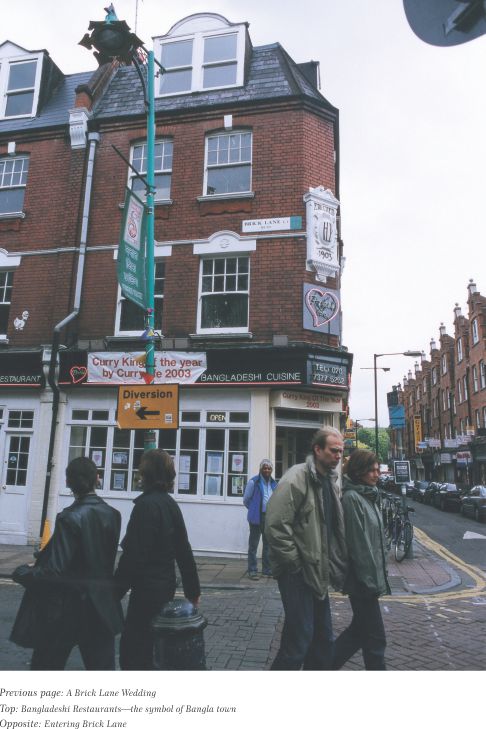
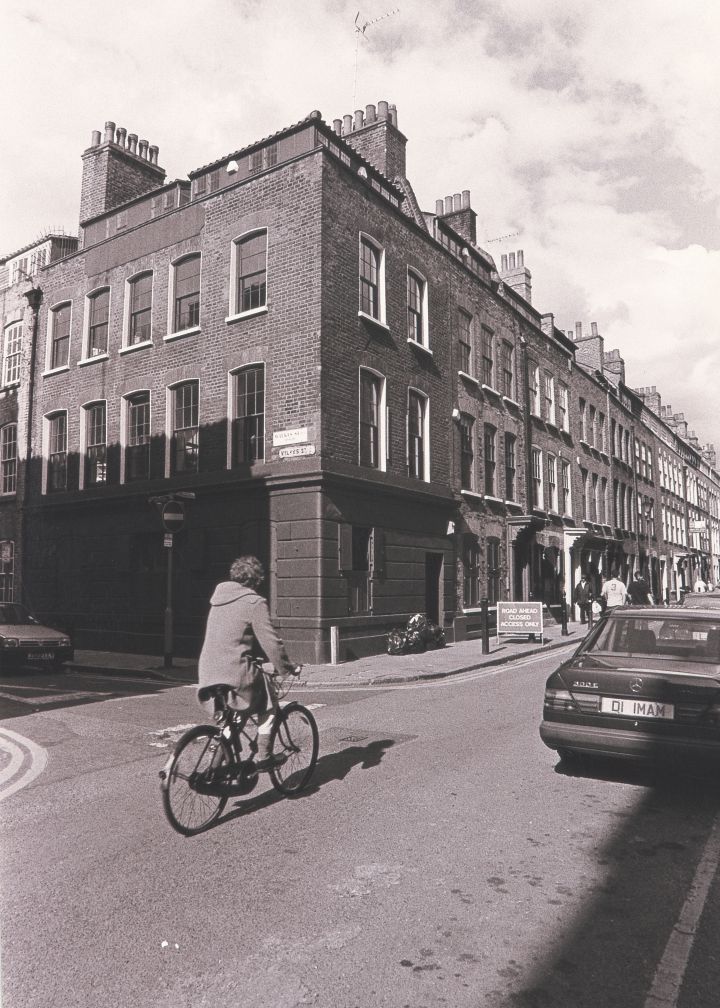
And when the photos had been taken and processed and pored over by picture editors and cropped and placed next to the text, the crossroads had vanished and Brick Lane was no more than a blur or a bit of wall or stretch of anonymous pavement.

It is not an easy place to photograph. Or rather it is too easy. So many things cry out for attention. Here it is. A street sign in English and Bengali. That’s what we need. A red and green flag advertising basmati rice and the Bangla national colours. Now we’ve got it.
But you can’t capture Brick Lane without capturing the people who live, work and play there. Nasir Ali Mamun’s photos take us into the street and lead us up to and alongside its inhabitants. His gift is in allowing the uninflected gaze of his lens to open up the scene. His pictures invite questions, open up a dialogue. The children at play, what is the game and who is in charge? The boy with the mohican and the open mouth, what’s his plan and how will it end? The mayor of London and the restaurateurs swelling with pride, who is on whose turf here?
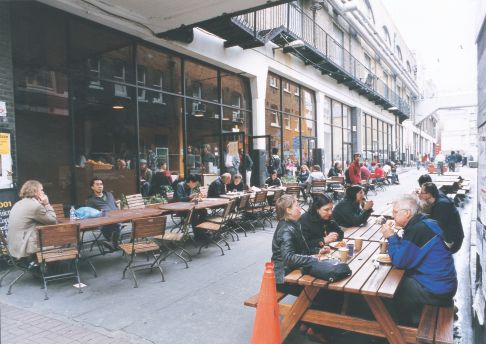

Brick Lane is known primarily for two reasons these days. Bangladeshi restaurants¾the symbols of Bangla Town. And the new bars and clubs that cater for the young and the hip who have made the East End the new West End of nightlife. As its name suggests, however, it was known first of all as a place where bricks were made. By the early eighteenth century it was a long and well-paved street down which carts took loads of bricks from their kilns down to neighbouring Whitechapel. During that century, the area became home to silk weavers largely of Huguenot descent; Protestants who had fled from Catholic persecution in France. Moving forward a century, a new community moved in, this time Jews from Eastern Europe fleeing from pogroms in their native lands.
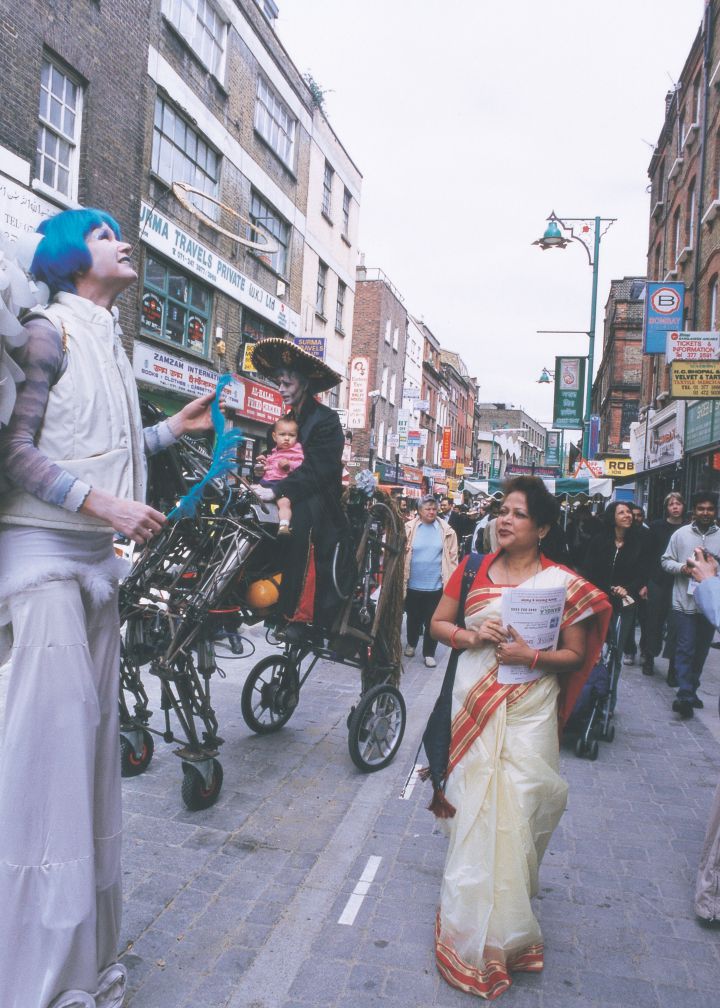
There has been a Bengali presence in the East End of London since the days of the East India Company. Lascars, as Indian seamen were known, would naturally wind up near the docklands area. But it wasn’t until the 1930s that the community really began to be established. By this time, wherever a lascar had ‘jumped ship’ in Britain, they began to make their way down to this particular place in London where they knew they could find friendly compatriots. In the mid-1960s new British immigration controls had the (unintended) consequence of encouraging a new wave of immigration and Bangla Town was well and truly on its way.
Brick Lane does not stand still. The changes keep on coming. And the past lingers on. Look around and you will find the French influences in the architecture, a faded sign for salt beef, the memories of the brewing industry (another eighteenth century trade). Nasir Ali’s photographs stir memories¾the man at the piano recalling the East-End knees-up tradition¾and give us glimpses of possible futures. How long before the city gents, cut off at the knee, become central to the picture? His telling eye for detail and juxtaposition tell stories that need to be heard. The young man in the FCUK sweatshirt cycles behind the elder in traditional dress. They connect and disconnect in myriad ways.
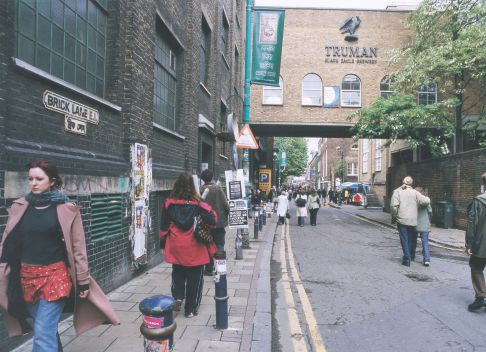
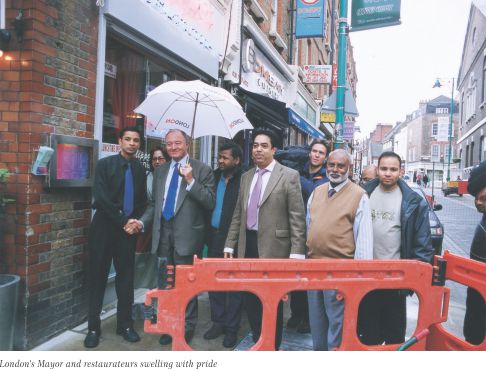

There is still a market in Brick Lane on Sunday mornings. Some of the stallholders still lay their goods on the grounds. It is a good place to look around, and no hunt through the debris would surprise me any longer. There’s no knowing what you might find. Put this thing with that, and mix it all around again. That is the way it is in Brick Lane.
Monica Ali is the author of Brick Lane (Doubleday 2003)
The first time I went to Brick Lane it was market day. The thing that struck me most was that some of the stallholders had no stalls. They laid out their goods on rugs, cardboard or on the pavement. One man stood by a mound of rusting bolts, screws and nuts. An old woman squatted…