

bengal light
Bengala by Claudio Pacifico (English translation by Catherine Bolton)Edimond, 2000. Distributed by University Press Limited at Tk. 1800.
Claudio Pacifico, surely, is one of the last romantics. Professionally a diplomat who entered the Italian Foreign Service after studying Law at Rome University and International Affairs at Winston Churchill College, Cambridge, he is by temperament an intrepid and indefatigable traveller, someone lured forever by the thought of far-off worlds. Fascinating places such as the Gobi and Sahara deserts, the plateaus of Tibet, the peaks of the Andes, or the jungles of the Yucatan or Papua New Guinea have always attracted him. As a diplomat he has served in countries such as Iran, Somalia, Sudan, and Libya. But it was in Bangladesh that his passion for travel, his interest in exotic places, and his obvious preference for appointments in Islamic countries came together when he was posted to Dhaka as the youngest ambassador in the Italian diplomatic corps in 1991. Bengala, a unique book consisting of his brilliant photographs and two long essays he has written about the people and places of Bangladesh, is the outcome of the decades Pacifico spent dreaming of Bangladesh before coming to the country, and of the few years he spent as an ambassador in it.
Wait a minute, I hear you say. How can Bengal compete as a romantic place and be considered as exotic as those formidable deserts, mountainous regions, and jungles? Besides, isn’t the age of romance over? Moreover, is it possible, or even desirable, for anyone to think of the east as mysterious, alluring, exotic, and the locus of forbidden pleasures after Edward Said’s Orientalism? In other words, is Pacifico guilty of essentializing/orientalizing Bangladesh?
In the first of his two long essays Pacifico reveals that he was initially drawn to the idea of travelling to esoteric places by an ‘unpleasant feeling of boredom and uselessness.’ He tells us that his wanderlust was fuelled by the ‘enchantment of the most impossible dreams of travel and exotic adventure,’ worked by children’s books. Bengal, he also says, became ‘the topos’ of ‘the restless wanderings’ of ‘his feverish teenage fantasies’ because of the diet of adventure novels by writers such as Scalgari, Verne and Kipling and films such as Around the World in Eighty Days that nurtured him. When he graduated to more serious reading in his teens, he found in writers such as Herman Hesse, Mircea Eliade, Rabindranath Tagore, and Romain Rolland, not to mention the adventurer-linguist and man of letters, Richard Burton, even richer fare to whet his appetite for fantasies of India in general and Bengal in particular. Still later, he read the work of more contemporary travelers like Tiziano Terzani and writers like Alberto Moravia and Pier Paolo Pasolini. Their impressions and sensations of India made him feel with greater intensity the urge to savor India at first hand. By this time he had decided that he would opt for a life of perpetual travel, seeking in his wanderings not only a means of escape from the tedium of contemporary life in the west but also a locale for the mystical stirrings in him.
However, Pacifico wasn’t going to be just another hippie on the road, one more starry-eyed, hallucinating flower child on spiritually obfuscating missions to the mysterious east who ended up either in the holy city of Benaras or the monasteries of Nepal. Of all the writers who had fed his imagination in childhood, it was the Italian Scalgari, author of over 200 thrillers that had first possessed his imagination. Pacifico knew that he would never be content till he saw what Salgari, an armchair traveller, had only imagined. And indeed Salgari’s imaginings had cast an enduring spell on Pacifico. Salgari’s books, for instance, The Mysteries of the Black Jungle, had bewitched him with their description of the labyrinthine forests of the Sunderbans, their snakes and tigers and heroic and villainous inhabitants. Reading novel after novel written by Salgari about the Sunderbans, Pacifico had become entranced. However, it would take many years for him to actually travel to the land that had so obsessed him. It was only after he was posted in Bangladesh for four years that he was able to emulate Salgari’s heroes and ‘enter the “black jungles” of the Sunderbans to explore and discover that enchanted world.’
But did Pacifico find the Bengal he was looking for, the Bengal so many European writers had described in their works on the basis of what they imagined or saw? Was he able to see Bengal as it was? Or was his vision distorted by race-prejudice or mysticism-tinged eyes? Or did he end up as so many Europeans before him perpetuating stereotypes about either the mystery and magic of the Orient or its decadent and moribund state?
The answer to the first two of these questions has to be ‘yes’ and ‘no’ and to the last two an unequivocal ‘no’. Bengala is testimony that Pacifico had found a land that was not like the Bengal he had read about and yet a country as mesmerizing as the one he had encountered in those fantastic tales of his childhood or the almost as imaginative fictional territory he had traversed in his adolescence. On the other hand, far from coming across enervated, fatalistic men and women and a culture in a state of decline, he had found a land and places full of life and a people wide-eyed, vibrant, and resilient.
Pacifico’s text and the photographs he took in Bangladesh show how intimately he was able to enter the life and times of the people of Bengal. Whether exploring the ruins of the great Buddhist monasteries of ancient Bengal, or the terracotta panels and bas-reliefs of latter-day Hindu temples such as Kantanagar, or the mausoleums of Muslim mystic-saints, he feels the magic and the marvel of the country’s religious history. Whether participating in contemporary religious spectacles such as the Biswa Ijtema at Tongi or following the Muharrum processions in old Dhaka or observing the annual Eid festivals and the autumnal cycle of Durga Puja rituals that end with the throwing of the idols in the River Buriganga or viewing the terrifying goddess Kali as sculptured by Hindu idol makers, his text and photos reveal his fascination and seemingly endless capacity to immerse himself in the spirit of the people and capture their spiritual yearnings. But the images that captivated him and that he is able to reproduce with such feeling as well as art in the pages of Bengala show that the land he had experienced so intimately was not full of the melancholy or resignation that the books he had read as a young man had led him to believe existed in the land. In short, far from being the Bengal ‘that existed only in the collective imagination and fantasy of European intellectuals,’ far from being tinted by either the romantic yearnings of armchair escapists/seekers or tainted by the prejudices of one branch of orientalist scholars, Pacifico’s pen and lenses portray a syncretic culture pulsating with life. In fact, at the end of his search for the Bengal he had been seeking since boyhood, and once he had become part of the land and close to its people, he was able to ‘set aside the fake Bengal of “cardboard” and folkloristic frills created by certain western longings.’ Ultimately, then, he was able to discover ‘the true poetry and charm of the “real” Bengal, in all its simplicity and universal humanity.’

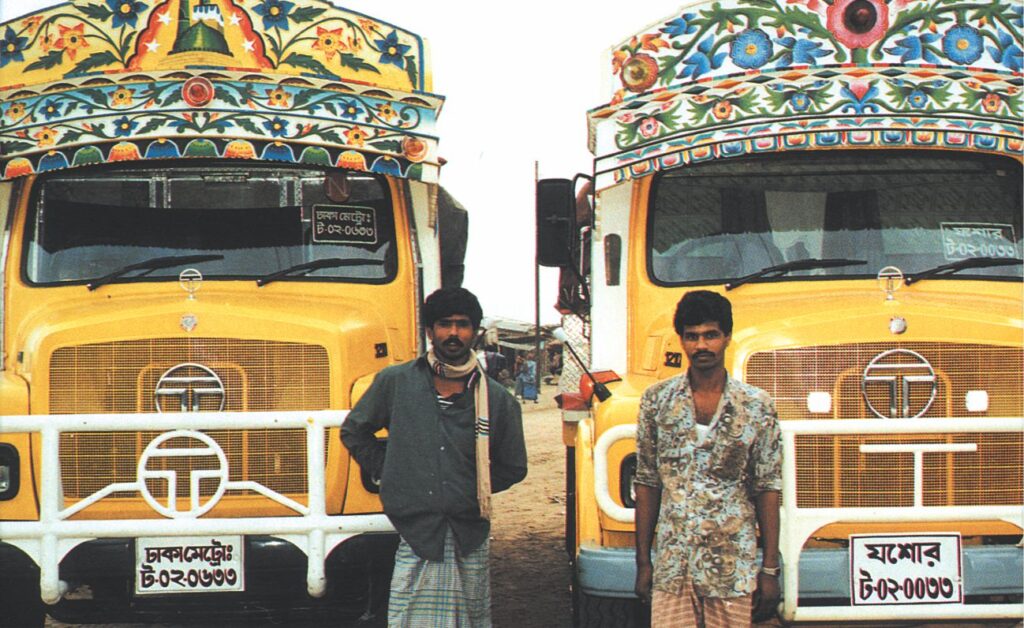
Bengala thus is a book about the ‘real’ Bengal that Pacifico found, captured in prose that is impassioned and energetic, even in the English translation by Catherine Bolton that runs side by side with the Italian original in this bilingual production, and in vivid photographs that never look like picture postcard ones and are full of the beauty of the quotidian. Reading the book and viewing the photos, one realizes how well he has come to know the people of Bengal and how much love he has for them. The 198 page book is an exceptionally engaging album of the land, its people, and their lives. And he has recorded so much in these 198 pages: the hospitality of the villagers, the ‘teeming beehives of the cities’, the vast rivers, the ancient and noisy and colourful transport vehicles, the spiced air, the innumerable variety of fruits, flowers and vegetables, the delicacies of old Dhaka, women in colourful saris in city markets, the crowded launches and paddle steamers. Indeed, Pacifico has managed what very few have done in representing Bangladesh: he has been able to bring alive ‘the Bengal of a swarming humanity, in every place and everywhere, at times so poor and destitute, yet never desperate or resigned.’ Pacifico’s Bengalis, whether in their grimaces or smiles, are vital, various, and humane; looking at his extraordinary portrait of ordinary Bengalis, one sees precisely those qualities that led Dryden to say of Chaucer’s representations of fourteenth-century Englishmen and women: ‘here is god’s plenty!’
Bengala also includes a competent history and general overview of Bangladesh. Tracing the earliest recorded references to the country in the great Hindu epics, accounts of medieval Chinese and Arab travellers, and the annals of more contemporary historians, he shows how the land declined from being enormously wealthy to extremely poor because of colonial rule. He traces the ups and down of Bengali history, concluding on a positive note: despite ‘the enormous problems created by the conditions of extreme poverty in which it was founded’, overpopulation, ‘a particularly inclement microclimate,’ and ‘its recurrent political crises,’ Bangladesh is now ‘on the path to political, economic, and social development, thanks to the hard work, tenacity and creativity of its people.’ Assaying the religion, language, literature, arts and crafts and music of the land, while portraying its monuments, ruins, artisans, and day labourers with the help of his camera, he shows his mastery of the region’s ‘popular’ as well as ‘high’ culture. However, there is at least one reservation that a reader might have about the text: it ends all too abruptly, as if Pacifico has exhausted himself in his attempt at depicting the fluidity and vibrancy of Bengali life!
But to come back to praise again: Pacifico’s book is a triumph of book design. While the photographs of Bengal and it people are almost always reproduced in vivid colour, the text is carefully laid out so that every page containing his verbal accounts of Bengali life is set against an appropriate background photograph in sepia or reddish-brown or rust-brown or related hues. The first eighty-eight pages of the text seem to be so designed to become a fitting background to the Bengal evoked in the European imagination; one can discern in these pages images from the books he had read in childhood and adolescence and icons from orientalist traditions. From page ninety-two onwards, the background photographs depict everything from rickshaws to advertisements to ferries, no doubt to highlight a nation on the move.
At least two more aspects of Pacifico’s photographs are worth commenting on. How wide-eyed are his Bengalis, and how directly and keenly they look at him as he is photographing them! Also, how consistently has he succeeded in transforming the world any Bangladeshi sees around him everyday into memorable, unforgettable photographs! One is almost sure that Pacifico’s Bengala has the capacity to be a lasting monument to his love of Bangladesh and its people. It is therefore to be hoped that the book is going to be successfully distributed and made readily available in book shops, not only in the west, but also in our part of the world, for it is an excellent antidote to the stereotypes about Bangladesh and its people held by many at home or abroad as well as a wonderful work of art.
Fakrul Alam is a member of the Jamini Editorial Board
Bengala by Claudio Pacifico (English translation by Catherine Bolton)Edimond, 2000. Distributed by University Press Limited at Tk. 1800. Claudio Pacifico, surely, is one of the last romantics. Professionally a diplomat who entered the Italian Foreign Service after studying Law at Rome University and International Affairs at Winston Churchill College, Cambridge, he is by temperament an…