

art is the city that we have built for ourselves

When a hedonist looks at you, you feel like a black forest cake in front of a chocoholic. You look down the throat of the monster. You know that by your very nature you will go there, even though it will be dangerous to do so. There is the risk of transformation beyond recognition. The irony is that the more a hedonist consumes of the world, whether it be in the form of food, culture or sexual partners the emptier they become and the more in need of fulfillment. Therefore, the tendency toward hedonism can only increase as their need for fulfillment increases, adopting the snowball effect until the final crash and burn-out. Hedonists are the ultimate consumers and not surprisingly cities have come to rely upon them. The irony of the hedonist is that they fill themselves with hunger. The minimalist, on the other hand, is a creator of reduction and a space maker. Yet the less a minimalist consumes the more fulfilled they become.
The marriage of city life and the hedonist is inevitable. If you want the minimalist experience, go to the deserts or the poles but stay out of New York. Here we live fast to access pace and we know that when we finally do stop then it’s the great emptiness that awaits us. What we don’t know is that the emptiness that disturbs us is coming from within. While we feel protected from nature within the city limits, the city is no substitute for the lost ecosystem that our instinct craves. We never forget our elemental make-up, yet in the end it is the ecosystem that disturbs us, not because we are vulnerable to mortality within it, but because we have lost sight of it. We are like a bird in a cage who doesn’t know what to do when the door is left open. As city dwellers without nature we are the centre and hence all that we create becomes egocentric and self-episodic. Our art is less about the external and more about the internal. It is a monologue.
The solution to this delusion of perpetual hedonistically orientated fulfillment, play-nirvana, power-cults and the false guarantee of adoration-everlasting, is of course via detachment, reduction and dissolution. The minimalist is well on the road to creating such a space which will enhance and nurture this state of being. What the minimalist does is an act of creation rather than consumption. All art needs space in which it is to be created and this must happen in order that we be fulfilled. The minimalist is about slowing down the pace and existing in the empty places where creativity and development can take place. The minimalist is about the city without consumption. To think of a city without the momentum of perpetual consumption and expulsion could be frightening. What would we have left and in that case what would be our reason for being there? I would imagine that the city itself would become art, both educational and symbolic.

What do we have when we turn New York inside out? I would imagine that we have a vast monosystem, with several species in plague proportions, that have learnt to operate in complex yet loosely synchronized colonies, that are ecosystem sensitive and serve the ego as one would the self or god. To the hedonist the minimalist world of ‘very little’ looks scary, as does what they find inside themselves. Rather than the discipline taking them to the emptiness of love and light, they are simply reminded of their own inner fear-based emptiness and of everything that they will miss out on, in other words the chance to finally satiate their unending appetites. The minimalist who denies themselves everything knows that they need nothing but love, whereas the hedonist has filled themselves with everything but love.
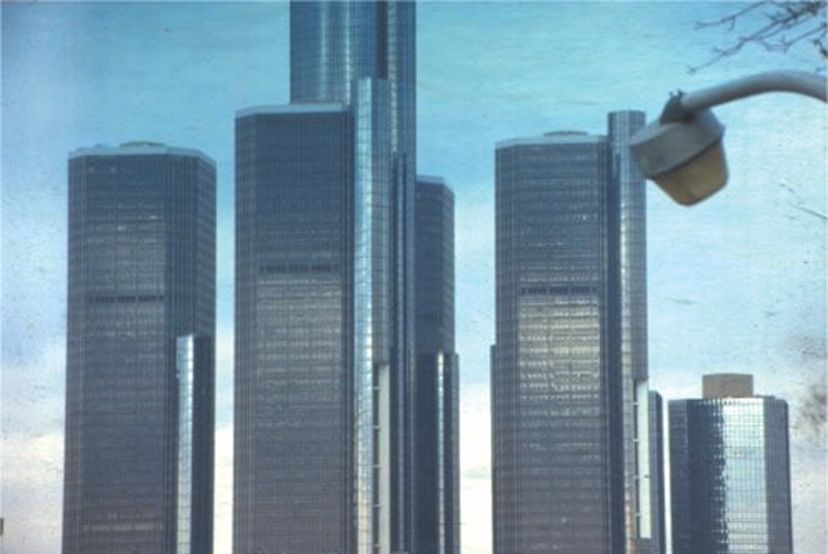
The city is a giant monoculture. We are energy operating within its mechanism, brief moments in time made up of everything that we consume and put into everything we create. Our awareness will lead us to self-development or transformation via creativity. In this way we will evolve as a species beyond the city that we have created for ourselves. Our potential will become limitless. It is inevitable that even the greatest city is to be finally relinquished as all art and everything we are is to be finally relinquished, but before that moment we live in it, as part of its celebration and its criticism. When we look into the city we look into the presence of humanity as a creative species upon the earth. The city is the largest and at the same time perhaps the least complex piece of art that humanity has created. Its function is primarily process-orientated, consumption and expulsion. It gives the appearance of a working body without a heart.
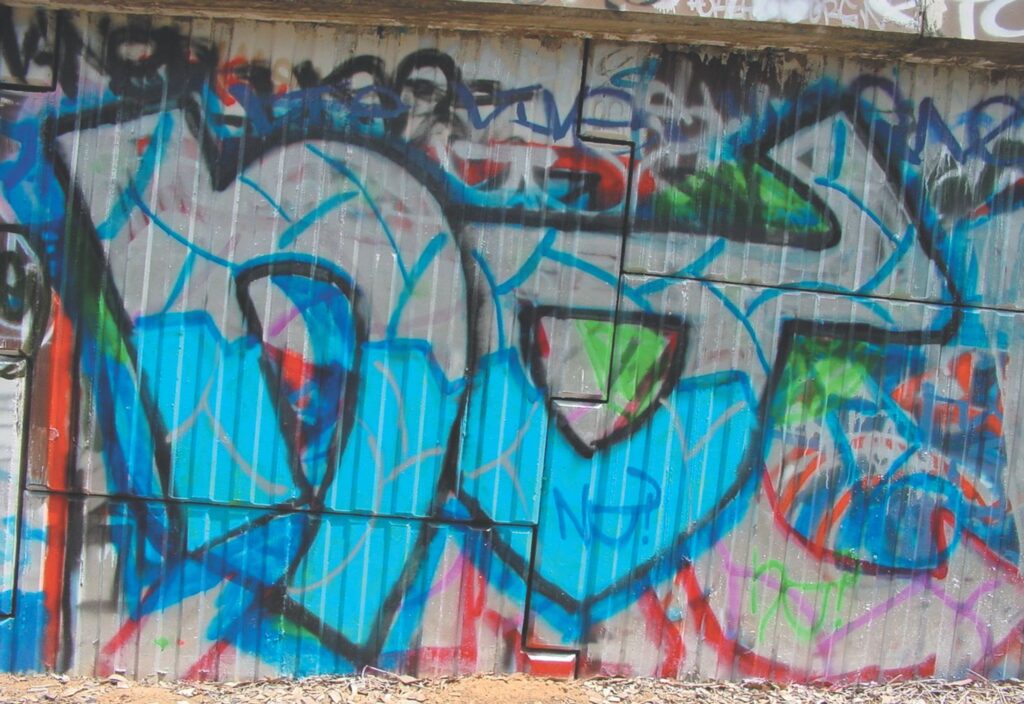
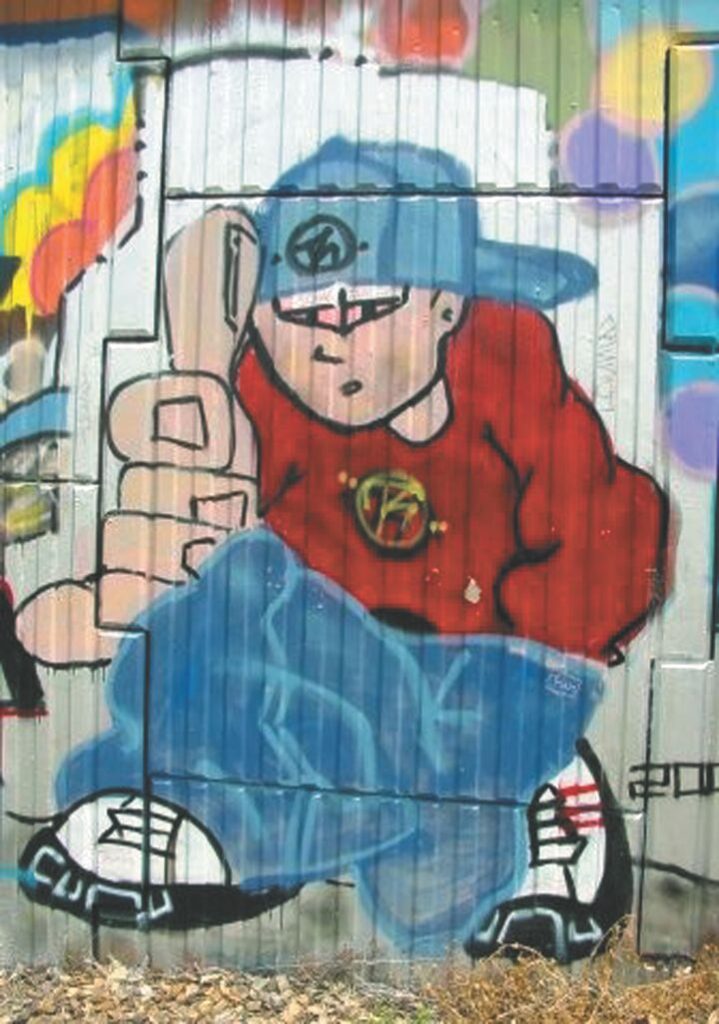
It is expected that the city will consume you as you consume it. The city is the art that best represents ourselves en masse. We are taught to believe in the billboard of the multi-billion dollar enterprises and to be judgmental about the graffiti artist who ducks away into the dawn in his beanie and baggy jeans with his spray gun beneath his arm. The difference between billboards and graffiti is that one controls the culture and one attempts to subvert it. Both are forms of self-advertisement. Both are signatures. Whereas the visual artist or director may place his signature at the edge of the picture or at the end of the film, the graffiti artist and the billboard advertiser place theirs at the centre. They compete for the leading role and in doing so they consume each other until both are finally indistinguishable. The signature is the product and the product is everywhere.

Hence I am everywhere surrounded by art. As creator I have taken up a position at the centre where there is an illusion of stability. If any rewards are imminent I will know about it. I have fed the world myself and I am ready to be fed by the world. The expectation is of reciprocity. Both graffiti and billboards reduce the environment and perpetually create the self. Yet the autograph becomes so layered that it is rendered anonymous. Each city building is unique; yet the more they extend and repeat the signature, the more uniform and indistinguishable they become from each other. The city of graffiti art and billboards is a progressing monoculture that acts like an ice age, diminishing everything in its path or that which threatens it. The city itself is egocentric and is about the extinction of what is beyond the ego. Therefore it becomes artless. It is merely a platform upon which to express one’s ego-self.
In the landscapes of the post-apocalyptic city we see great hardship and isolation of the human spirit and alongside that we see courage, heroism and love. We see much darkness as in the speculative fiction, the X-Files. We remember the solitary and foreboding image of a little girl who walks along the roof guttering on the programme Millenium. We see human struggle and vulnerability and the perpetual and cyclical play of darkness and light that we are all caught up in until we cease to recycle and return ourselves. Although we strive to be otherwise, we might think back to the Milky Way galaxy, in order to remind ourselves that we are on the edge and not at the centre of creativity. We are merely parasites clinging to the back of a giant entity with a heart of stone. No matter how hard we think we have become, the material that the city is made from is always harder.

All creativity is diminished when faced with the incredible streamroller of monoculture. The irony is that it caves in and goes under due to the perpetual repetition of ego-signature-identity. The repetition itself becomes the crushing force. In his latest video clip, singer Eminem rejects this notion and perpetually plunges face first from a city skyscraper to symbolize simultaneous feelings of spiritual and creative freedom and of being out of control. Similarly, the recent video clip that accompanies the song ‘Wake Me Up’ by Evanescence shows a woman as ‘astral self’ being woken up and leaving the isolation of her apartment bed. She desires to be saved from the self-described emptiness of ‘this nothing I’ve become.’ She walks along the narrow ledges and scales the sides of buildings in a skimpy white night dress. The tone is carnivalesque, but more haunting than playful. There is the risk of falling. In another building close by there is a rock band playing with a young rough-edged lead singer. It is through art that the two states of being that are the astral self and the physical self are synchronized.
The ‘sleep-walker’ approaches the window as a human apparition and the singer stops to look out at her. She sings of her love and at the same time his reflection is seen in the window. They struggle for worldly communion but the forces that come between them are too overwhelming. Thus she falls when he is unable to hold her and lands back in her own bed and body. Meanwhile he is left to scream out to the sky: ‘There must be something more.’ The sky is bordered by the landscape of buildings and not the other way around. Attachment is risky. Love is hard to hold onto. Human intimacy is unstable, fleeting and fragile. It is vulnerable to dissolution at the best of times. The irony is that it is within the self that we will face that ‘nothingness’ and it is through this empty embrace that we will find an end to fear and the way to love. To love with attachment and yet without fear is to embrace love’s impermanence. It is wise to love so long as we are able to let go of love.
Both love and art are doomed. Any notion of permanence is an illusion. Yet so long as the buildings remain impenetrable and the same, so long shall we remain permanently transfixed by the same. We will not transform art nor will art or love transform us. We will instead transform all that is not us, not into love or art, but into who we are. We will call this art and through its creation and preservation we will outlive death. Our choice may be to have the city grow into our expressions, hard, angular and resilient. In the same way that the character in Radio Heads’ new film clip ‘there there’ loses his shoe and turns into a tree in a magical forest once his bare foot touches the earth, so the human turns into a city. Beyond the safety net of structure is the abyss so that while a city dweller may remain within the city, they will venture to the universe within the self, that is the infinite or unknowable self. This involves the creation of space, but not necessarily the creation of art.
Instead, the future of city art is to be found in the expression of the post-apocalyptic cityscape. Bleak, transformed, densely inhabited, complex industrial worlds that have ecosystems; of rats and pigeons, subways and bridges, mountain as buildings and canal as rivers. The city is culture transformed, as in the popular television shows Buffy, Angel, Dark Angel, and Third Watch and is populated with terminators, genetics, mutants, machines, cyborgs and other human-centric art. What we have created is a human monosystem. The city begins to walk without the fear of death and humanity forms an allegiance and walks alongside it. The new art is again the old art, in that it reverts to a mixture of magic, myth and speculation. Combine this with a sense of justice and morality and we have popular TV.
We are addicted to episodic sequences and glimpses of characters who are too deep to fathom in just one programme. Many of the characters struggle with the pain of a harsh reality and/or emotional or spiritual isolation from each other or from god. They are in the police force OR the force within the city that wavers between upholding morality and the new neutralization of humanity. The world has become too dark, as sad and violent as the unforgettable cityscapes of the movie Blade Runner. While humanity remains connected to a natural world and is neurotic without it for any length of time, the city is futuristic and only relies on nature as part of its process. City human beings stay inside their buildings and look out into the new neutralization from a place of retreat. Love is what they really want. Humanity is on the edge of the building or the bridge looking down. There is the sensation of falling. The only chance at escape or revelation is to cease the quest for control and to fall through the layers of the self into the state that is never beginning and never ending, or that is eternal.
Art is the city that we build for ourselves. It is only ever as the creator is, unless the creator claims to have been touched by god during the process. Humanity is creative by nature. Some of this learning belongs to the cultural tradition of the art institution of great masters and naked mistresses and one mad gay guy who cut his ear. Alongside art is the instruction or destruction that we receive from ourselves. It can be dreamlike or nightmarish, depending on where we are at as individuals. We live in our art as we live in our great cities. Under such circumstances art becomes an ego signature rather than a celebratory gesture. It is all about survival rather than development. It is about the mortality of the body while we live and of the immortality of the ego through art after we die.
Like any great army the city must dominate in order to conquer and go forward as a force devoid of individualism. Hence the crushing of all creative signature before its steamroller movement appears inevitable, while perhaps only the billboards and graffiti survive¾the pigeons and rats of the art world. These are the survivors. So rather than be devalued, they might be respected as successful adapters to a somewhat preposterous situation. Artwork is materialistic enough to be consumed and yet spiritual enough to be locked away behind glass or in vaults, as chalice or grail, where its worth becomes more holy than material, despite the big bucks involved. Here art has reached the status of symbol. Hence the rewards for artistic practice may be the same rewards as giving to charity; in the act of giving we receive and in the act of creating we are created in return.

While not fundamentally sentient by nature, the city monoculture is certainly made up of the corpses of the dead who are consumed and forgotten within it and of the living who recreate themselves within it in order not to be forgotten either through signature-art or hedonistic consumption. Meanwhile, the great city rolls forward like a slow and neverending wave filled with the life and death of all those who move within it. Just as we have struggled in a wilderness of ice and sand, so now we struggle in a monoculture wilderness of steel and stone. Art without love is a city without humanity. Creation doesn’t always guarantee compassion. Perhaps we must live like a minimalist in order to be fulfilled. Perhaps art is about the creation of space in our lives, while accepting the inevitability of transformation. If we are brave we will fall into the zone where boundaries become limitless and art is about non-definition. While we may not outlive the structure of the city and the art institution, we will be go beyond it and we will be woken up inside. Through this freedom we will understand that the limitless potential for creative endeavour and human development can be found here, that is, within city limits.
Coral Hull is the author of over thirty-five books of poetry, fiction, artwork and digital photography. Her first novel Work The Sex is published by Jacobyte Books (Australia, 2002)
When a hedonist looks at you, you feel like a black forest cake in front of a chocoholic. You look down the throat of the monster. You know that by your very nature you will go there, even though it will be dangerous to do so. There is the risk of transformation beyond recognition. The…